
The practical answer
- Short answer
- HubSpot's ecosystem is a real opportunity, but thin connector apps can be difficult to underwrite. Here is the diagnostic playbook for building durable ISV revenue in 2026.
- Best fit
- Industry: B2B SaaS / MarTech. Function: Product Strategy & M&A
- Operating path
- Exit Readiness → Operational Excellence → Transaction Advisory Services
- Key metric
- 4 Product signals buyers review: activation, feature depth, retention, and paid conversion.
The HubSpot Ecosystem Trap
Building an app on the HubSpot Marketplace can provide access to a large installed base. It can also create a thin feature that generates little durable enterprise value.
IDC has projected significant revenue around the HubSpot ecosystem. This is the growth narrative that many founders pitch to their board.
Here is the reality the pitch deck leaves out: The vast majority of the 2,000+ apps in the marketplace are uninvestable. They are "connector" utilities or thin UI layers that are one HubSpot product update away from obsolescence. I see founders celebrating installs while burning cash, unaware that churn and weak paid conversion can erase the value of the distribution channel.
The Valuation Divide: Services vs. ISV
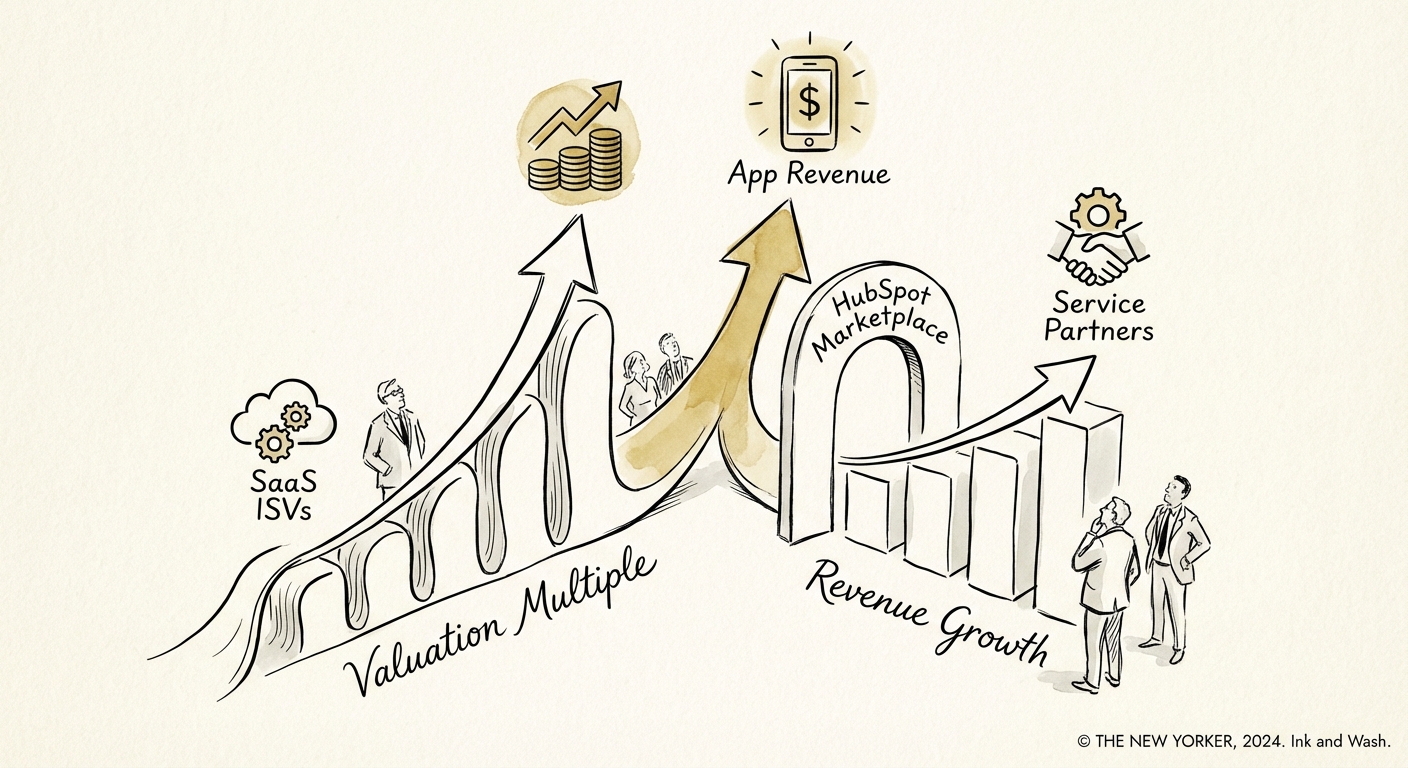
For founders, the math is compelling. Pure-play service partners (agencies/SIs) typically trade at 6x-10x EBITDA. A high-performing ISV (Independent Software Vendor) in the ecosystem may command a revenue-based premium when retention, product depth, and platform risk are under control.
However, Private Equity buyers in 2026 have become sophisticated. They do not pay ISV multiples for "services firms with a plugin." To command a premium exit, you must prove you are a platform-native product, not just a simple API script.
You don't need more free installs. You need a retention engine that proves you're a platform, not a feature. Buyers value workflows, not widgets.
The AI Workflow Shift: Why Connector Apps Need Depth
The rules of the ecosystem are changing as HubSpot expands native data sync, AI, and workflow automation capabilities. If your app’s primary value proposition is "we sync data from X to Y," the product is exposed to platform roadmap risk.
The value is shifting toward AI-assisted workflows. Buyers—and M&A scouts—are looking for apps that do work, not just move data. See The Ecosystem Paradox for a similar dynamic in the Microsoft channel.
The Diagnostic: 4 Metrics That Influence Your Multiple
If you want to know if you are building an asset or a hobby, look at these four metrics. This is exactly what we check during technical due diligence.
1. Product Usage Depth
Forget vanity install counts. Track activation, recurring usage, feature depth, and retention by cohort. If your app is installed but not used in core workflows, churn is likely and marketplace distribution will not rescue the business.
2. Install-to-Paid Conversion (>5%)
Vanity installs are high-risk. If you have a "Freemium" model, your conversion to paid must exceed 5% within 90 days. Anything less implies your product may be a "nice-to-have." Free users only matter when they convert into retained paid accounts.
3. Net Revenue Retention
In the 2025 SaaS landscape, buyers care heavily about retention. To command a premium valuation, your ecosystem app needs clear expansion behavior and controlled logo churn. Because you rely on HubSpot for distribution, you have lower CAC (Customer Acquisition Cost), so your retention must be higher to justify the platform risk.
4. The "Hub" Revenue Mix
Where does your app live? Apps deeply integrated into Sales Hub or Service Hub historically commanded higher retention than Marketing Hub apps, which can be more campaign-based and transient. Data and workflow integrations should be evaluated for retention, expansion, and API dependency risk.
Exit Readiness: Structuring for the Strategic Buyer
Who buys HubSpot apps? It is rarely HubSpot itself (though they did acquire XFunnel and Cacheflow). The primary buyers are:
- PE-Backed Platform aggregators: Firms rolling up ecosystem apps to create a "Super-ISV."
- Adjacent SaaS Platforms: Competitors or partners looking for a foothold in the HubSpot base.
To be ready for them, you must reduce "Platform Dependency Risk." If HubSpot changes an API tomorrow, does your revenue go to zero? If the answer is yes, buyers will price that risk.
The "Code Audit" Reality
When a HubSpot ISV depends heavily on a deprecated or fragile API endpoint, the product story weakens quickly. You must document your API dependency map and prove you are managing technical debt proactively.
Your Action Plan:
- Audit activation, retention, and feature-depth metrics by cohort.
- Shift R&D from simple connectors to workflow automation where the product does meaningful work.
- Calculate your NRR specifically for the HubSpot cohort (exclude direct sales).
The HubSpot ecosystem opportunity is real, but marketplace access is not the same as enterprise value. You are either building a strategic asset or renting distribution from someone else. Choose carefully.