
The practical answer
- Short answer
- Stop building $10 apps. Learn why Shopify ISVs targeting 'Plus' merchants command 10x multiples while generalist tools stall at 2x.
- Best fit
- Industry: Ecommerce Technology. Function: Product Strategy
- Operating path
- Exit Readiness → Operational Excellence → Transaction Advisory Services
- Key metric
- 49% Increase in installs within 14 days of achieving 'Built for Shopify' status.
The "Passive Income" Myth: Why 85% of Apps Are Unsellable
The Shopify App Store has bifurcated into two distinct economies: the "Hobbyist Lottery" and the "Enterprise Ecosystem." For years, the narrative sold to developers was simple: build a $10/month dropshipping tool, get it approved, and enjoy passive income. In 2026, that narrative is a valuation trap.
The data paints a brutal picture of the "Hobbyist" tier. According to 2025 market analysis, the median Shopify app generates just $725 per month in revenue. Furthermore, approximately 35% of all apps have zero reviews, effectively signaling zero meaningful revenue. While Shopify’s decision to drop commissions to 0% on the first $1 million of revenue was celebrated as a win for developers, it inadvertently flooded the market with low-quality, "feature-level" apps that compete on price rather than value.
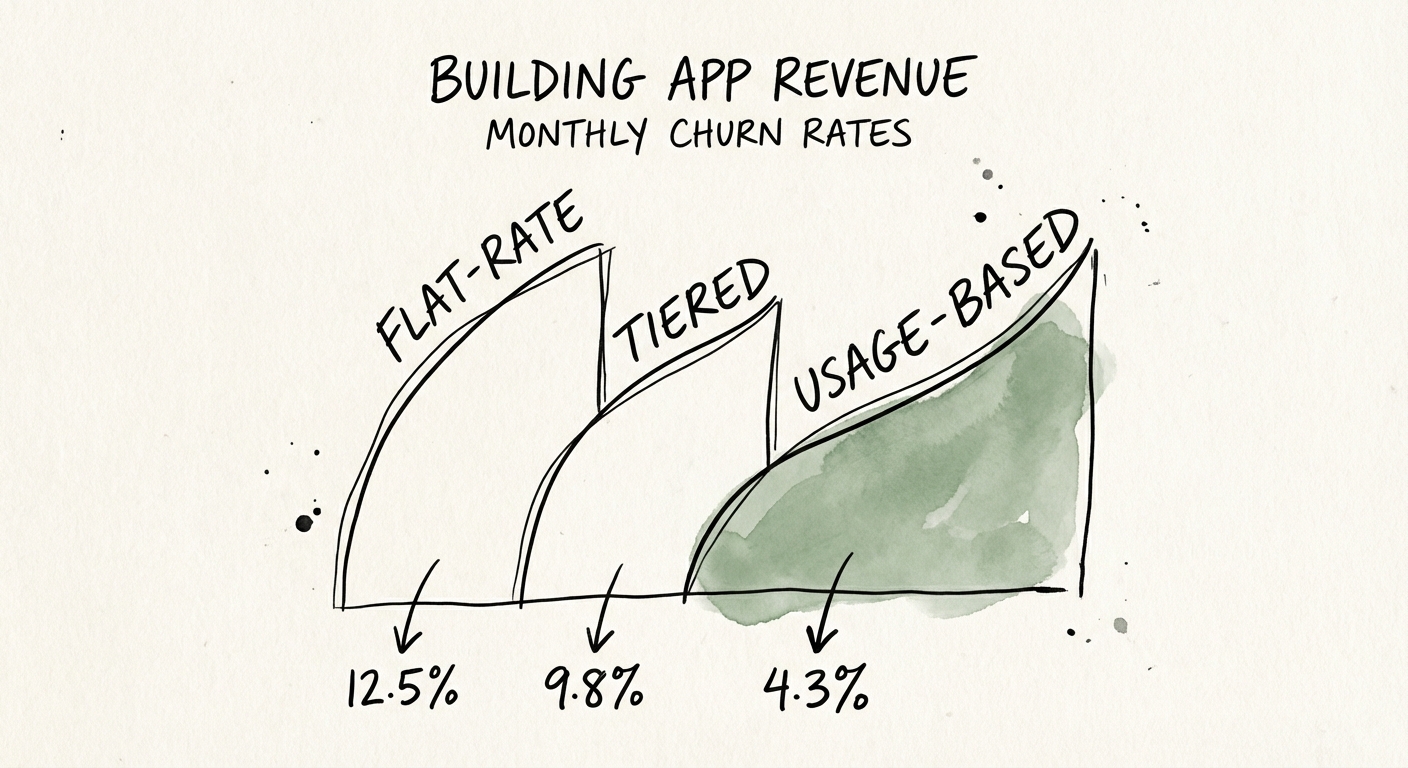
For the PE-backed or scaling founder, this saturation creates a specific strategic imperative: You cannot build a venture-scale asset on SMB churn. Apps targeting the long tail of $29/month Shopify Basic merchants face monthly churn rates as high as 12.5% for flat-rate pricing models. In the eyes of an acquirer, this isn't a SaaS business; it's a leaky bucket with a code base. To command a premium multiple, you must exit the "app" game and enter the "platform" game.
The median app makes $725 a month. The top 1% makes $83,000. The difference isn't code quality; it's the refusal to serve the 'hobbyist' market.
The "Plus" Premium: The Only Metric That Matters for Exit
If you want to trade at a 10x revenue multiple rather than a 2x SDE (Seller Discretionary Earnings) multiple, your revenue quality must mirror that of Shopify itself. The signal is clear: Shopify Plus.
While Plus merchants make up a fraction of the total store count, they account for roughly 31% of Shopify's Monthly Recurring Revenue (MRR). More importantly, these merchants are growing at 126% YoY, far outpacing the industry standard. For an ISV, this means your "Plus" cohort is not just stickier; they are naturally expanding their usage of your platform, driving Net Revenue Retention (NRR) above 100% without you needing to acquire a single new customer.
The strategic lever here is the "Built for Shopify" (BFS) designation. This is no longer just a vanity badge; it is a distribution moat. Data shows that achieving BFS status drives an average 49% increase in installs within 14 days. But the real value isn't just volume; it's trust. Enterprise buyers—the CTOs of brands like Gymshark or Staples—do not install unverified plugins. They buy certified infrastructure. If your roadmap doesn't prioritize BFS compliance and Plus-specific features (like Headless integration or B2B checkout extensibility), you are voluntarily capping your enterprise value.
Valuation Architecture: Escaping the "Feature" Discount
The most common reason Shopify apps fail due diligence is the "Feature vs. Product" classification. Private Equity firms differentiate aggressively between a "feature" (a gap-filler that Shopify could build in a weekend) and a "product" (a defensible workflow that stores data and drives revenue).
The Churn-Valuation Correlation
Your pricing model is a direct proxy for your valuation. Recent benchmarks reveal a stark difference in retention based on billing structure:
- Flat-Rate Pricing: 12.5% Monthly Churn (Low Valuation)
- Tiered Pricing: 9.8% Monthly Churn (Medium Valuation)
- Usage-Based Pricing: 4.3% Monthly Churn (High Valuation)
Usage-based or value-metric pricing (e.g., orders processed, emails sent) aligns your revenue with the merchant's success, drastically reducing churn. Lower churn signals to acquirers that your product is "mission critical" rather than "nice to have." To exit at a premium, you must transition your revenue architecture away from flat fees and towards consumption models that scale with your top 1% of customers. This is how you bridge the gap between a $50k "side project" flip and a $50M strategic exit.