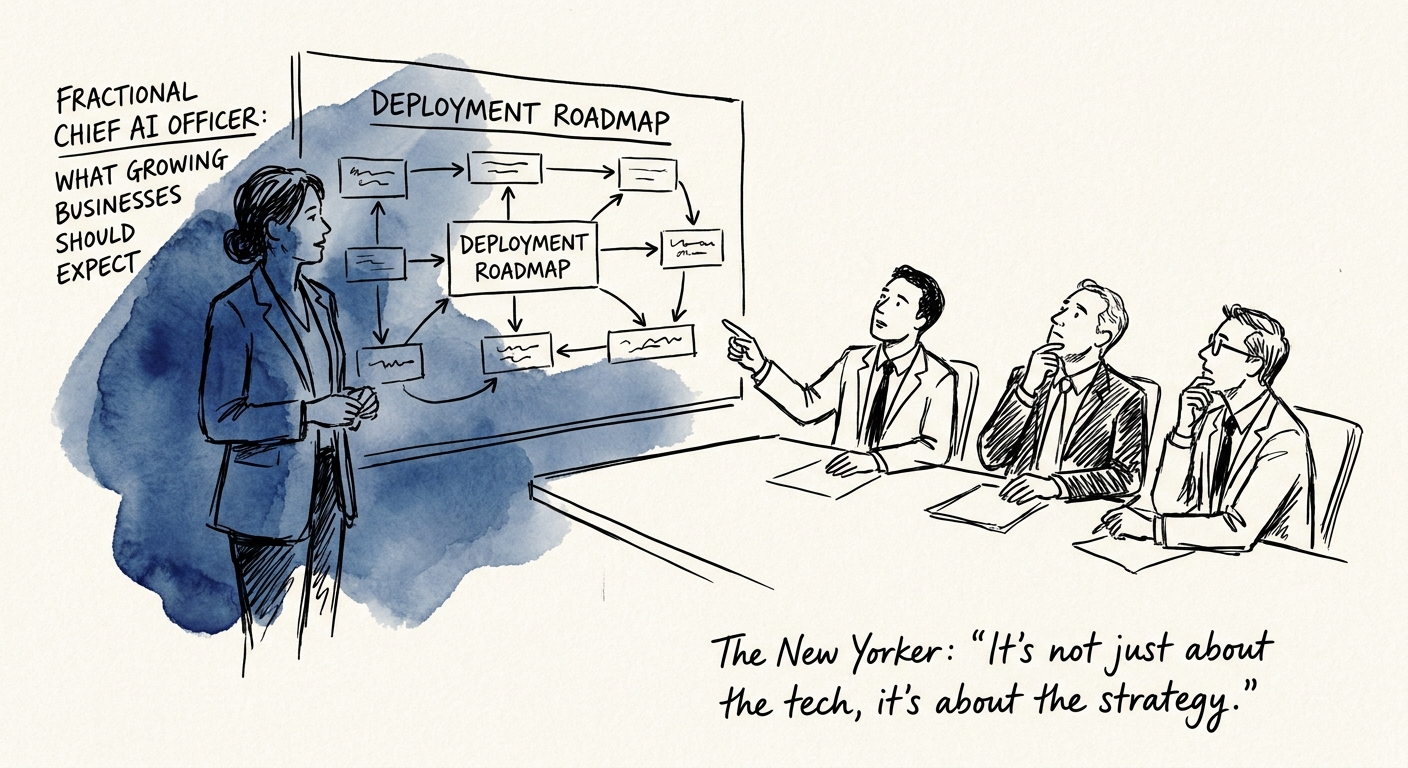
Five teams, four AI tools, zero owners
Picture a 120-person technology services firm. Delivery is piloting a coding assistant. Sales bought a meeting-summary tool on a corporate card. Support stood up a chatbot trained on last year's help docs. The CFO's analyst is pasting client financials into a public chat window to draft commentary faster. Four AI bets, four budgets, and not one person who can tell the board which data is leaving the building or what any of it has returned. That is the day a fractional Chief AI Officer earns their fee.
The pressure to "have an AI story" is real, and for tech-services firms it is sharper than most. Your clients are asking whether their delivery is touched by AI, your competitors are putting it in proposals, and your own engineers will adopt tools with or without permission. PwC's Annual Global CEO Survey shows leaders expecting AI to reshape how they create value; McKinsey's State of AI shows adoption climbing far faster than governance. The gap between those two facts is exactly the mess on the corporate card.
A fractional AI leader is not there to build an empire before you have a single governed workflow in production. The job is narrower and more useful: take scattered, ungoverned activity and turn it into an accountable, ranked roadmap that your own teams can execute.
When the fractional model fits, and when it is a trap
The fractional model works when you need pattern recognition and guardrails faster than you need a department. For a services firm, the early wins are unglamorous on purpose: rationalize the four overlapping tools down to two, write a one-page rule for what client data can and cannot touch a model, set who signs off on a new vendor, and pick the single workflow worth implementing first. Notice what is not on that list — a chief of staff, a center of excellence, or a 30-person backlog. Those come later, if ever.
The trap is hiring a full-time Chief AI Officer into a company that cannot yet absorb one. If your delivery process is undocumented, your data is scattered across client tenants, and your practice leads cannot agree on which use case matters, a permanent executive will spend year one negotiating politics instead of shipping. You will pay a senior salary to watch someone build slides. A fractional engagement builds the foundation first and tells you honestly whether the permanent seat is even warranted — and what you would actually hire them to run.
Critically, fractional does not mean the work leaves the building. Your delivery, engineering, finance, and client-success leads still own their workflows and their numbers. The fractional leader supplies the operating blueprint, the risk framework, and the discipline to say no. They do not become the person every AI question routes to forever; that dependency is the failure mode, not the goal.
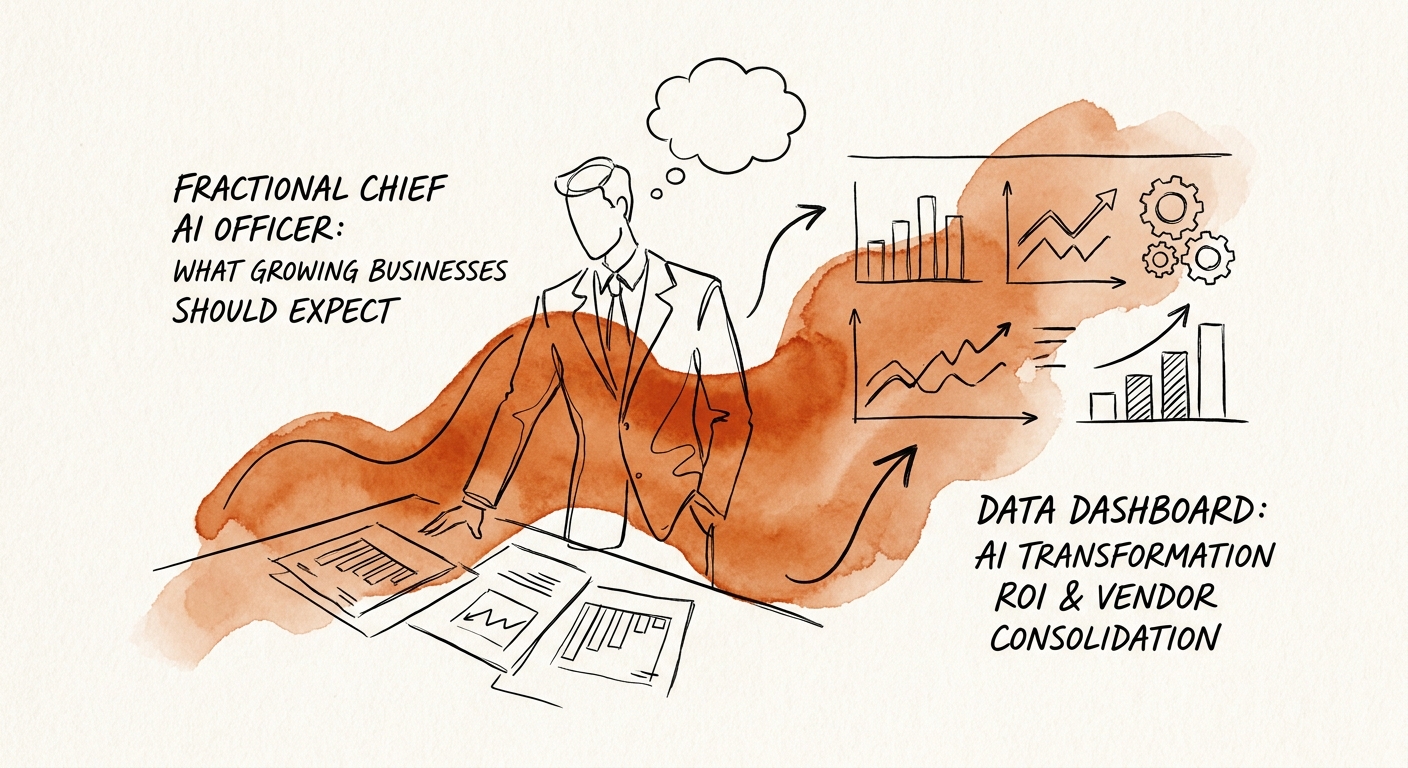
Days 30, 60, 90: what should actually exist
By day 30, you should have a current-state inventory you could hand to your board or a security-conscious client without flinching: every tool in use, who bought it, what data it touches, where client information may be exposed, and which "pilots" are quietly going nowhere. For a services firm that often surfaces an uncomfortable answer — the chatbot is wrong often enough to create client risk, or the analyst's shortcut is a confidentiality problem. Naming the projects that should stop is part of the deliverable, not a side note. If your inventory is still fuzzy, start with an AI readiness assessment before you add a single new tool.
By day 60, that inventory becomes a governed plan: named owners, the source systems each workflow may use, a review standard, security boundaries, milestones, and the value metric you will actually track — recovered delivery hours, faster proposal turnaround, lower support cost per ticket. Pick numbers you can defend to a client, not adjectives.
By day 90, one workflow should be in a controlled pilot or a production-readiness sprint — not in a deck. Operating proof beats transformation language every time. This Monday: open a shared doc, list every AI tool anyone in the company is paying for or using, and put a single name next to each. The blanks in that table are your real roadmap. If you are weighing this against a project-based engagement, read Fractional Chief AI Officer vs. AI Consultant; if the sequencing question is broader, the AI Transformation Blueprint maps the route from readiness to implementation.