
The practical answer
- Short answer
- HubSpot Elite partner exit guide for 2026. Discover why technical consultancies trade at 12x while marketing agencies stall at 4x. Benchmarks, valuation drivers, and due diligence prep.
- Best fit
- Industry: HubSpot Ecosystem. Function: M&A
- Operating path
- Exit Readiness → Operational Excellence → Transaction Advisory Services
- Key metric
- 4x-6x Typical EBITDA multiple for Generalist Marketing Agencies in 2026.
The Great Split: Agency vs. Consultancy Multiples
If you are a HubSpot Elite or Diamond partner in 2026, you are living in a tale of two markets. On one side, we have the traditional Inbound Marketing Agency. This firm sells retainers, chases creative awards, and scales linearly with headcount. Private Equity buyers view this model as a risk-heavy service business with low barriers to entry. In the current M&A climate, these firms are trading at 4x to 6x EBITDA.
On the other side is the Technical RevOps Consultancy. This firm leads with Operations Hub, handles complex CRM migrations from Salesforce, and builds custom integrations. They don't just write blog posts; they architect revenue engines. Because they own the infrastructure of the client's business rather than just the messaging, they command 10x to 14x EBITDA.
The mistake most Founders make is conflating tier status with enterprise value. Being an "Elite" partner is a vanity metric if your revenue mix is 80% content creation and 20% technical implementation. Smart buyers in 2026—specifically the PE firms rolling up the ecosystem—are scrutinizing your Revenue Mix. They want to see high-margin technical services and sticky managed services that resemble SaaS metrics, not ad-hoc creative work.
The "Partner Sourced" Trap
As of July 2025, HubSpot's requirement for Partner Sourced points has forced many agencies into a desperate sales cycle, discounting services just to hit tier thresholds. This erodes margins and attracts low-quality revenue. In due diligence, we strip out these "tier-chasing" deals. If your EBITDA margin is below 20% because you're over-servicing low-value clients to keep a badge on your website, you are actively destroying your exit value.
Being an 'Elite' partner is a vanity metric if your revenue mix is 80% content creation. Smart buyers want high-margin technical architecture, not low-barrier creative services.
Operational Rigor: Moving Beyond "Hero Mode"
For founders, the biggest barrier to a premium exit is the Founder Dependency trap. If you are the only one who can close the big deal or architect the complex migration, your business is unsellable. The 2026 market demands what we call "Smart Structures"—moving away from the bloated headcount models of the past.
Top-tier acquirers are looking for:
- Revenue Per Employee (RPE): targeted at $200k+. If you are sitting at $120k, you are overstaffed with low-leverage talent.
- usage and retention signals: This 2025 HubSpot metric is now a proxy for customer health in due diligence. A high UUS proves you aren't just selling licenses; you are driving adoption.
- Standardized Delivery: Documented SOPs for migrations, onboarding, and RevOps implementations. If your delivery relies on tribal knowledge, you will fail the Operational Due Diligence exam.
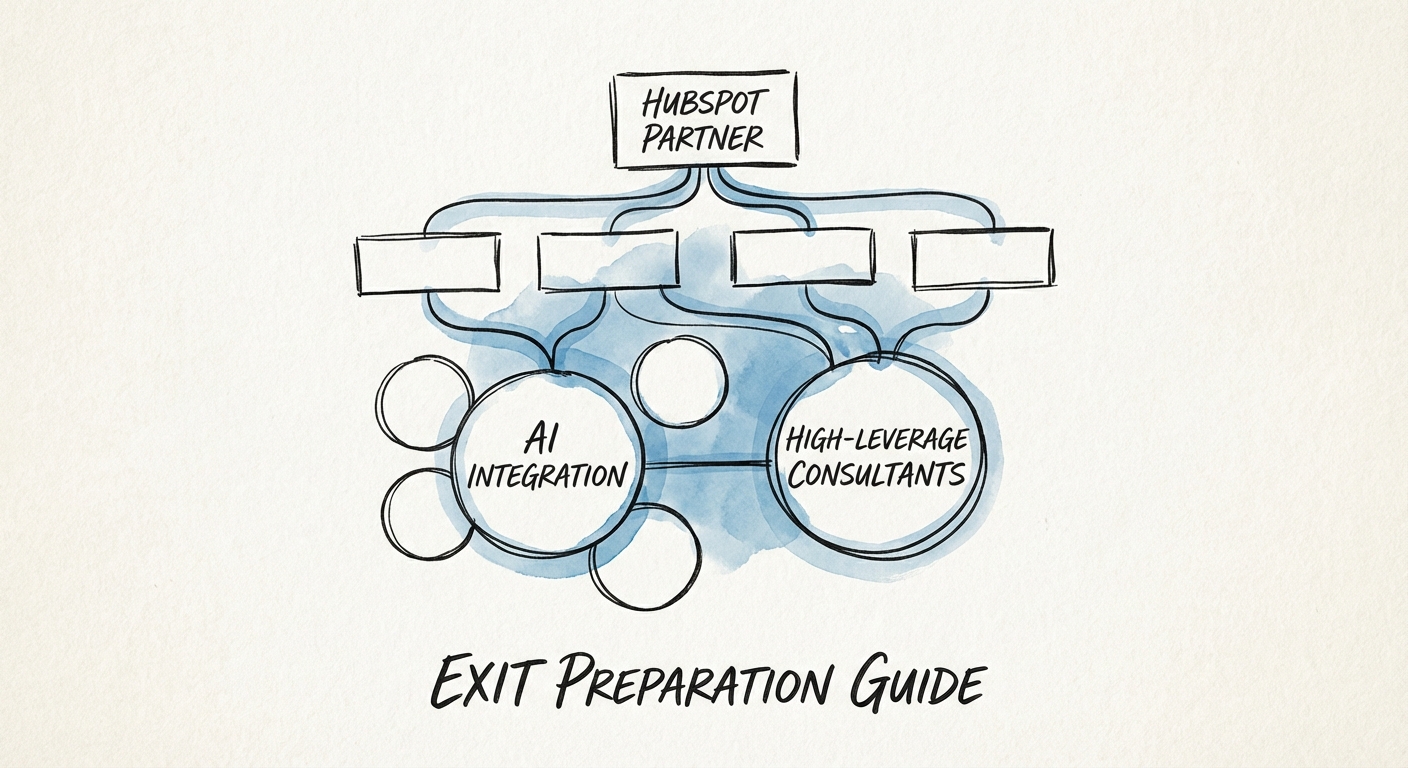
We are seeing a trend of "AI-Enhanced Buyouts" (AIBOs), where aggregators acquire agencies specifically to inject AI efficiencies. If you haven't already integrated AI into your delivery model to compress service hours, a buyer will simply pay you less and do it themselves post-close. You must demonstrate that your margins are sustainable through systems, not just sweating your staff.
The 18-Month Exit Roadmap
You cannot wake up one morning and decide to sell for 10x. It requires a deliberate restructuring of your P&L and operations. Here is the playbook for the next 6 quarters:
1. Purge the "Bad Revenue"
Stop chasing low-margin marketing retainers that churn every 9 months. Pivot hard into CRM Migrations, Data Hygiene, and RevOps. These projects have higher margins and create deeper stickiness. Fire clients that drag down your Revenue Quality.
2. Fix Your Financial Hygiene
Most partner agencies have messy books. You must separate Software Resale (Commissions) from Services Revenue. Buyers will discount your commissions revenue (often valuing it at 1x-2x) because it's at the mercy of HubSpot's program changes. Your Services EBITDA is what drives the multiple. Ensure you are recognizing revenue in accordance with ASC 606, especially on long-term implementation contracts.
3. Build Your "Second Layer"
Promote or hire a practice lead who can run delivery without you. This isn't just about work-life balance; it's about proving Transferability. If the business shrinks by 20% when you take a month off, you will be locked into a painful 3-year earnout. If the business grows without you, you get cash at close.