
The practical answer
- Short answer
- HubSpot Elite status doesn't guarantee a premium exit. Learn the 2026 valuation gap between marketing agencies (4x) and RevOps SIs (10x+).
- Best fit
- Industry: Professional Services. Function: M&A
- Operating path
- Exit Readiness → Operational Excellence → Transaction Advisory Services
- Key metric
- 12x Valuation multiple for HubSpot partners with 'Technical SI' revenue mix vs. 4x for 'Marketing Agency' mix.
The Tier Trap: Why 'Elite' Status is a Cost Center, Not a Valuation Driver
In 2026, the HubSpot badge on your website—Gold, Platinum, Diamond, or Elite—means significantly less to a private equity buyer than it does to your marketing team. For years, partners have sprinted on the utilization hamster wheel to hit the sold MRR (now "Sourced Points") targets required for the next tier, assuming valuation multiples climb the ladder with them. They don't.
The 2025 program changes, specifically the rebranding of Sold Points to "Sourced Points" and the 5% increase in Total Points thresholds, have exacerbated a dangerous dynamic: the Cost of Badge Maintenance. To maintain Elite status under the new deal-based tiering model, partners often inflate their CAC (Customer Acquisition Cost) to unsustainable levels, aggressively discounting services or staffing bloated sales teams to feed the point machine. I see "Elite" partners running at 10-12% EBITDA margins because they are structurally built to sell software licenses for HubSpot, not high-margin services for themselves.
Conversely, we see "Diamond" or even "Platinum" partners with deep vertical specialization (e.g., FinTech RevOps or Healthcare CRM compliance) running at 25%+ EBITDA. These firms trade at a premium because they have escaped the agency trap. They aren't reselling a tool; they are selling business transformation. PE buyers in 2026 are underwriting the stickiness of the service revenue, not the logo on the slide deck.
Elite status is often a 15% margin tax disguised as a partnership benefit. Smart acquirers buy the EBITDA and the technical moat, not the badge.
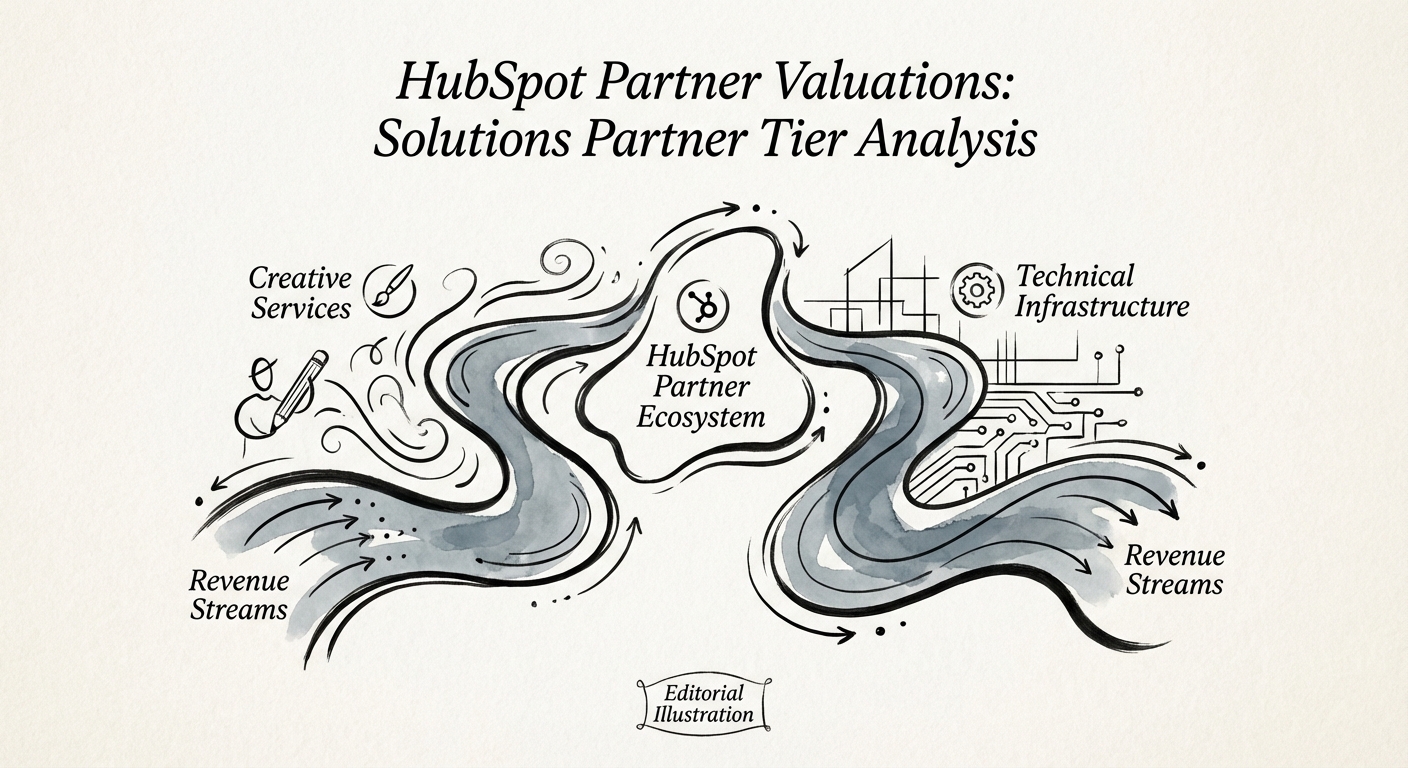
The Great Bifurcation: Marketing Agency (4x) vs. Technical SI (12x)
The most critical diagnostic for a HubSpot partner's valuation is not their tier, but their revenue mix. The ecosystem has bifurcated into two distinct asset classes, and the valuation delta is massive.
1. The "Inbound" Marketing Agency (4x - 6x EBITDA)
These firms look like traditional ad agencies. Their revenue is tied to creative retainers, content generation, and top-of-funnel lead flow. The risk profile is high: if the client cuts their marketing budget (the first thing to go in a downturn), the retainer vanishes. churn is often 20-30% annually. Buyers price these assets on adjusted EBITDA multiples of 4x to 6x, treating them as volatile service businesses with low barriers to entry.
2. The RevOps Systems Integrator (8x - 12x EBITDA)
These firms look like IT consultancies. They handle complex data migrations, custom API integrations, and "Oserver to HubSpot" enterprise shifts. Their revenue is tied to infrastructure. Once they build the RevOps backbone, ripping them out is nearly impossible without breaking the business. These firms command 8x to 12x multiples because they own the "System of Record" relationship. If you are a PE Operating Partners looking at a target, check the bench: do they have more copywriters (Agency) or Python/Node.js developers (SI)? That headcount ratio tells you the real multiple.
Escaping the "Generalist" Discount
If you currently own a HubSpot partner that looks like a marketing agency, you cannot simply "rebrand" to an SI. You must re-engineer the P&L. The 2025/2026 market punishes generalists who offer "full-service inbound" to everyone. It rewards specialists who offer "patient intake automation on HubSpot" or "SaaS subscription management via HubSpot Payments."
To pivot your valuation before an exit, you need to shift your metric focus from Managed MRR (a vanity metric controlled by HubSpot pricing) to Net Revenue Retention (NRR). Top-quartile SIs boast NRR of 110-120%, driven by expansion revenue from technical managed services—not just buying more seat licenses.
Stop chasing the "Elite" point threshold if it costs you 10 points of margin. Instead, invest that capital into technical accreditations (Data Migration, Custom Integration). A Platinum partner with the "Custom Integration Accreditation" and 25% margins is a far more attractive acquisition target than an Elite partner with 10% margins and a leaky bucket of marketing retainers.