
The practical answer
- Short answer
- Why 30% of deals stall at the Management Presentation stage. A diagnostic guide for founder-led tech companies to bridge the 'Conviction Gap' and secure premium PE exits.
- Best fit
- Industry: Private Equity / B2B Tech. Function: Executive Leadership
- Operating path
- Exit Readiness → Operational Excellence → Transaction Advisory Services
- Key metric
- 30% The 'Conviction Gap': The percentage of deals that stall post-MP due to lack of confidence in the management team's ability to execute.
The 'Product Demo' Trap: Why Founders Fail in the Boardroom
In the high-stakes theater of Private Equity dealmaking, the Management Presentation (MP) is the moment where the spreadsheet reality of the Quality of Earnings (QofE) meets the human reality of execution. Yet, in 2026, a startling trend has emerged: 30% of deals that pass the initial financial screen stall or suffer significant re-trades immediately following the Management Presentation.
The culprit is rarely the product. It is the "Conviction Gap."
For years, founders have been conditioned by the Venture Capital ecosystem to pitch vision, disruption, and product superiority. They spend 45 minutes of a 60-minute hour demoing features, explaining the architecture, and showcasing the roadmap. In a Series B pitch, this is expected. In a Private Equity Management Presentation, it is a fatal error.
PE sponsors are not buying code; they are buying predictable cash flow streams and operational leverage. When a founder spends 80% of the meeting on the product and only 20% on the Unit Economics, the Go-to-Market (GTM) efficiency, and the organizational structure, they signal a lack of "CEO maturity." They signal that they are still the "Chief Product Officer" of a company that has outgrown them.
The 2026 Shift: Operational Rigor Over Growth at All Costs
As noted in the Bain Global Private Equity Report, the 2026 deal environment has shifted decisively from "growth at any cost" to "operational value creation." Buyers are no longer paying for 30% growth if it comes with a 1.5x burn multiple. They are looking for the "platform potential"—the ability of the management team to integrate acquisitions, optimize pricing, and scale processes without breaking the business.
If your Management Presentation feels like a sales demo, you have already lost the room. The buyer isn't asking, "Does this software work?" (Their technical diligence team will tell them that). They are asking, "Can this team deploy $50M of my capital without setting it on fire?"
Private Equity buyers aren't looking for a perfect company; they're looking for a perfect understanding of the company's imperfections. The founder who tries to hide the flaws loses trust. The founder who explains the flaws with data gains a partner.
The 3 Pillars of a 'Premium' Management Presentation
To bridge the Conviction Gap, founder-led teams must fundamentally restructure their narrative. The goal is to demonstrate that the company is no longer dependent on "founder heroics" but is run by a scalable, data-driven executive team. This requires a shift from storytelling to evidence-based conviction.
1. The 'Capital Allocator' Mindset
The most effective CEOs in MP sessions speak the language of capital allocation. Instead of saying, "We need to hire more sales reps to grow," they say, "Our CAC payback period is 9 months with a 4:1 LTV/CAC ratio. We have a data-driven capacity model that indicates investing $2M in GTM headcount will yield $3.5M in ARR within 14 months, assuming a 5% degradation in efficiency."
This level of precision changes the dynamic. It turns the conversation from a "bet" into a "calculation." It shows you understand the M&A Product Roadmap not as a feature list, but as an investment thesis.
2. The 'Unit Cohesion' Test
PE firms are obsessed with "Key Person Risk." If the CEO answers every question—even the ones directed at the CFO or VP of Sales—it is a major red flag. It suggests that the team is weak or the founder is a micromanager. A coached management team plays "pass the ball."
- The Question: "Why did churn spike in Q3?"
- The Wrong Answer: The Founder jumps in with a story about a specific client.
- The Right Answer: The Founder looks to the Head of Customer Success, who answers with data: "We had a cohort of legacy customers on 2022 pricing plans renew. We consciously accepted 2% churn to push a 15% price uplift, resulting in net positive retention."
This demonstrates management team quality and proves that the business can scale beyond the founder.
3. The 'Bad News' Pivot
Every company has warts—a missed quarter, a failed product launch, a lawsuit. The worst thing a founder can do is hide them or get defensive. The "Trust Dividend" is earned when a management team proactively addresses issues before the buyer finds them. "Here is where we failed in 2024, here is the root cause analysis, and here is the process change we implemented to ensure it never happens again." This converts a liability into an asset: resilience.
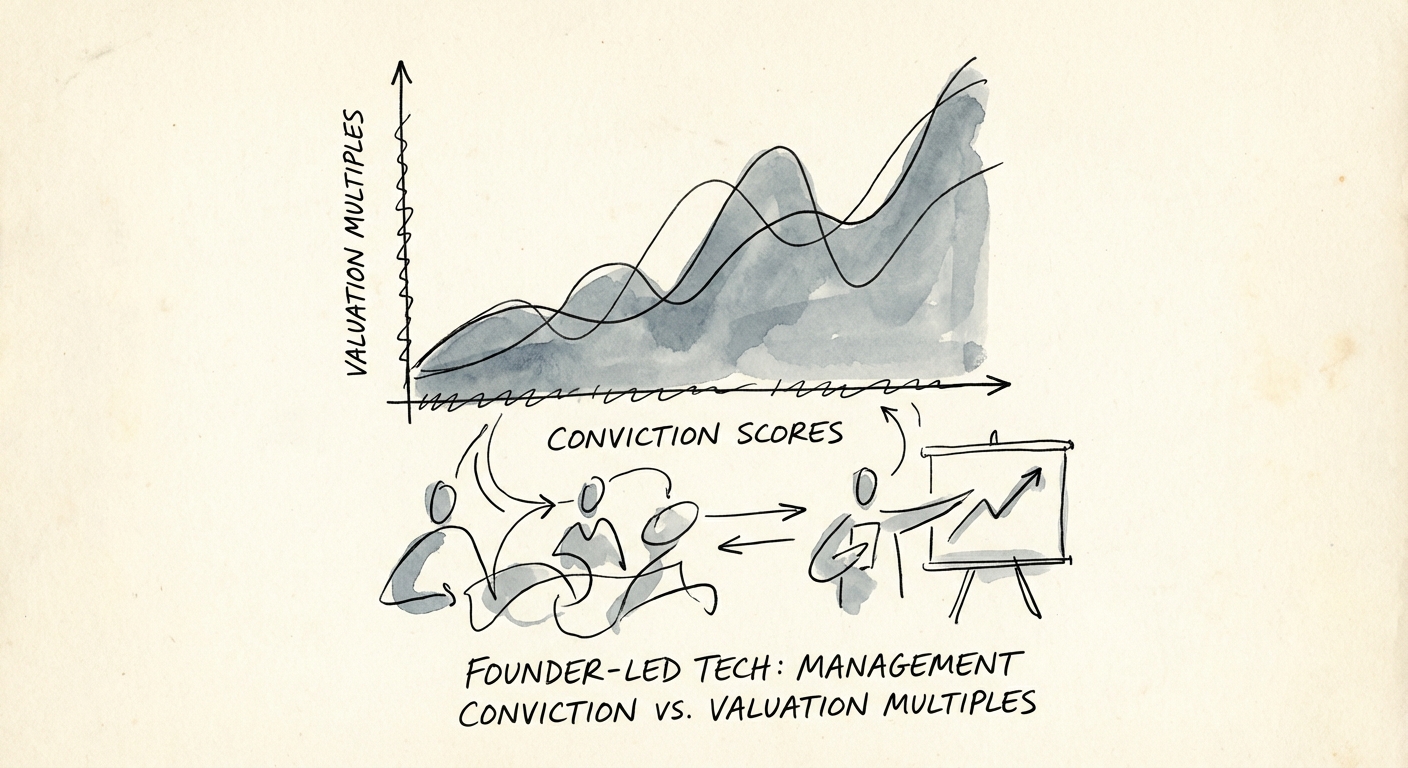
Benchmarking Your Presentation Readiness
How do you know if you are ready? We evaluate Management Presentations against a Conviction Scorecard. Top-quartile presentations share these characteristics:
- Ratio of Business to Product: 70% Business / 30% Product.
- Data Density: Every claim is backed by a specific metric (e.g., "High retention" becomes "112% NRR across our Enterprise cohort").
- Q&A Velocity: Answers are concise (under 90 seconds) and directly address the question without "word salad."
The 'Founder-to-CEO' Transition
The Management Presentation is often the final exam of the Founder-to-CEO transition. It is the moment you stop selling a dream and start selling a business. For a founder who has successfully grown to $20M ARR, the challenge is letting go of the "builder" identity to embrace the "operator" role.
Successful coaching isn't about scripting lines; it's about rewiring reflexes. It's about training the team to see the business through the lens of an investor—scrutinizing risks, validating assumptions, and relentlessly focusing on EBITDA expansion. When you do this, you don't just get a deal; you command a Conviction Premium—often worth turns on the multiple.