AI Consultant vs. Automation Agency: Decision Guide
A decision guide for choosing an AI consultant, automation agency, or implementation partner when a growing business needs practical AI workflow improvement.
Owners, CEOs, COOs, IT leaders, and functional leaders deciding who should help with AI workflow transformation.
Use this when the business is comparing strategic AI consulting, low-code automation vendors, and implementation partners.
AI consultant
The business needs use-case prioritization, workflow redesign, governance, vendor selection, adoption planning, and measurable operating outcomes.
Strategy work that never reaches workflow implementation or pricing that assumes enterprise-scale discovery.
AI audit, transformation blueprint, prioritized backlog, governance plan, value model, and implementation path.
Automation agency
The workflow is narrow, low-risk, already understood, and mostly needs tool configuration or low-code integration.
Tool-first builds, weak data handling, missing human review, and automations that break when the process changes.
Configured automation, integration, basic documentation, and handoff.
Implementation partner
The business has already selected the tool and needs integration, training, rollout, and support.
Platform bias, scope creep, and implementation teams that do not challenge whether the workflow should be redesigned first.
Implementation plan, integration, rollout support, training, and post-launch fixes.
How to make the call
- Step 1
Name the workflow maturity
If the workflow is unclear, start with consulting. If it is already clear and low-risk, automation may fit.
- Step 2
Inspect data and review risk
Sensitive data, customer-facing output, or high-impact decisions require stronger governance and review.
- Step 3
Compare total cost
Include discovery, implementation, tools, training, monitoring, and internal owner time.
- Step 4
Ask for the adoption plan
The right partner should explain who uses the workflow, how they are trained, and how quality is reviewed.
- Step 5
Set the first review date
No vendor choice is complete until the business knows when it will measure value, quality, and usage.
The difference is not vocabulary. It is where the work starts.
Automation agencies usually start with a tool and a build request. AI consulting should start with the workflow, the owner, the data, the review point, and the metric. Growing businesses need both at different moments, but the order matters.
Where the decision turns into work
Performance Improvement
Revenue, margin, delivery, technical debt, and operating-system improvement for technology firms with stalled growth or compressed EBITDA.
Interim Management
Operator-led interim management for technology companies in transition, crisis, integration, or founder extraction.
Frequently asked
- When is an automation agency enough?
- An automation agency may fit when the workflow is narrow, low-risk, documented, and mostly needs configuration.
- When should a business hire an AI consultant?
- Hire an AI consultant when the business needs workflow selection, operating redesign, governance, adoption planning, or vendor-neutral guidance.
- What is the safest first question to ask vendors?
- Ask which workflow they would not automate yet and why. The answer reveals whether they understand risk and operating fit.
Articles that support the decision
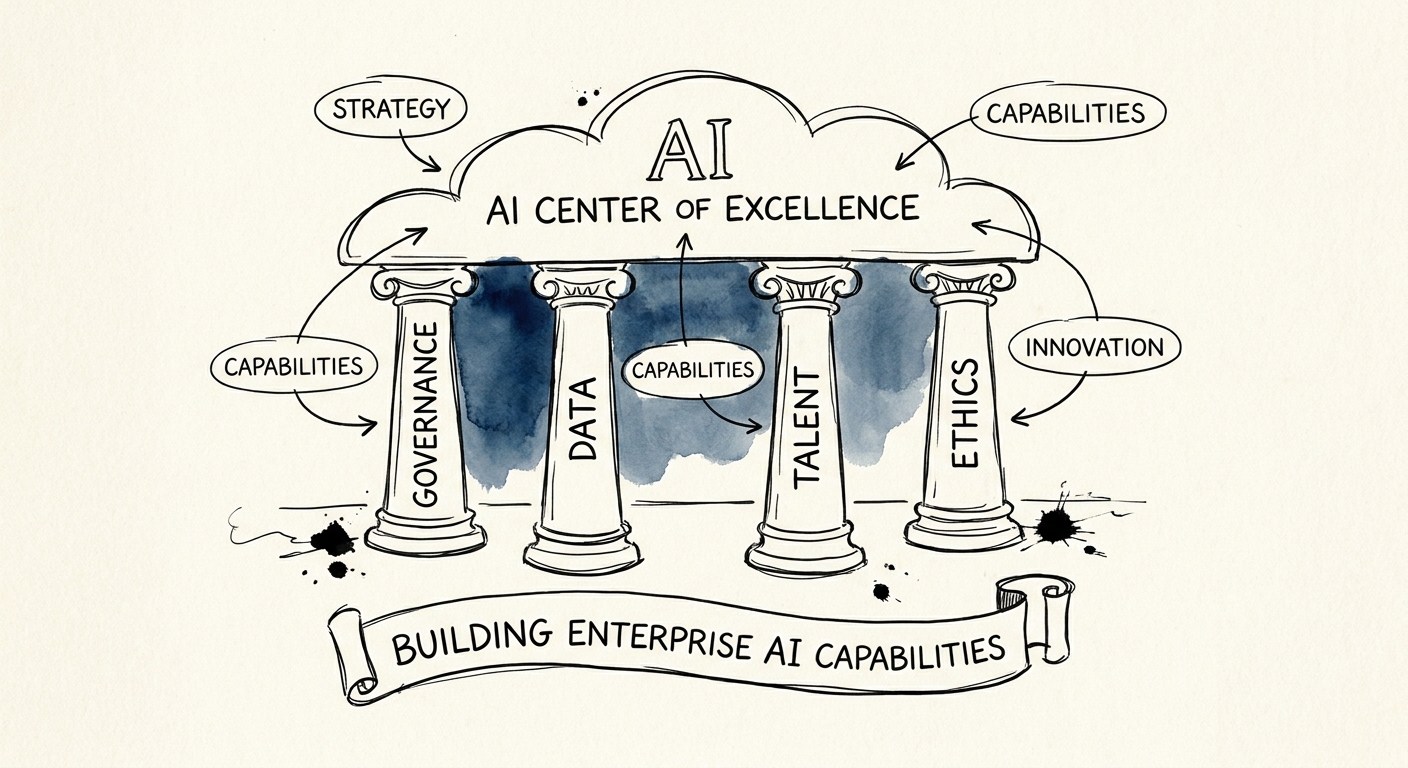
BRIEF · PROCESS DOCUMENTATION
Your AI Center of Excellence Is a Filing Cabinet, Not an Org Chart
Most AI Centers of Excellence are an org chart with no paperwork behind it. Here are the four documents that decide whether your models survive M&A diligence.
70% Budget burned in pilot phase without a CoE
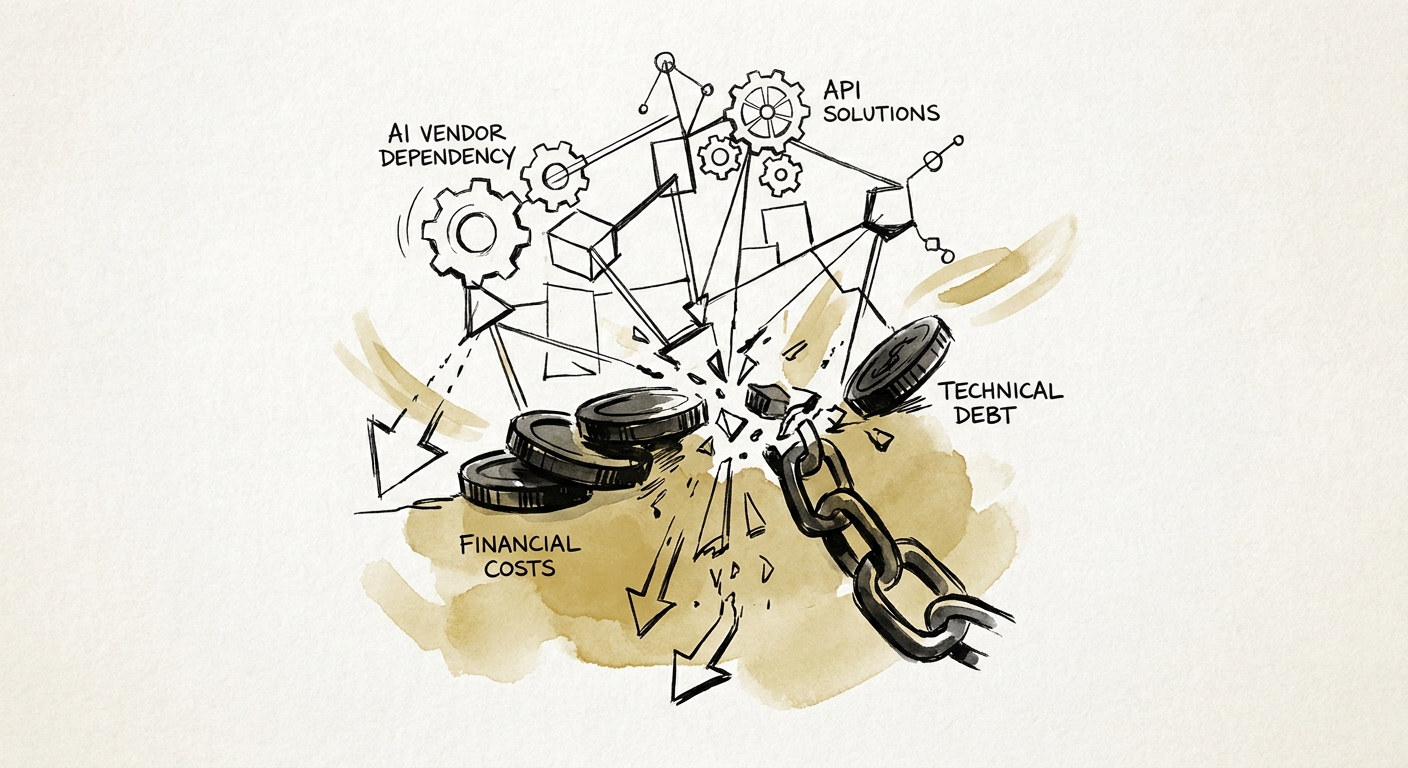
BRIEF · TECHNICAL DEBT
The Margin That Wasn't There: Auditing AI Vendor Dependency Before You Sign
A SaaS target's 82% gross margin can hide a single-vendor API bill that quietly halves it. How to diligence AI dependency, model drift, and COGS before LOI.
349% Increase in AI Infrastructure COGS
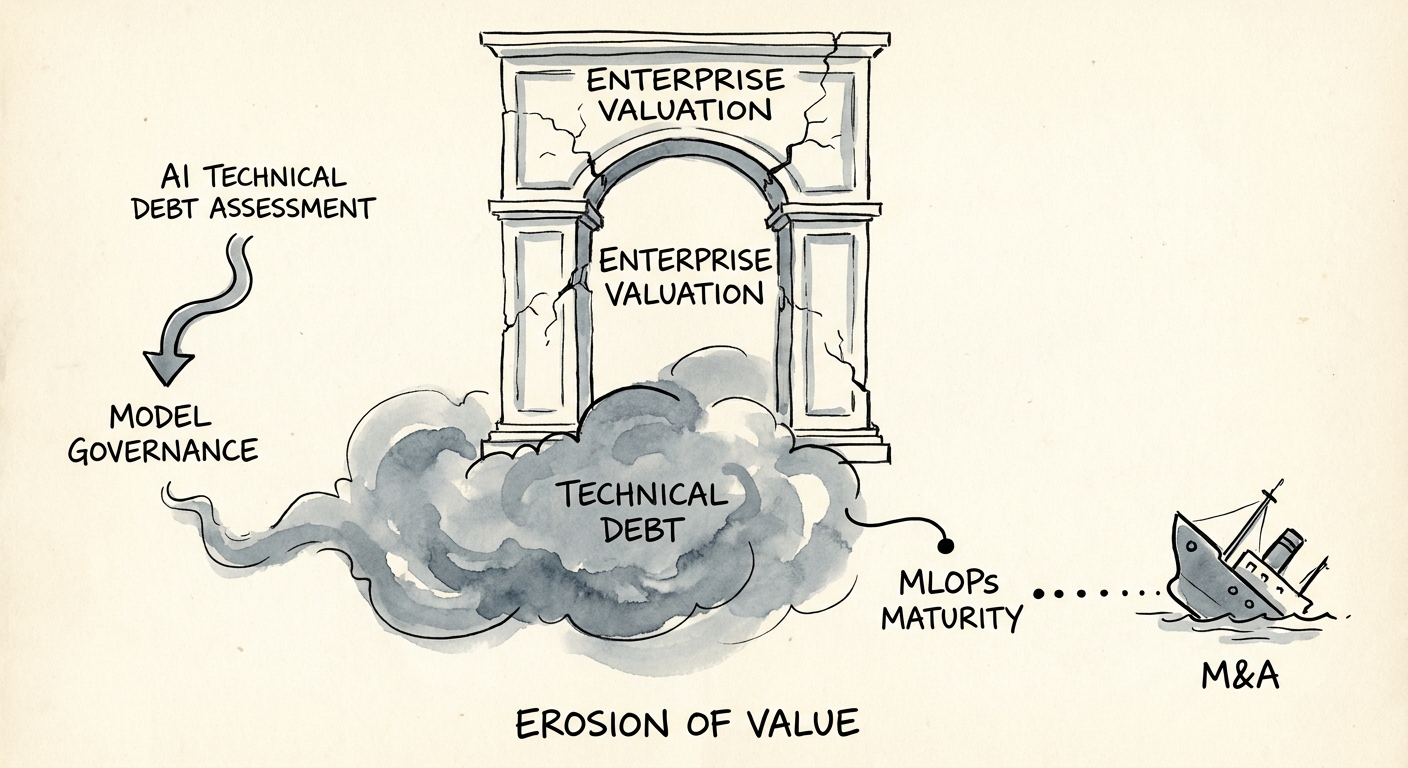
BRIEF · TECHNICAL DEBT
The MLOps Audit: How to Price an AI Target Before the Models Quietly Rot
AI targets don't fail in the codebase—they fail in the retraining pipeline. A buyer's field guide to auditing MLOps maturity, model drift, and registry gaps.
400% Maintenance vs. Development Cost Ratio for Ungoverned AI
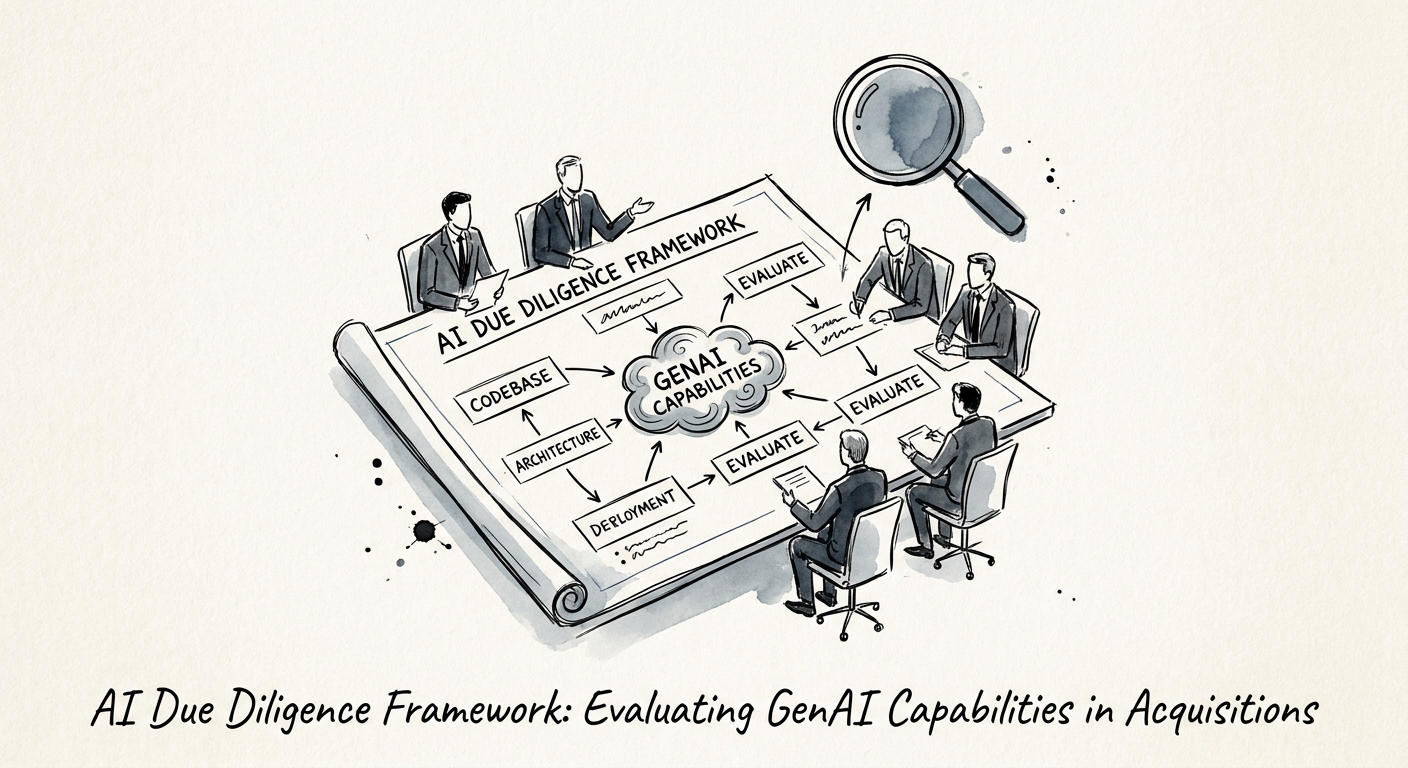
BRIEF · TECHNICAL DEBT
How to Diligence a GenAI Acquisition: Reading the CIM Against the Inference Bill
A PE diligence playbook for tech M&A: separate a real GenAI moat from a $25/month API wrapper, audit the IP chain, and price inference cost before you sign.
95% GenAI Pilot Failure Rate
BRIEF · TECHNICAL DEBT
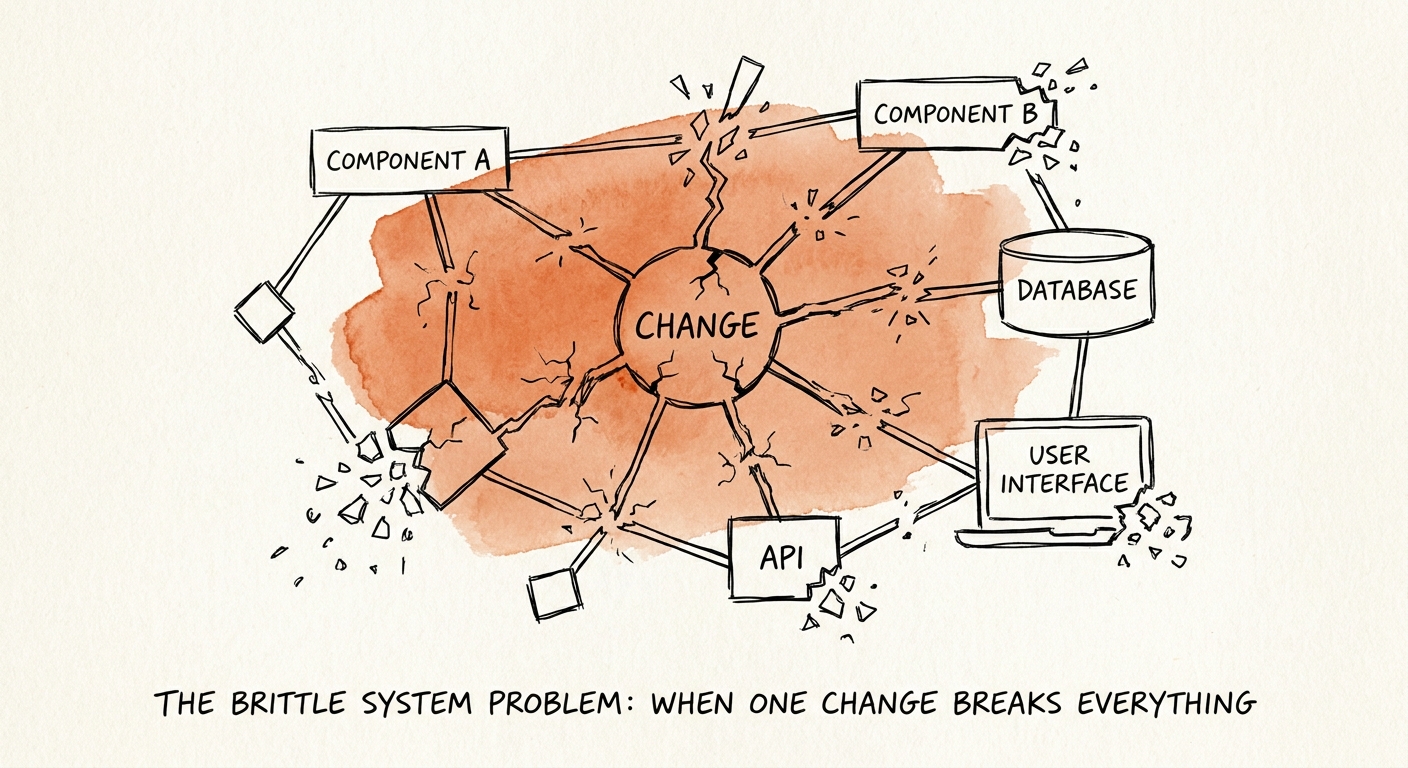
The Brittle System Problem: When a Dashboard Tweak Takes Down Billing
A two-line change to a reporting page shouldn't crash your payment gateway. When it can, buyers cut the price. Here's how brittleness becomes a 22% discount.
22% M&A Valuation Discount Applied to Brittle Architectures
BRIEF · TECHNICAL DEBT
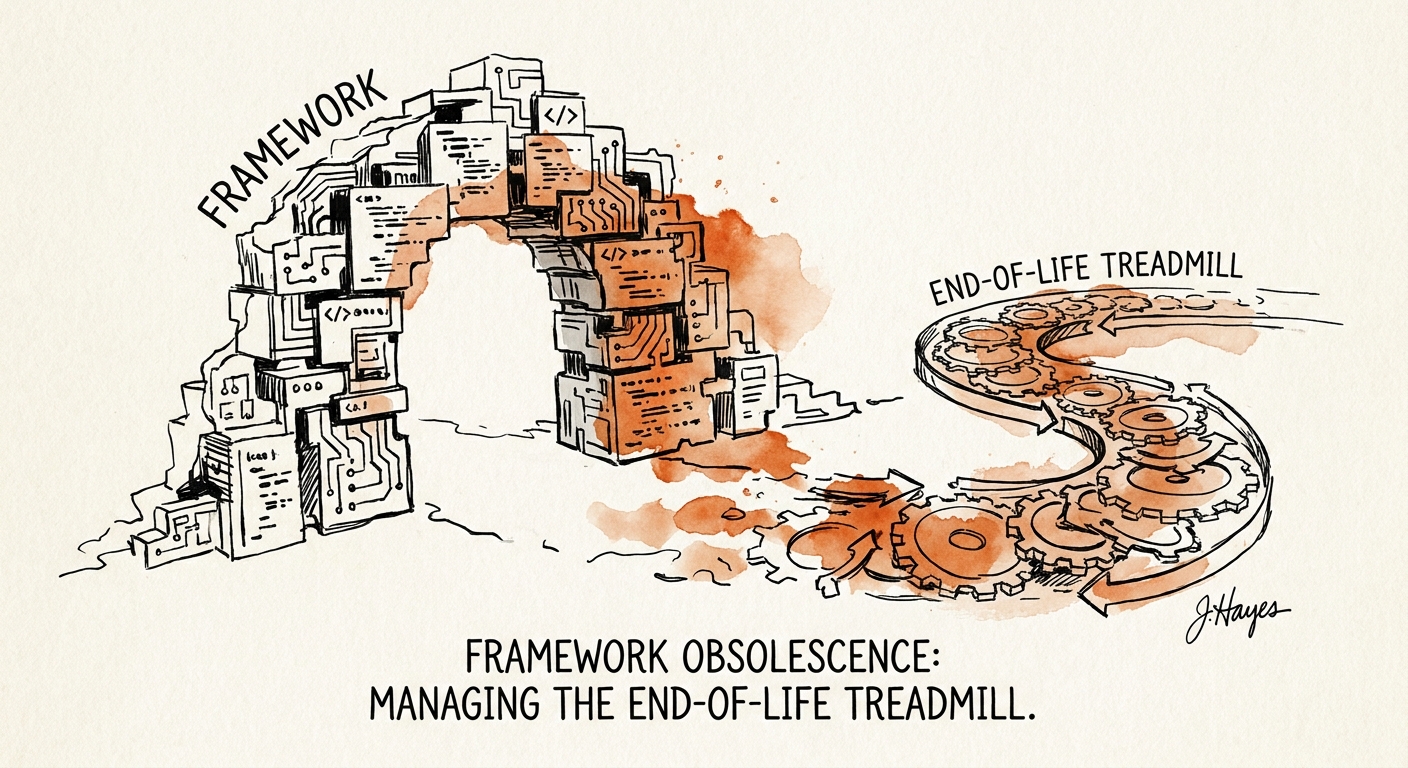
The End-of-Life Treadmill: How Dead Frameworks Sink SaaS Valuations
A frozen framework version is a diligence landmine. How SaaS leaders inventory end-of-life dependencies and run AI-assisted migration without freezing the roadmap.
EOL register first control for framework obsolescence