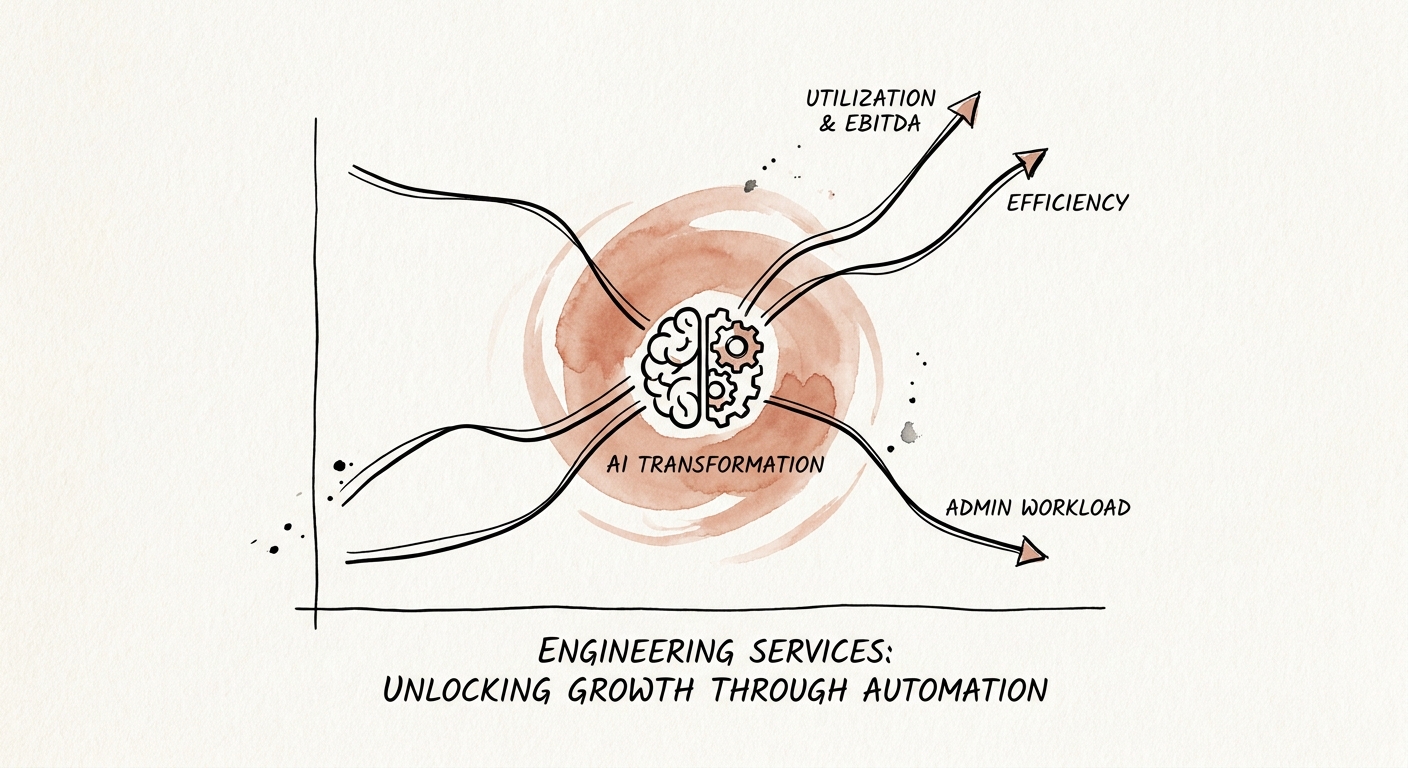
The 40-RFI backlog is the tell
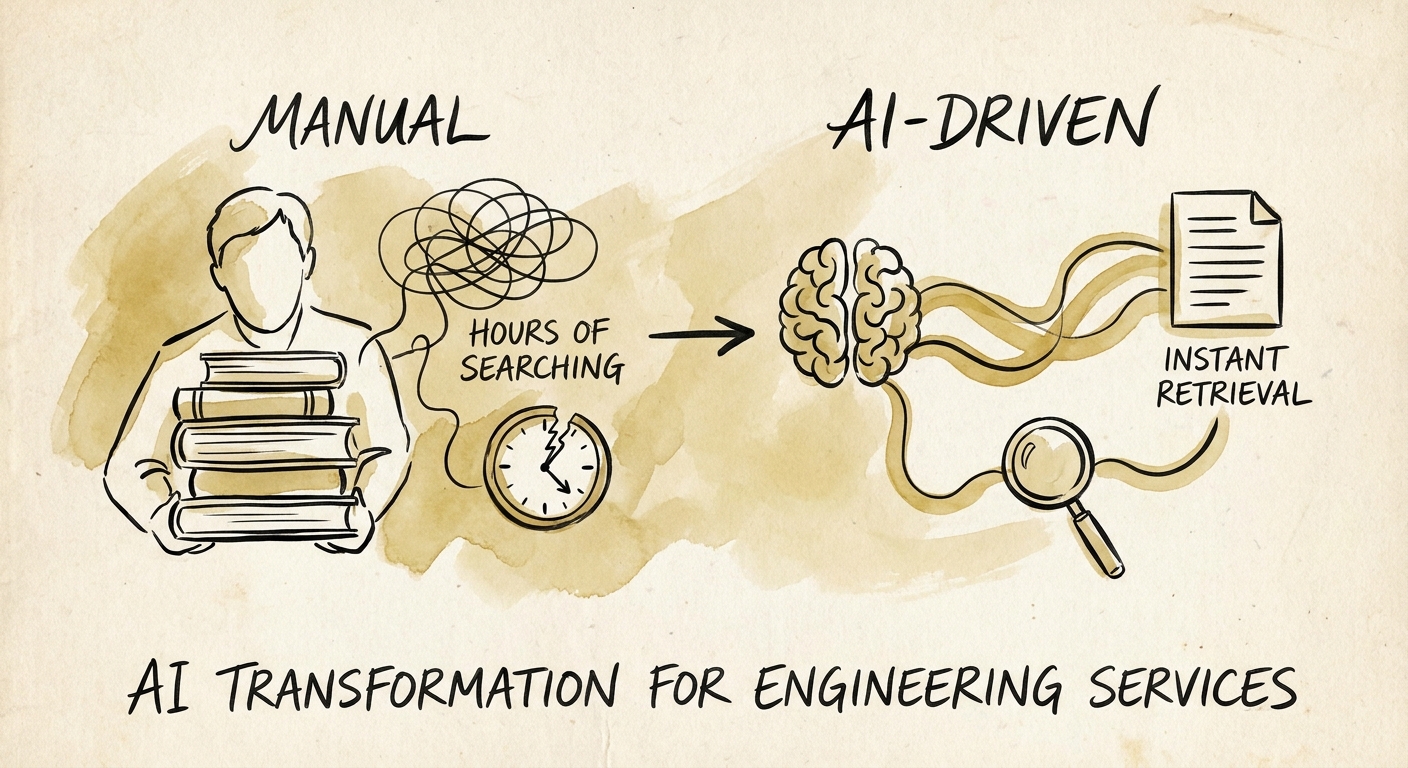
Walk into a mid-sized engineering services firm — say a 60-person civil and structural shop running a dozen active projects — and ask the project engineers what eats their week. It is rarely the analysis they trained for. It is the RFI sitting in the inbox that needs three old emails, a spec section, and last month's submittal log assembled before anyone can answer it. It is the change-order packet that has to reconcile the contractor's number against the original scope. It is the Friday status report that nobody wants to write.
That is exactly where AI earns its keep first, and exactly where most firms point it last. McKinsey's State of AI research and the IBM Institute for Business Value AI capabilities research both land on the same uncomfortable point: value comes from redesigning the work and getting people to actually use the result, not from buying everyone a license and hoping. For an engineering firm, redesigning the work means the document-assembly grind around professional judgment — not the judgment.
Draw the line at the stamp
Here is the distinction that keeps an engineering firm out of trouble: there is work that supports a decision, and there is the decision itself. AI belongs squarely in the first column. Have it pull the relevant spec sections for an incoming RFI, draft a response for the engineer to red-line, route a submittal to the right reviewer with a checklist, or reconcile a change request against the contract baseline and flag the deltas. What it must never do is generate something that flows to a client over a P.E. stamp without a human owning it line by line.
The PwC Responsible AI survey and the NIST AI Risk Management Framework describe the governance pattern in plain terms: name the use, name who's affected, measure quality, and keep accountability attached to a named role. In an engineering practice that maps cleanly to the engineer of record. So make every AI output carry four things on its face — the source documents it leaned on, the assumptions it made, the open questions it could not resolve, and the reviewer whose name goes on the signoff. The day a workflow touches a stamped drawing, a safety calculation, a sealed deliverable, or a contractual commitment, that path gets stricter, not looser. Start internal — intake summaries, RFI prep, status reporting — and earn your way toward anything client-facing.
Measure it like a delivery problem, because it is one
Once AI starts taking actions on its own — routing, drafting, flagging — permissions and monitoring stop being optional, a point the Bain agentic AI transformation research hammers. But the scorecard for an engineering firm shouldn't be "AI metrics." It should be the delivery metrics your PMs already argue about: RFI turnaround time, change-order aging, rework hours traced to missing context, submittal cycle time, and how often a status report goes out complete and on time. If AI doesn't move those, it's a toy.
So pick one workflow this week. Most firms should start with the RFI queue — it's high-volume, document-heavy, and visibly painful — then add submittal review once the first one proves out. Map it, instrument the before-state, and ship a narrow version with a named reviewer on every output. To scope the candidates, run the AI Opportunity Score, and see how this plays across adjacent work in AI for professional services and AI workflow automation before you commit to anything firm-wide.