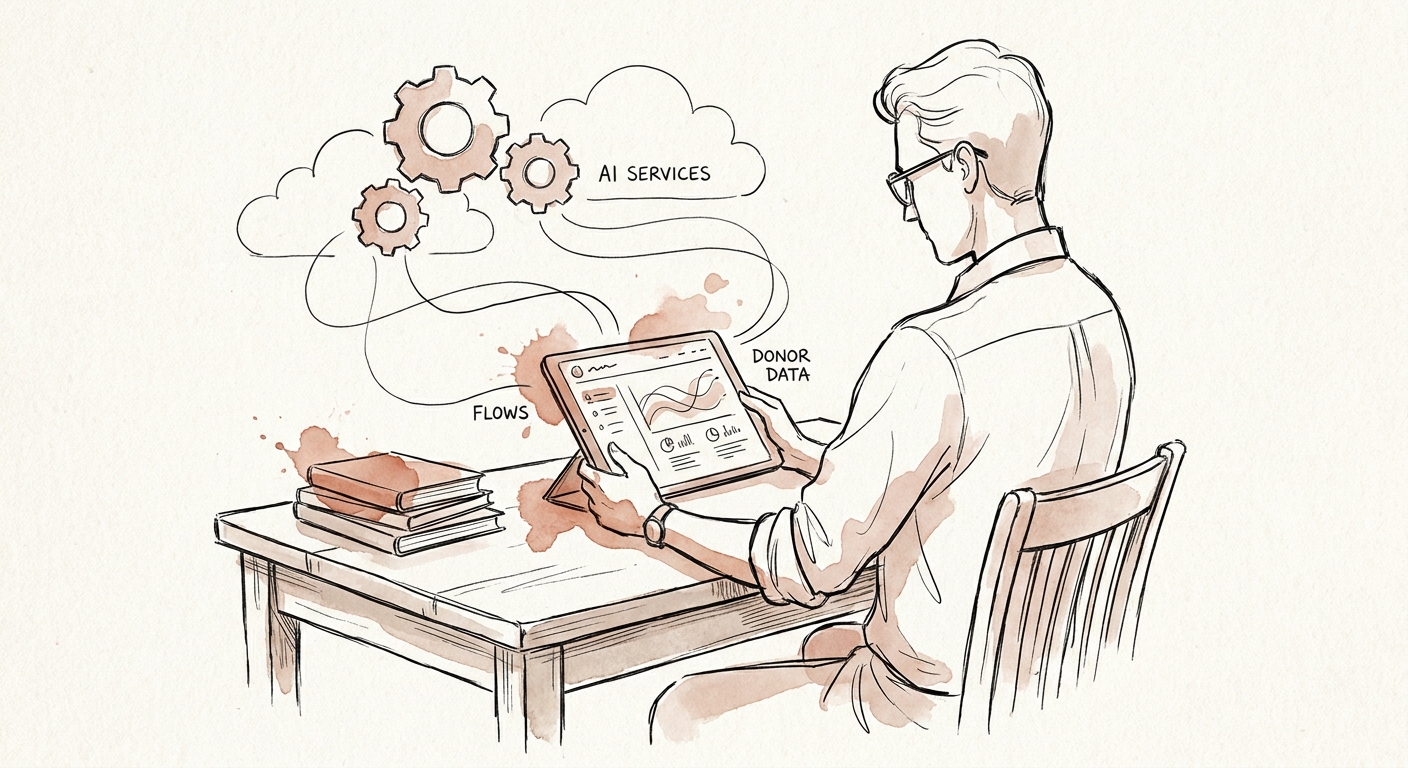
The grant report is where the hours go to die
Picture a program director at a 30-person nonprofit on the last Thursday before a funder deadline. She is toggling between a case-management system, three spreadsheets, an old narrative report she is "lightly updating," and an email thread where a colleague mentioned the actual Q2 enrollment number. The report is due Friday. The story it tells is true, but pulling it together costs her a full day she would rather spend with program staff. Multiply that by every restricted grant on the books and you have found where a nonprofit's scarce hours actually go.
This is the right place to start with AI, and it is the opposite of where most pitches point. You are not automating the mission or letting a model decide who qualifies for services. You are compressing the assembly work that sits between your data and a human who has to certify it: pulling the enrollment count, formatting it to the funder's template, surfacing last quarter's narrative so it can be updated rather than rewritten, and flagging the three fields nobody has filled in yet.
The research backs the framing. McKinsey's 2025 State of AI, the IBM Institute for Business Value, and PwC's 2025 Responsible AI survey all converge on the same point: value comes from governing a workflow and getting people to adopt it, not from dropping a clever tool onto a chaotic process. For a nonprofit, "the process" is usually reporting and stewardship, and it is usually a mess of scattered records.
What an honest first build looks like, and the line it must not cross
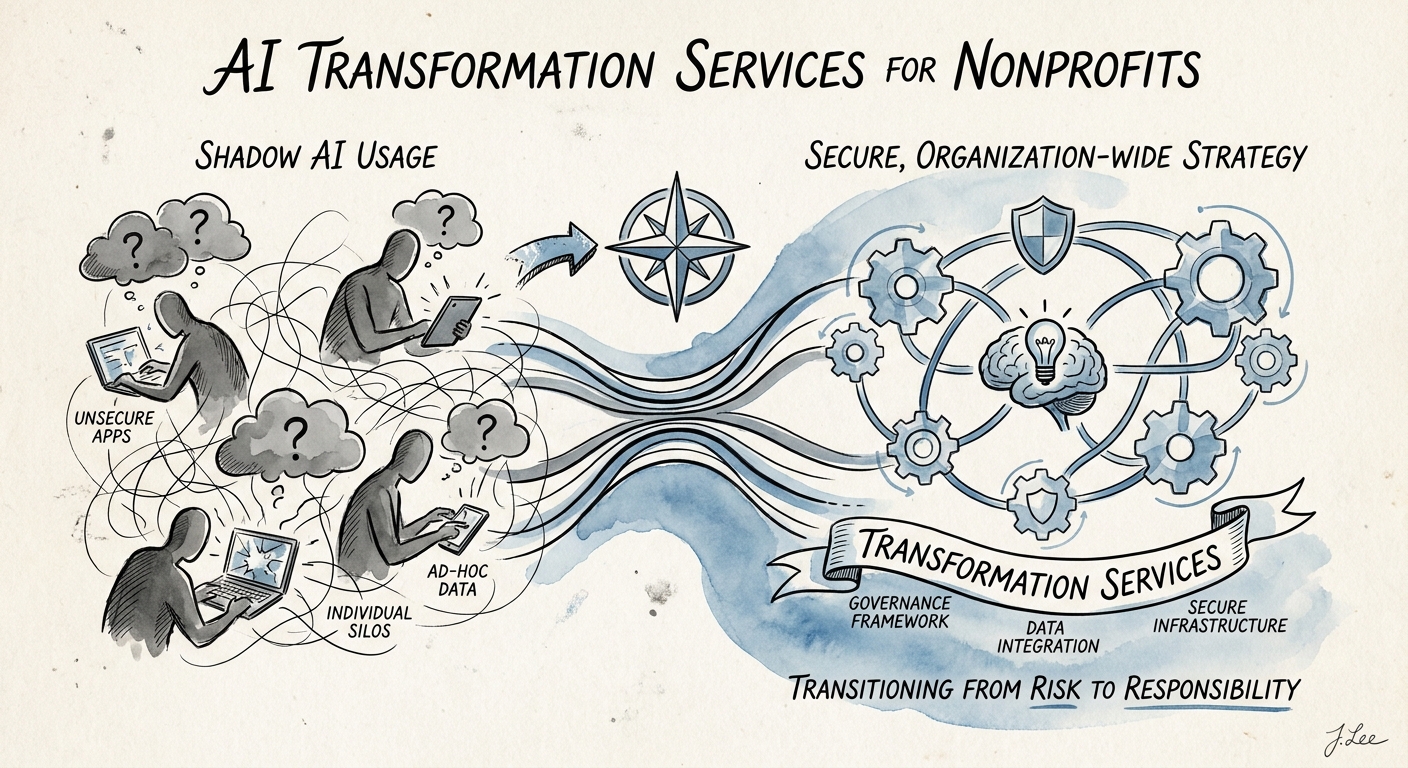
Before any automation, answer one question: which record is the truth? Nonprofit context lives in a donor CRM, a grants portal, program spreadsheets, board minutes, and a decade of email. AI that reads "everything" will confidently blend a pledged gift with a received one, or a projected outcome with a measured one. So you name the authoritative source for each field, name who can approve a change to it, and name which outputs are allowed to leave the building. NTEN's nonprofit AI guidance is a strong companion for these readiness questions, and it speaks the sector's language about privacy and donor consent.
Say a 40-person human-services org starts with grant reporting. The build should: draft the narrative section from approved program data, reconcile the served-client count against the case system, pre-fill the funder template, and produce a list of "needs human input" gaps. The hard boundary, the same one NIST's AI Risk Management Framework is built to enforce, is this: it never invents an outcome, never asserts a restricted fund was spent on-purpose, never decides eligibility, and never states a compliance fact. Those are certifications a person signs. The AI's job ends at "here is the assembled evidence, here is what's missing, your move."
That distinction is what protects the asset a nonprofit cannot afford to spend: trust. A funder who catches one fabricated number in a report does not file a complaint, they stop funding. When the work needs a governed path that respects mission, donor privacy, and the human signature at the end, route it through AI for Nonprofits.
Measure capacity returned, then expand to the next deadline
Hours saved are a vanity number unless you know where they went. The scorecard a nonprofit should actually track: how long a grant report takes from data to draft, how many revision cycles it survives, how often a field comes back wrong, and, the one that matters most, where the reclaimed hours land. If reporting drops from a day to two hours but the program director just absorbs more grants, you have improved throughput, not capacity. If those hours show up as more time with clients or a development officer making more donor calls, you have moved the mission.
Bain's 2025 research on agentic AI transformation makes the case for sequencing: prove one bounded workflow with one accountable reviewer before you widen the scope. So pick a single recurring deadline, grant reporting or a board packet, give it one owner who signs off on every output, and run it for two cycles. If the records come back cleaner and the handoffs stop slipping, the next moves are obvious: donor acknowledgment drafts, board update prep, volunteer scheduling.
To decide which deadline to attack first, run your candidate workflows through the AI Opportunity Score, then design the approval path and controls with AI Workflow Automation. Start with the report that eats the most hours and tolerates the least error. That is almost always where AI earns its place in a mission-driven org.
