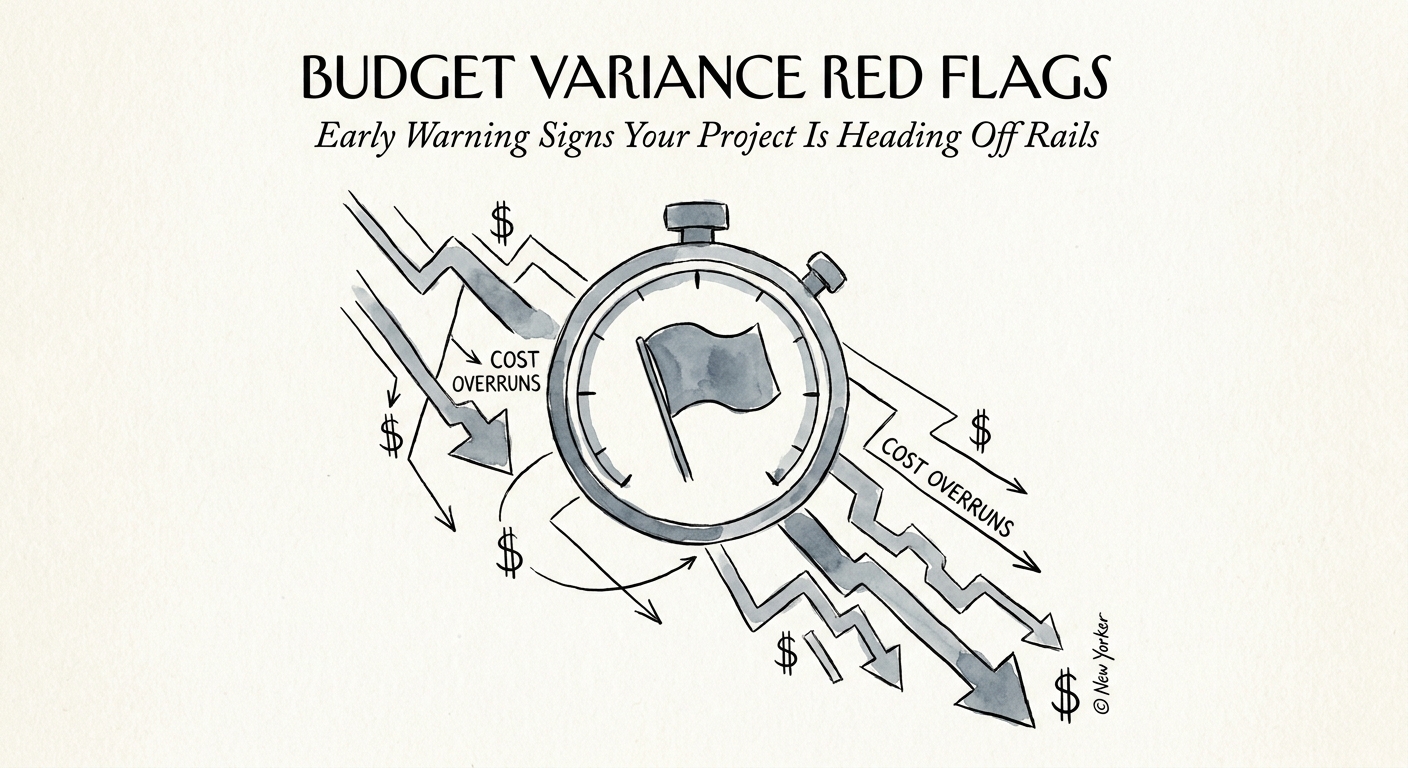
A $50,000 variance, dismissed, that ate $1.2 million
The status deck said green. The sponsor said the $50,000 overrun in discovery was "expected friction on a complex build." Six months later the same program was running a $1.2 million burn deficit, and the root cause had never moved an inch: the team never locked the data migration scope, so every sprint quietly re-priced itself. We halted the program, replaced the primary systems integrator, and rebuilt the governance model from zero. The variance was screaming in month one. Nobody was reading it as a signal.
That is the trap. A 5% variance in month one of a multi-quarter technology initiative is not an administrative blip you absorb — it is the earliest honest reading you will get of how the rest of the project behaves. McKinsey's research on large-scale IT projects found these initiatives run 45% over budget on average while delivering 56% less value than the investment thesis promised. Those are not freak outcomes. They are the median, and the median project hit 5% drift early and called it noise.
The reason the drift goes unread is structural latency in how most companies track money against work. Analysis on budget variance and financial health shows 81% of organizations remediate performance issues too slowly to change their actual financial trajectory, and only 13% catch them before the P&L is already damaged. When you manage a fast-moving build off a backward-looking monthly close, you are steering a race car by the rearview mirror. The crash is not a surprise; it is a scheduling matter.
The watermelon: green on the dashboard, dark red inside
The most expensive projects I get called into are not the ones flashing red. They are the watermelons — green on every executive dashboard, bleeding underneath. The mechanism is almost always the same: a project manager shifts unbilled hours into the next sprint, or re-estimates remaining work downward, so this month's variance looks clean while the cost-to-complete keeps climbing in the dark. Dress that pattern up across hundreds of programs and you get the number behind The Standish Group's CHAOS Report: 66% of technology initiatives either fail outright or land severely challenged on scope, time, or cost.
Before I can fix a variance I have to know which kind it is. Structural variance means the business case was wrong from the start — the technical complexity was underestimated and no amount of discipline closes the gap. Behavioral variance means scope creep and zero change-order discipline — fixable, but only if someone enforces the friction. Acquirers know both exist, which is exactly why they discount in-flight IT projects hard during diligence: they assume the seller's management is hiding the true cost to complete. The tell I trust most is granular. When a developer reports a module "90% done" three weeks running, I do not log a schedule slip — I log a budget variance wearing a costume, because the last 10% of code routinely burns half the remaining capital when oversight is thin.
Here is the math that makes it concrete. PMI's 2025 Pulse of the Profession reports organizations waste 11.4 cents of every dollar spent on projects to poor performance — over $1.1 million on a $10 million integration, gone straight out of EBITDA. So I make clients retire "budget spent" as a status metric and demand earned value instead. Burned 30% of the capital but only landed 15% of the critical-path deliverables? You are not "on track" just because you have not hit the funding ceiling — your cost-to-complete just doubled and the report didn't say so. A weekly flash report that forces project leads to defend the gap between burn and shipped output is what cuts the watermelon open before it bursts.
Tripwires, and the discipline to actually pull them
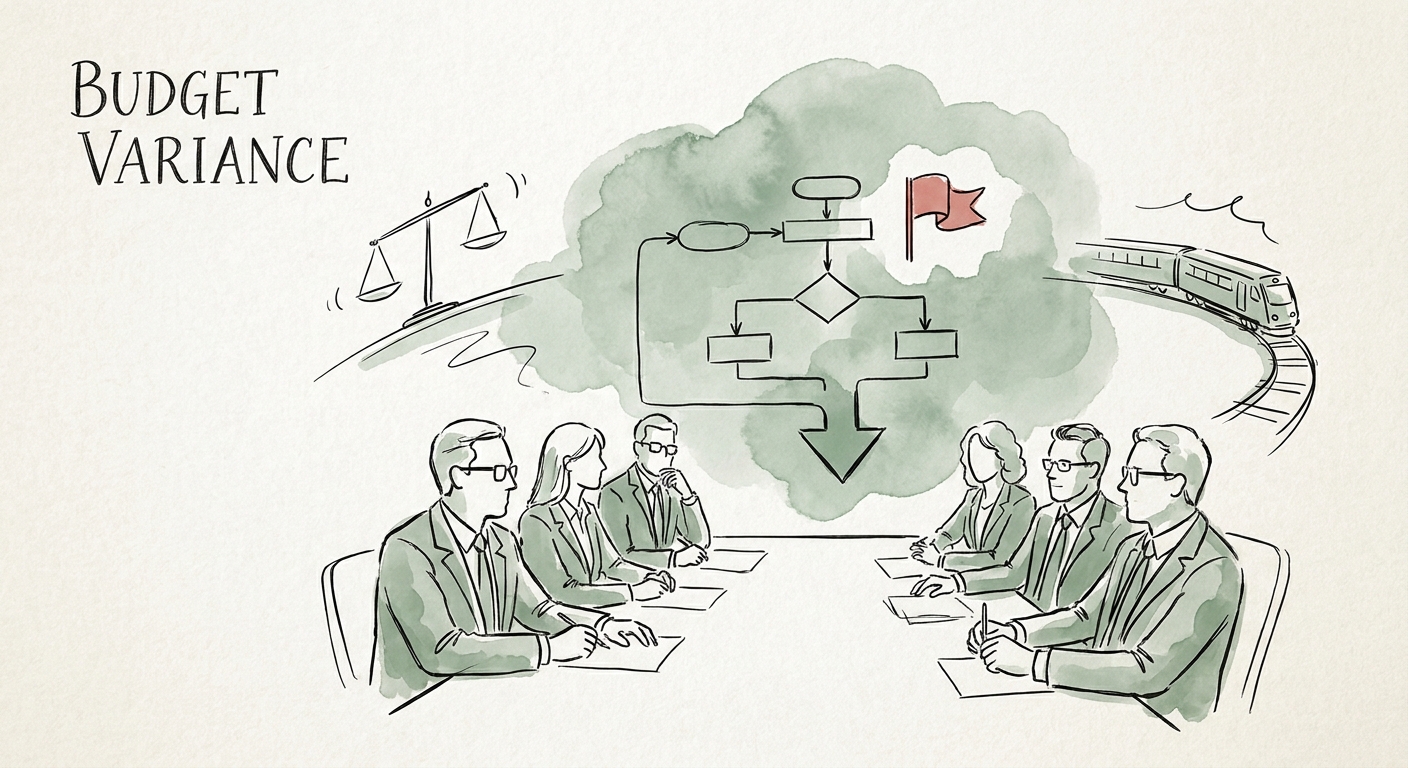
Monitoring without a pre-committed response is theater. So before a project starts I install variance tripwires with the trigger written down: a 5% deviation fires an automatic root-cause analysis, a 10% deviation forces a steering committee to either re-baseline or kill the initiative. The decision rule lives in the charter, not in someone's nerve in the moment — that is the whole point. There is no shame in abandoning a flawed plan; the penalty is reserved for funding a doomed one quarter after quarter.
What is waiting at the bottom of an ignored variance is genuinely severe. Harvard Business Review's study on black swan IT projects found one in six technology initiatives balloons into a black swan: 200% average cost overrun, 70% schedule slip. Those do not just embarrass a quarter — they vaporize exit valuations and trigger management changes the moment operational due diligence opens the books. And you do not climb out of a 200% overrun by adding engineers in Q4. Throwing headcount at a broken architecture accelerates the burn and multiplies the coordination overhead. The lever that actually works is the opposite one: cut scope. Strip the nice-to-haves that got bolted onto the charter during the launch-week enthusiasm and protect the one capability that drives enterprise value.
So make it operational this week. Stand up the two tripwires and put the response on paper before you need it. Replace "budget spent" on your next status review with an earned-value line — burn against deliverables that cleared user acceptance testing, nothing softer. And the first time a variance shows up that nobody can explain, run a project reset: freeze non-essential development, audit the backlog, and force every unbuilt feature to re-justify itself against the original return thesis. The goal of budget monitoring was never accounting precision. It is capital preservation under fire — and the firms that treat early variance as an operational emergency instead of a deferred annoyance are the ones still holding their margins at exit.