The brief that read great and aged in 48 hours
Picture a 60-person B2B software firm. An analyst asks ChatGPT Team to "summarize the competitive landscape for our renewal pitch to a key account." Out comes a clean two-pager: market sizing, three competitor moves, a pricing read. The account exec drops a line from it into a deck. On the call, the buyer says, "That funding round was eight months ago — they actually cut that product." The number was real once. Nobody could tell from the brief when it was true, or where it came from.
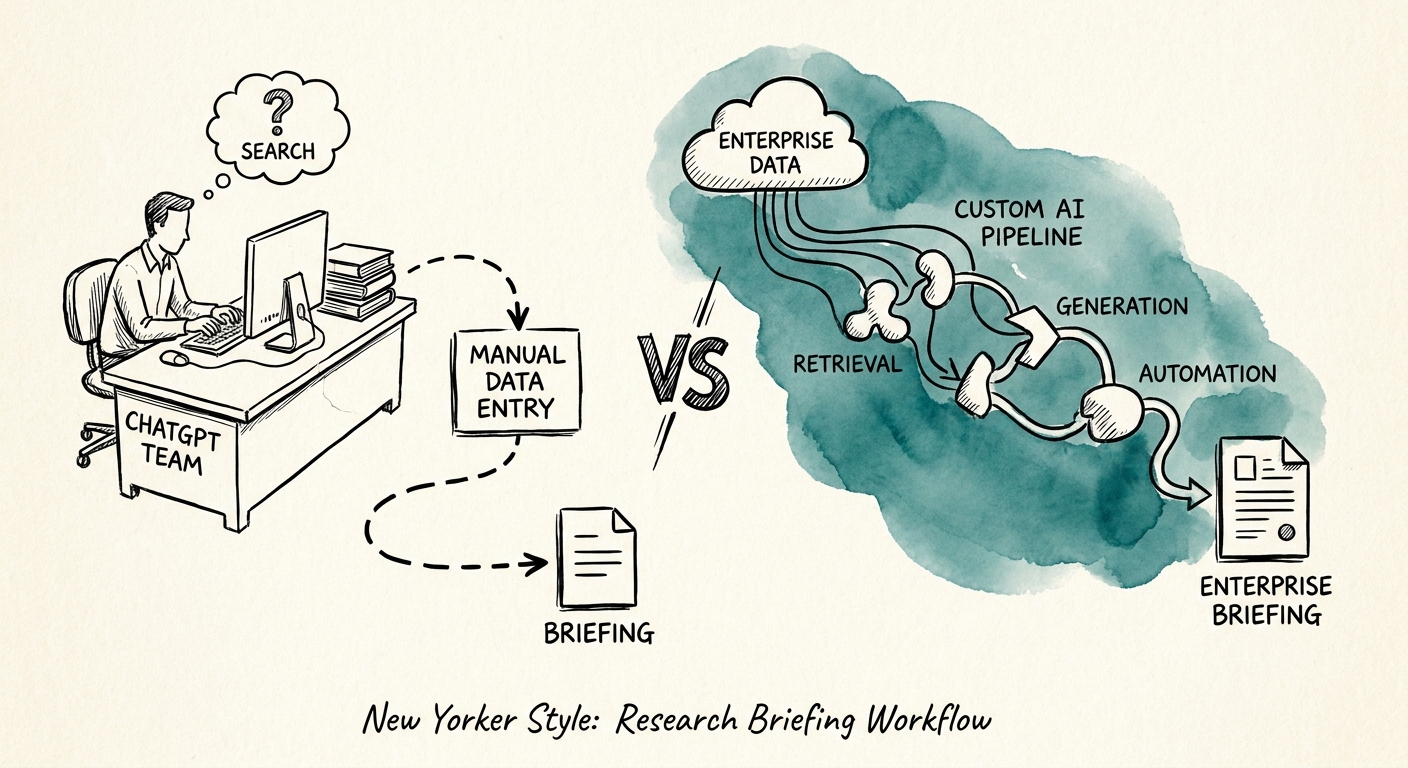
That is the whole decision in one scene. ChatGPT Team is excellent when an analyst is still figuring out what to ask — scanning an unfamiliar vertical, stress-testing a thesis, drafting questions before a discovery call. The output is a thinking aid, and the analyst is the reviewer. Nothing travels that they haven't personally vetted.
The moment a brief leaves the analyst's hands — into a deck, an account plan, a board read, a pricing recommendation — flexibility stops being a feature. Now you need the same sections every week, sources you can name, and a date stamp on every claim. That is a different artifact, and it usually wants a governed workflow rather than a chat window. OpenAI's enterprise privacy commitments and Microsoft 365 Copilot's privacy and data controls cover what the workspace does with your data — a real question, but a separate one from whether the briefing process itself is trustworthy and repeatable.
The line that splits "interesting" from "decision-grade"
Research briefing carries a sneaky risk: a summary written for casual learning and a summary used to set a renewal price look identical on the page. Same tone, same confidence, same length. The reader can't see which one was assembled from three vetted sources and which one borrowed a half-remembered stat. The NIST AI Risk Management Framework is useful here precisely because it treats risk as context-dependent — the controls you want scale with what the output is allowed to influence.
So make the invisible visible. A custom briefing workflow should force five fields onto every brief before it can ship: the date each source was published, the source type (public report vs. internal CRM note vs. paid research), a confidence rating, what the reviewer changed, and the questions still open. That last field is the one teams skip and the one that saves the call — an honest "we don't yet know their new pricing" beats a confident guess every time.
There's also a feed problem unique to sales and strategy briefs: they pull from a messy mix. Public market data is fine to quote loosely. A note from a customer's QBR is not — it shouldn't quietly resurface as generic "market color" in a brief that lands in a competitor-adjacent account team's inbox. CISA's AI data security guidance is a sensible reference for drawing that boundary: decide up front which inputs are public, which are restricted, and build the workflow so the two never blur. ChatGPT Team has no idea your QBR note was confidential. A governed workflow can be told.
Stop counting pages. Count decisions.
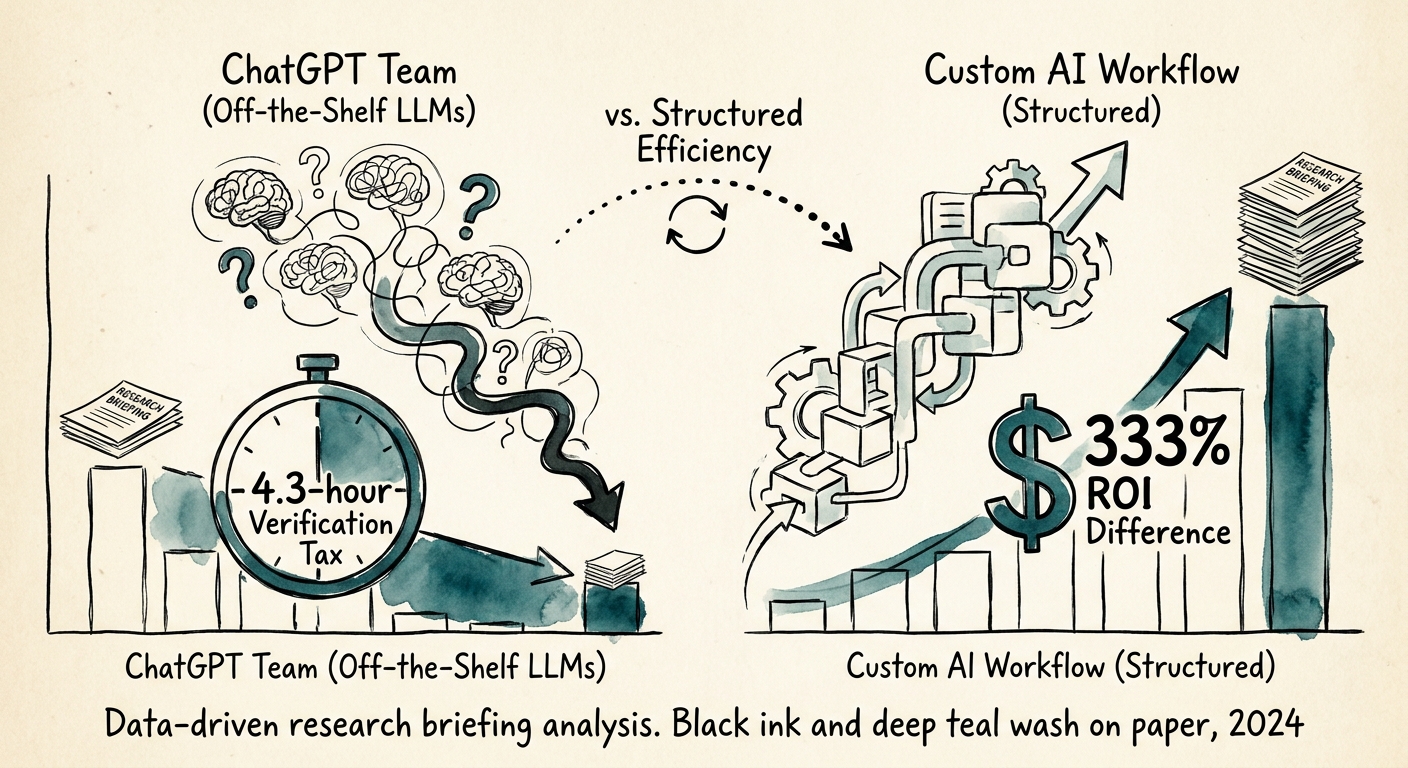
Here is the trap: page volume is the worst possible metric for a briefing system, and it's the easiest to brag about. Five polished pages nobody trusts is a cost, not an output. Measure the brief by what happens downstream instead.
Track six things over a 90-day pilot: analyst prep hours before the brief vs. after, the share of cited claims a reviewer accepts without re-checking, unsupported claims pulled before send, decision questions the brief actually resolved, account-plan or pricing changes triggered by a brief, and follow-up research reviewers requested. The tell is in the rework. If your strategy lead keeps rewriting the same "competitor pricing" section every Monday, the workflow isn't broken at the AI layer — your source rules or your template are wrong, and no amount of better prompting fixes that. Fix the inputs before you scale the outputs.
The practical split: keep ChatGPT Team for the front of the funnel — uncertain sources, forming questions, exploratory scans where the analyst is the only consumer. Graduate to a custom workflow once the brief has a known audience, a fixed input set, repeatable sections, and a manager who reviews the exceptions instead of the whole thing. And keep the business case honest — measuring AI ROI without fake savings matters most here, because briefing value is real but indirect: it shows up as a faster renewal decision or a pitch that didn't get corrected on the call, not as a line item.
