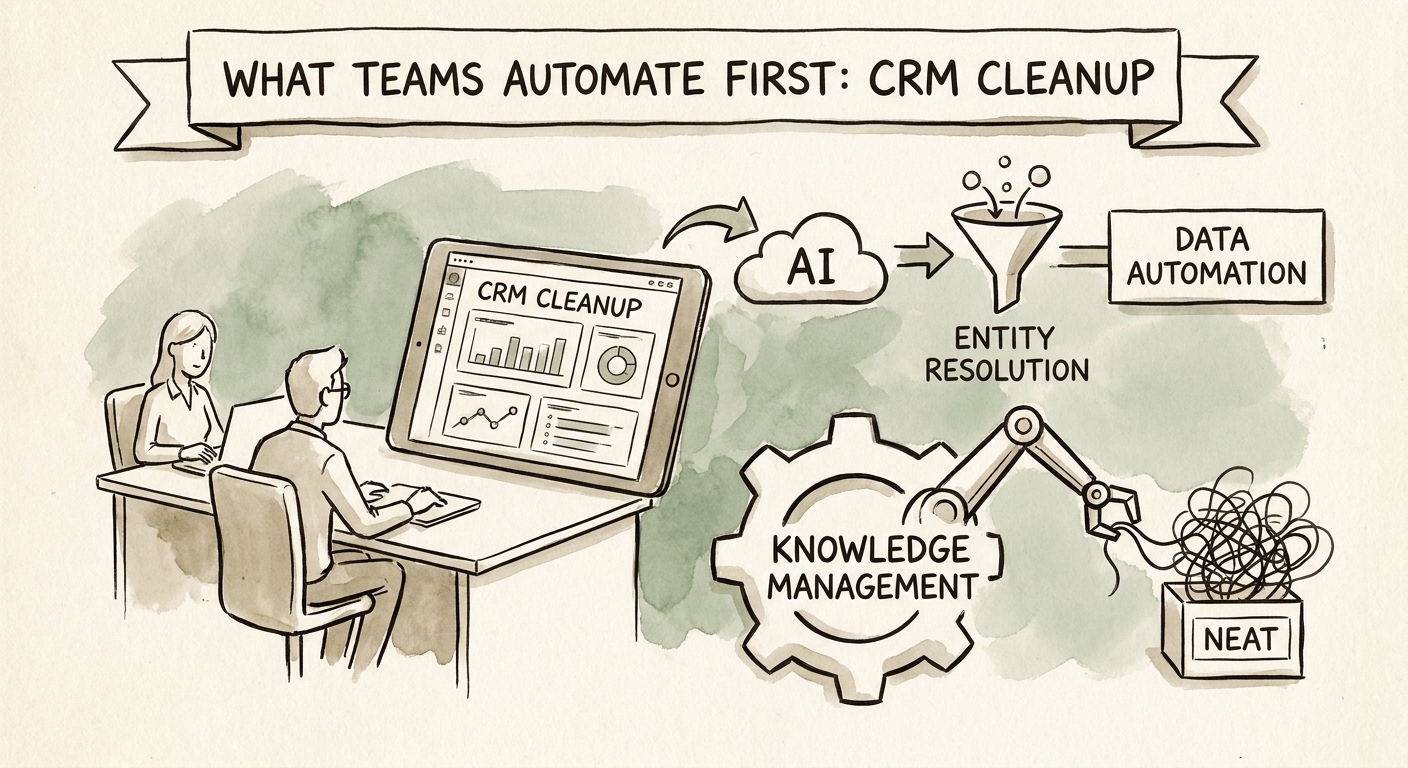
Three "Acme Corp" records and a note from 2022
Open your CRM and search for one of your bigger accounts. If you're a B2B services or technology shop that's done any volume, there's a decent chance you'll find it twice — maybe three times. One record has the right billing contact, another has the open opportunity, the third has a note from a rep who left in 2022. The phone number on file rings a disconnected line. The "last activity" field says 14 months ago, which is wrong, because someone emailed them last week from their personal inbox.
This is the knowledge-management problem hiding inside your sales stack. The CRM is supposed to be the system of record for who your customers are and what's happened with them. When it's full of duplicates, blank fields, and stale context, your team stops trusting it — and a rep who doesn't trust the CRM rebuilds the customer's history from scratch before every call. Salesforce's State of Sales research keeps surfacing the same theme: reps lose real selling hours to manual data work, and untrusted data is upstream of that waste. IBM's Institute for Business Value makes the same point from the AI side — usable, trusted context has to exist before any AI layered on top does anything but launder the mess faster.
What AI is good at here — and the line it must not cross
The reason CRM cleanup is a good first AI project isn't that it's glamorous. It's that the work is high-volume, pattern-heavy, and judgment-light at the line-item level: is "Acme Corp," "Acme Corporation," and "ACME Corp. (do not contact)" the same company? Which of the three has the freshest data? Is this contact's title still accurate, or did they get promoted two years ago? A model can churn through thousands of records and surface candidates far faster than a human scanning lists.
Here's the line. AI should propose, not execute. The first version of this workflow produces a review queue: each proposed merge, field fill, or flag comes with the source evidence — which records it's combining, what it's pulling the "correct" value from, why it thinks two records are the same company. A sales-ops owner or the account owner approves before anything writes back. You do not let the model silently merge records, because a wrong merge buries an open opportunity inside a dead account, and nobody notices until the forecast is off.
This is exactly where the responsible-AI guidance earns its keep. PwC's Responsible AI survey and the NIST AI Risk Management Framework both stress traceability and human approval for decisions that touch customers — and a merged-or-deleted customer record is precisely that. Practically, that means three things the queue must have: a source link on every proposed change, a logged approver and timestamp, and an escalation path for records that are too ambiguous to auto-suggest (think a record flagged "do not contact" colliding with an active deal). Those should escalate, never auto-merge.
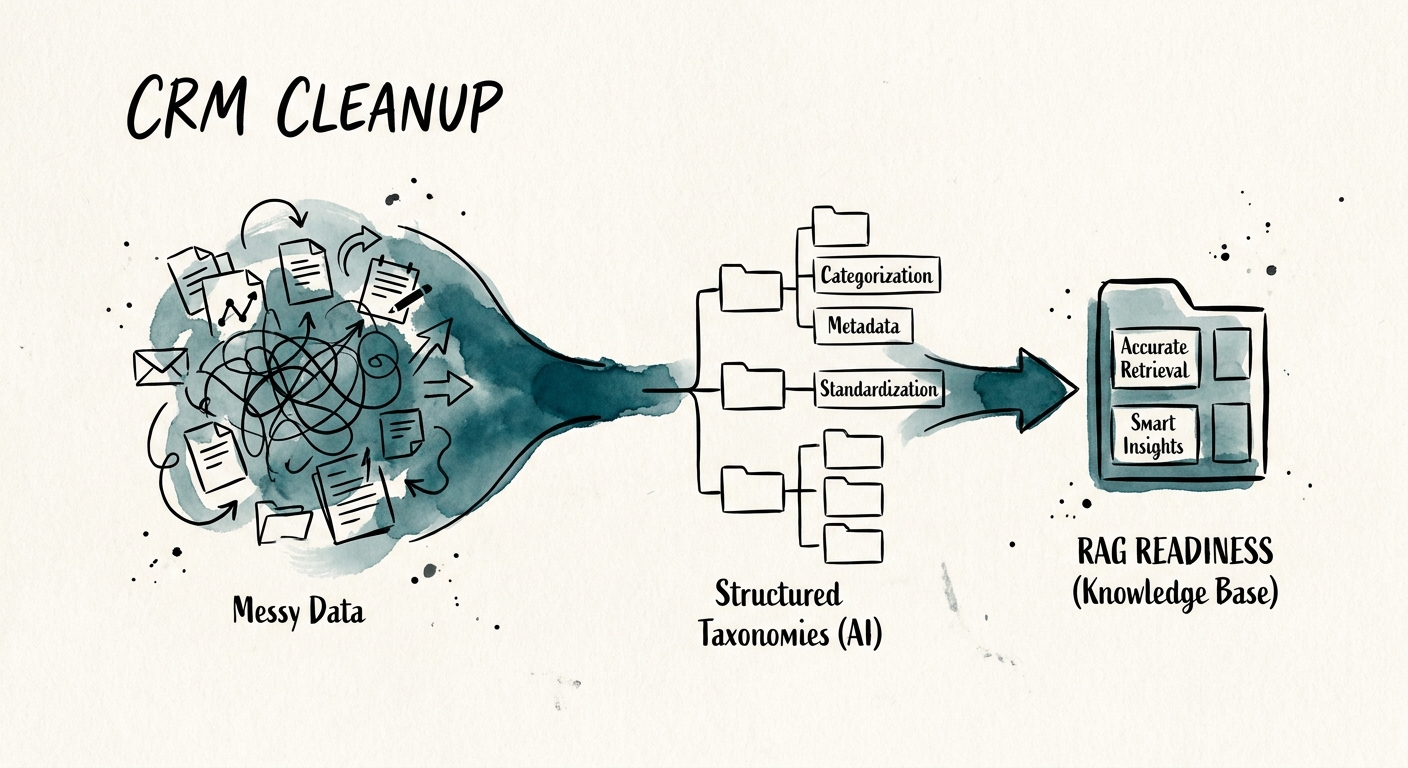
Run a 200-record pilot, then measure what actually changed
Don't point this at all 80,000 records on day one. Pick a slice — say the accounts owned by one sales-ops person, or your top 200 active opportunities — and run the cleanup against just those. You'll learn your matching logic's failure modes on a set small enough to eyeball, and the approver can sanity-check whether the AI's "same company" calls are right before you trust them at scale.
Then measure usefulness, not activity. The temptation is to report "1,400 records processed," which tells you nothing. McKinsey's State of AI work is blunt that the value shows up in operating outcomes, so track the things that map to selling: how many duplicate clusters got resolved, how field completeness moved on the records reps actually open, whether the "time a rep spends researching an account before a call" dropped, and whether forecast hygiene improved because opportunities stopped hiding in orphaned records. If those don't move, expand the rules — don't expand the volume.
Two adjacent moves once the queue is running clean: reach for AI knowledge systems when the real gap is retrieval — reps can't find what's already documented — and for AI for sales teams when clean data should turn into better follow-up and pipeline discipline. Cleanup is the foundation; those are what you build on it.
