An analyst spends Tuesday hunting, not thinking
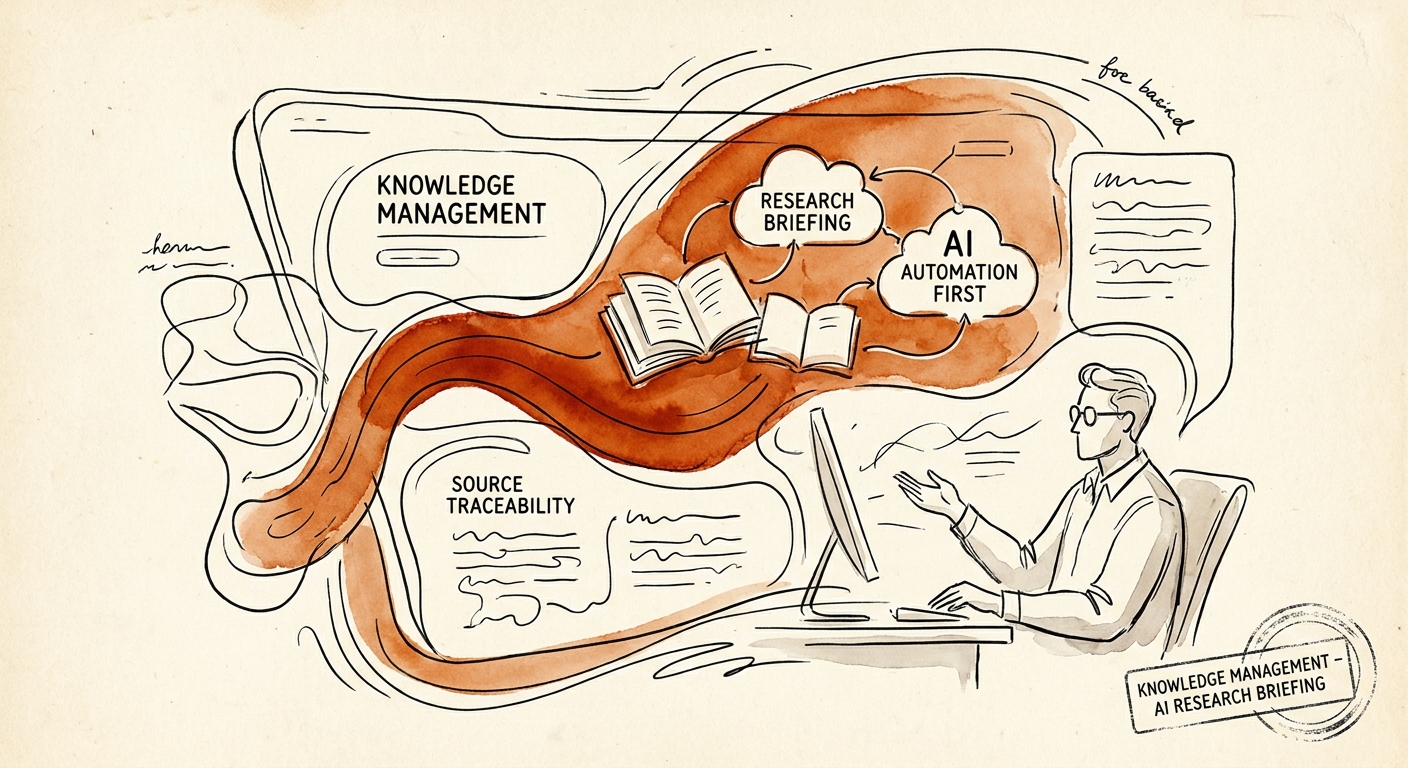
Picture the work behind a single client brief at a 60-person advisory firm. An analyst opens fourteen browser tabs, a licensed database, a shared drive of prior deliverables, and a folder of internal expert notes. Most of the day goes to finding and reconciling — does the analyst-firm forecast agree with the regulator's filing, and which one does the partner trust? The actual thinking — the so-what for this client — gets the last ninety minutes before the brief is due. That ratio is the problem worth fixing, and it's exactly the part of research that AI retrieval and synthesis are good at: collapsing the hunt so the human can spend the day on judgment.
This is why the research brief, not a flashier output, is the smart first project for a knowledge-management team. Deloitte's 2026 AI research points at production value over demo polish, and for a professional-services firm that value is specific: reviewer leverage and a traceable evidence trail, not a clean paragraph whose sources nobody can name. A brief has a built-in quality bar — every claim is supposed to be sourced — which makes it one of the few knowledge tasks where you can actually tell whether the AI helped or just sounded helpful.
Build the trail backwards from the reviewer's red pen
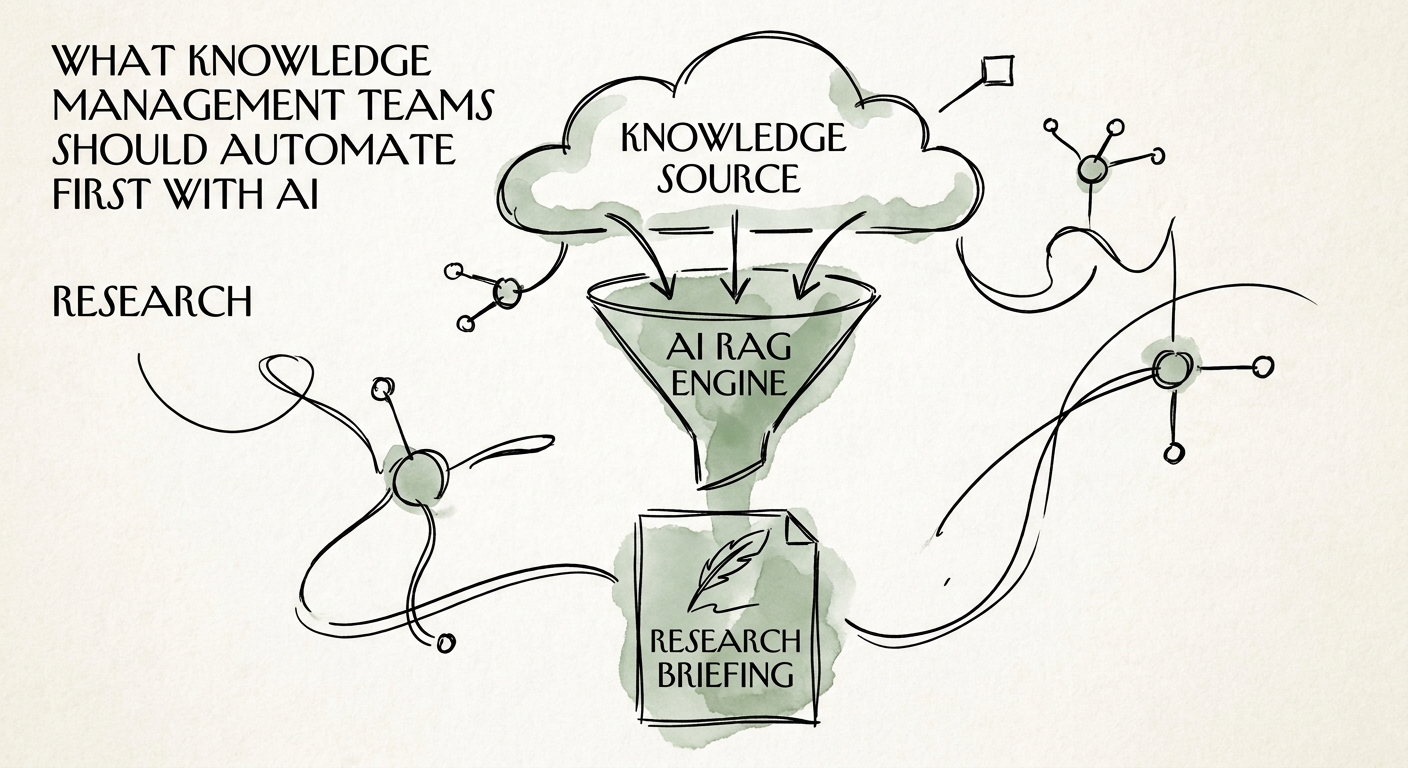
The trap most teams fall into is automating the synthesis first — the readable summary — and bolting citations on afterward. Reverse it. Design the workflow so the artifact a reviewer opens is the retrieval log, not the prose: the approved sources that were searched, the passages each claim was pulled from, and a flag on every spot where two sources disagree. The synthesis draft hangs off that trail. When a partner challenges a number, the answer is one click away instead of a forensic re-search after the fact, and the assistant's job is explicitly to surface contradictions rather than smooth them into a single confident sentence.
That structure is also where governance lands cleanly. NIST's AI Risk Management Framework gives you the scaffolding — map the intended use, measure answer quality, assign ownership — before brief volume scales past one analyst. And research folders are not neutral: they mix public filings, licensed databases you're contractually barred from re-publishing, and confidential client strategy notes. CISA's data-security guidance is the reason the assistant must keep those tiers walled off — never letting a client's confidential context leak into synthesis that's framed as public market research, and escalating any market claim it can't tie to a named source before that claim reaches a client-ready page. The contradiction flag and the permission wall are the two features a research brief needs that a generic summarizer never builds.
Run one category, watch three numbers
Go ahead if your firm already has source standards, a citation expectation, and named experts willing to review the first outputs and mark them up honestly. Wait if the topic rides on unsettled facts, on confidential client context that can't be cleanly separated, or on claims no named source supports — those are briefs that need a person, not a faster draft.
The Monday version is narrow on purpose. Pick one briefing category — say, competitive landscape briefs for one practice group — and define what counts as an acceptable source before any analyst touches the tool: public research, licensed databases, client files, expert notes, prior deliverables each carry different permissions and different trust levels, and that ranking belongs in the workflow, not in an analyst's head. Then watch three numbers and only three: how much the briefing cycle compresses, how many citation corrections reviewers still have to make, and how often the assistant catches an unsupported claim before review rather than after.
If those numbers move, you've earned the right to add a second category. If they don't — if reviewers are still rewriting citations or fishing client context out of public-source synthesis — the fix is upstream in source quality, permissions, or ownership, not more automation. The honest target here isn't a hands-off brief; it's a stronger first draft that arrives with its evidence trail already attached, so the expert challenges the source set instead of the wording. When one category clears that bar, fold what you learned into a broader AI transformation plan and pick the next.
