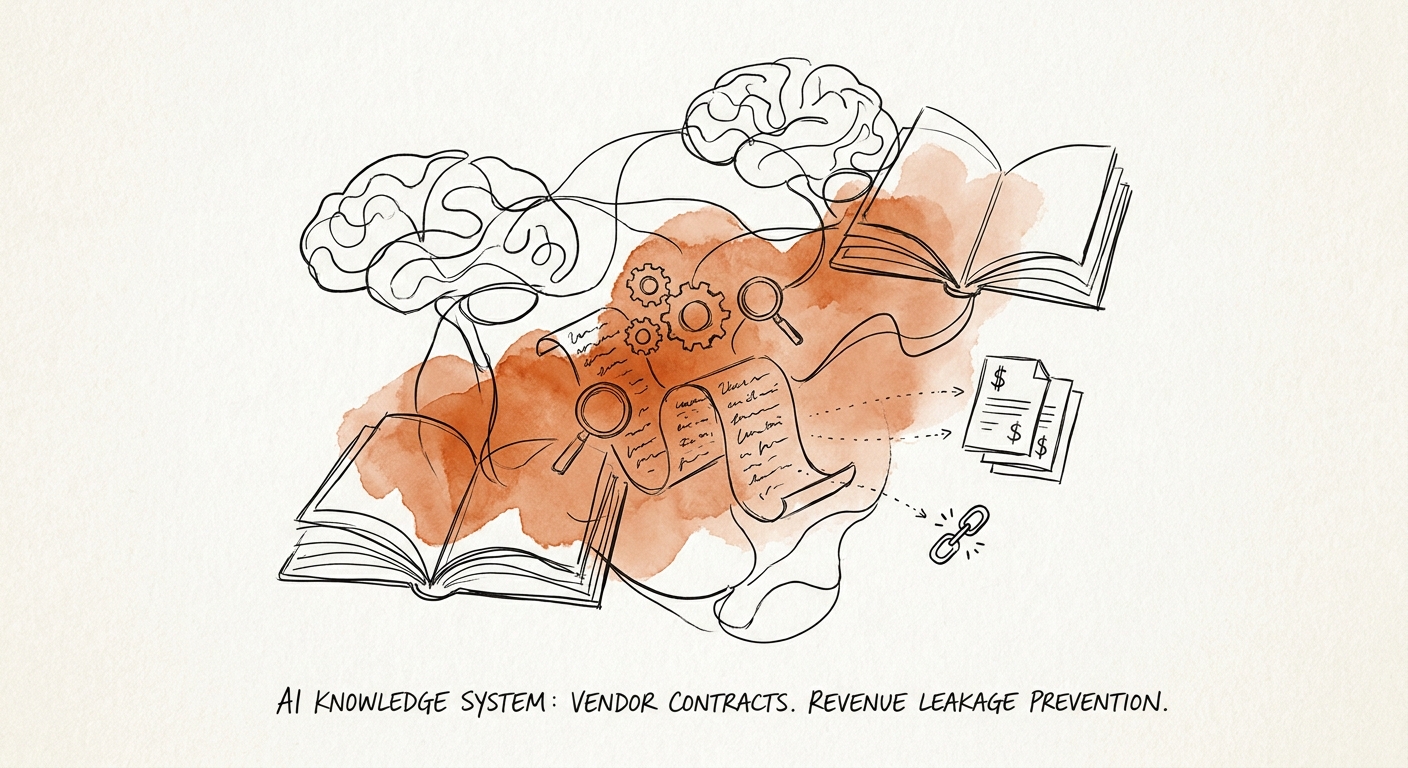
The $40,000 renewal nobody saw coming
Picture a 60-person professional services firm. Someone in operations gets a renewal invoice from a software vendor — a tool half the team stopped using eight months ago. The 90-day cancellation window closed last week. Nobody knew, because the master service agreement lives in a folder one person set up in 2022, the amendment that changed the pricing is buried in an email thread, and the only person who remembers the termination terms left in March.
This is the real reason a vendor contract library is the right place to point AI first. Not because contracts are exotic, but because the document set is bounded, high-stakes, and full of dates and obligations that cost money when missed. Your library is a specific, knowable thing: MSAs, SOWs, renewal notices, security and data-processing addenda, pricing schedules, and termination windows. Unlike a general "ask the company anything" assistant, you can actually enumerate every source before you start.
That bounded scope is exactly why it works for a firm your size. The RSM middle-market AI survey, the San Francisco Fed analysis of AI and small businesses, and the OECD report on AI adoption by small and medium-sized enterprises all land on the same point: smaller firms win when AI is tied to one painful workflow, not spread across a vague "transformation." A contract library is that workflow. The pain is concrete, the documents are finite, and the test of success is brutally simple — does it surface the right clause from the right signed PDF before the deadline, or doesn't it?
Before retrieval: who is allowed to read these, and which version is real
Here is the trap that sinks contract-library projects specifically. You index everything in the shared drive, and the AI cheerfully answers from a draft redline instead of the executed version, or it pulls a clause from a contract that belongs to a client engagement the asking employee should never see. In professional services, a vendor contract often carries the client's data terms inside it — confidentiality is not optional, and "the AI told someone the wrong thing about a client's vendor obligations" is a genuinely bad day.
So the work before you build retrieval is mostly curation and permissions, not technology. Three concrete moves: First, separate executed from draft. Index only signed, current versions; quarantine redlines and superseded amendments so the system never cites a document that isn't binding. Second, set read boundaries by who should see what — partner-level commercial terms, vendor security addenda, and client-linked contracts are not all the same audience. Third, decide that every answer must cite the specific source document and section, so a human can open the actual PDF before acting on a termination date.
The NIST AI Risk Management Framework gives leadership the language to map those risks deliberately, and CISA AI Data Security Best Practices applies directly the moment your library touches vendor security terms or client data clauses. If you're routing this through an enterprise tool, hold its controls against Microsoft 365 Copilot privacy and data controls or OpenAI's enterprise privacy commitments — and confirm one thing above all: that a contract's confidential terms stay inside your approved environment and never become training data or a leaked answer to the wrong person.
Ship the boring version, then measure what it actually catches
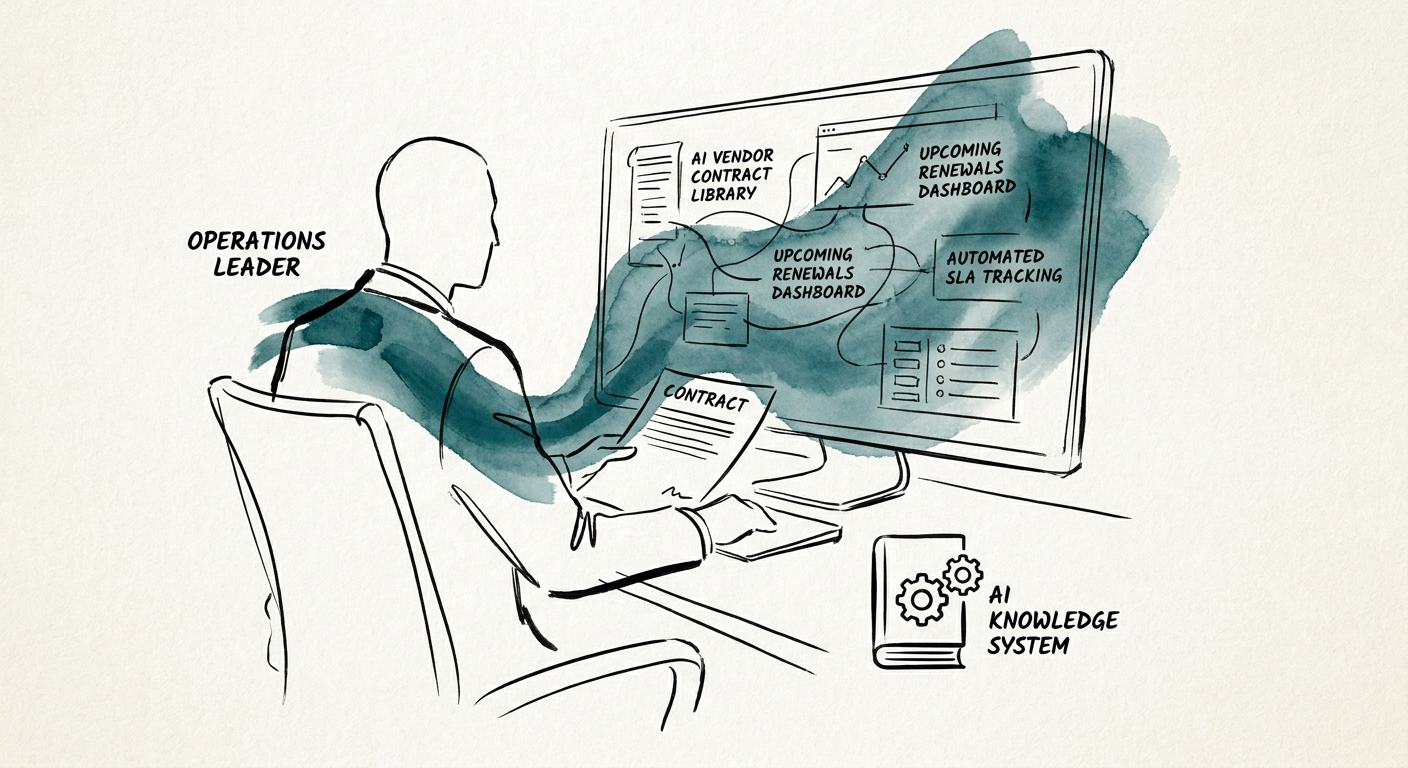
The version you put into production should be smaller and duller than the demo. Pick one question the firm asks constantly — "when does this vendor renew and what's the notice period?" — wire it to executed contracts only, force a citation to the source document in every answer, and route anything ambiguous to a named owner (often whoever runs operations or vendor management). Resist the urge to make it answer everything. A tool that reliably nails renewal dates and termination windows is worth more than one that fuzzily handles all contract questions and quietly hallucinates a date.
Then measure things a partner would care about, not vanity stats. Retrieval accuracy on a fixed test set of real contracts. How often a reviewer has to correct the answer. Time saved versus the old "search the drive and email the person who might know" routine. And the most valuable output of all: the gaps it exposes — contracts with no owner, missing executed versions, renewal dates nobody had tracked. Those discoveries often justify the whole effort before the AI saves a single minute.
Monday, you can do the first step without any software: list every active vendor contract and the person who owns it. The holes in that list are your real project. When you're ready to design source boundaries, the internal AI knowledge assistant guide walks the structure, and the SMB readiness assessment tests whether your ownership, permissions, and review capacity can actually hold up before you point AI at your most sensitive documents.
