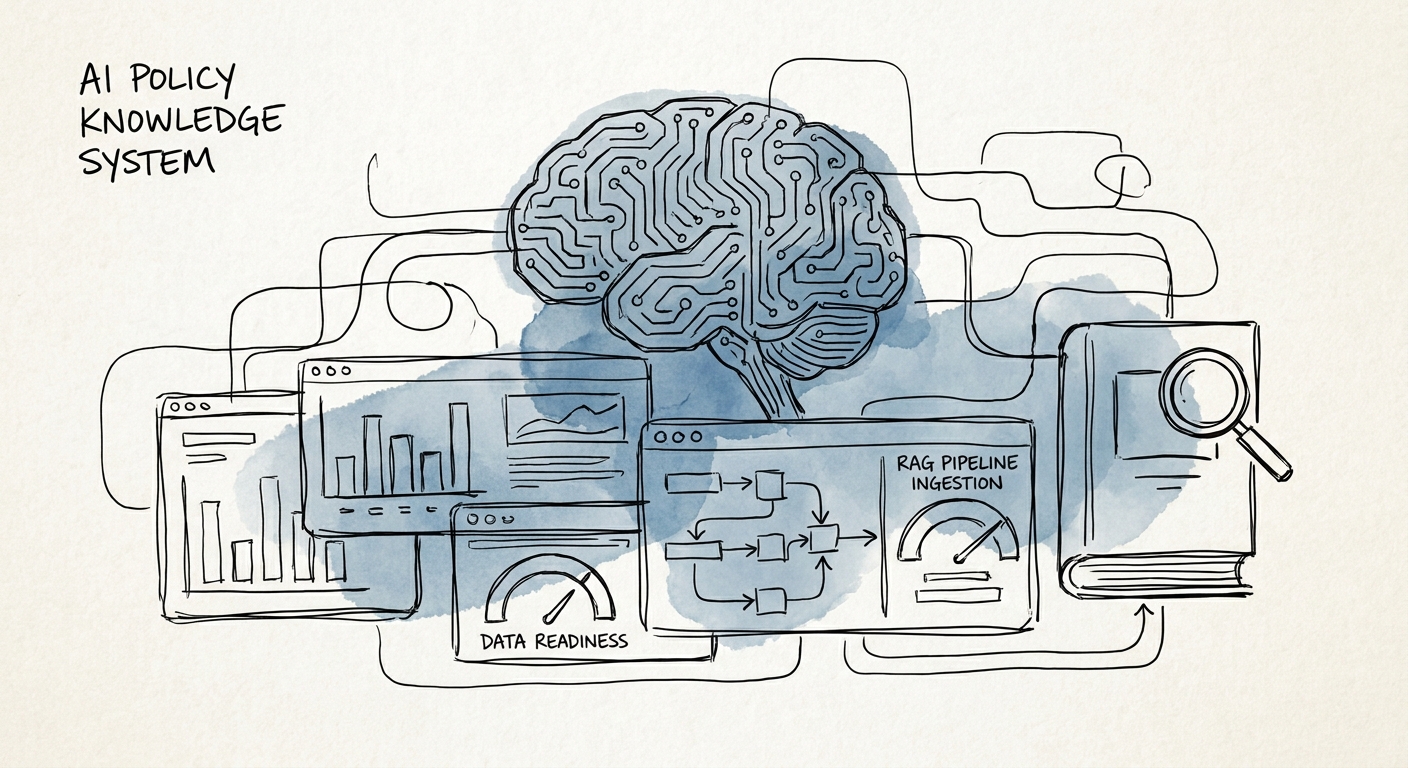
The most expensive search in your firm runs on a partner's calendar
Picture a 60-person consultancy on a Tuesday. A second-year analyst is staffing a new engagement and needs to know: which master services agreement applies to a client in a regulated vertical, whether the standard data-handling clause survived last quarter's legal review, and what the firm's policy is on storing client files in a personal cloud drive. The answer exists. It lives in a partner's head, a two-year-old PDF on a shared drive, and a Slack thread nobody can find. So the analyst does what analysts do: pings the partner, waits, and bills the client for the delay — or worse, guesses.
That is the real workload a policy-library knowledge system has to absorb in professional services. Not "search the docs faster." It's the steady tax of routing operating questions — delivery standards, client-specific rules, HR guidance, security procedures, engagement-acceptance criteria — to the handful of people who actually carry the institutional memory. Those people are also your highest-leverage billable resources. Every policy question they field is margin you don't recover.
The research on smaller firms keeps landing on the same point: AI pays off when it's tied to a specific, painful workflow, not deployed as a general experiment. The RSM middle-market AI survey, the San Francisco Fed analysis of AI and small businesses, and the OECD report on AI adoption by small and medium-sized enterprises all reinforce it. So don't start with the assistant. Start by mapping where each policy actually lives, who owns it, and who is allowed to act on it. If your client-engagement rules are duplicated across three intake decks and owned by no one, an AI layer just makes the wrong answer arrive faster — with more confidence.
In professional services, the source library IS the liability
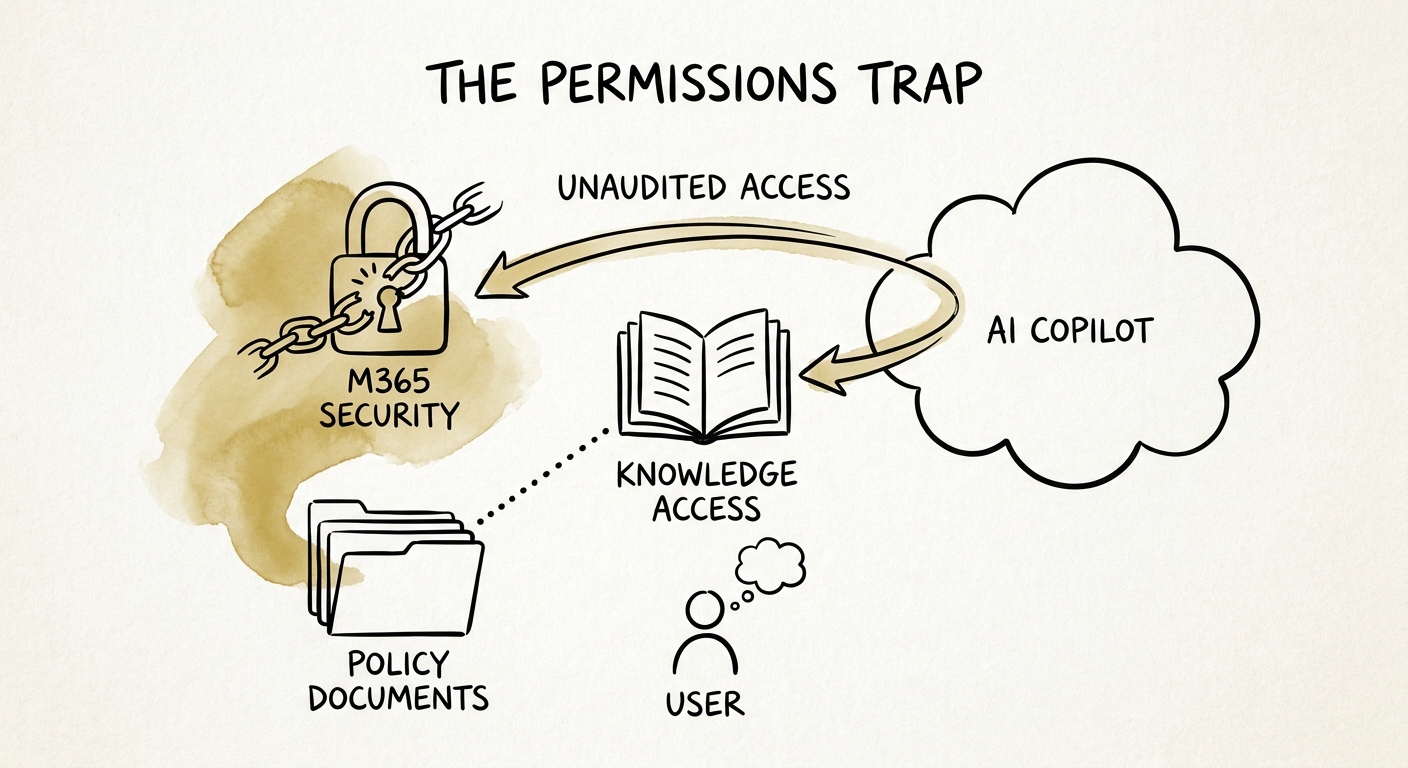
Here's what makes this variant different from automating, say, a warehouse FAQ: your policy library is laced with material you are contractually and legally obligated to protect. Client confidentiality clauses. Engagement-specific data-handling terms. HR records. Conflict-of-interest screens. The moment you point retrieval at "the shared drive," you've potentially made one client's restricted procedures answerable to someone staffed on a competitor's account. That's not a hypothetical edge case in pro services — it's the standard structure of the work.
So classify before you connect. The NIST AI Risk Management Framework gives leadership a shared language for mapping where an AI system can create exposure, and CISA AI Data Security Best Practices is directly on point once retrieval touches client, employee, contract, or security material. Before any index gets built: sort the library into what's firm-general (safe to answer broadly), what's engagement-scoped (answerable only to people on that matter), and what should never enter retrieval at all. Then enforce those permission boundaries in the tool — not in a policy doc nobody reads.
If you're using an enterprise assistant or a custom retrieval setup, hold the tool's controls against Microsoft 365 Copilot privacy and data controls and OpenAI enterprise privacy commitments, and confirm they honor your existing permission model rather than flattening it. The test a managing partner should be able to pass cold: for any answer the system gave last week, can you show which documents it drew from, who was allowed to see them, who reviewed the output, and that no client-confidential material crossed an account boundary? If you can't answer that, you don't have a knowledge system — you have an unaudited leak with a chat interface.
Ship one knowledge path, and measure the partner-tax you remove
The version that survives contact with a real firm is narrower than the demo. Don't index everything. Pick the single highest-frequency policy question — for many pro services shops it's "which contract template and clauses apply to this client and engagement type?" — and connect only the approved, current sources for that path. Require a citation to the source document in every draft answer. Route anything outside the approved set to a named reviewer, usually the policy owner you identified in step one.
Then measure what actually matters for a billable-hour business. Track retrieval accuracy and how often the reviewer has to edit an answer (your trust signal). Track partner and senior-staff hours no longer spent fielding policy pings (your margin signal). And track the unanswered questions and source gaps the system surfaces — because in a professional services firm, "the AI couldn't find the current policy on X" is often the most valuable output of all. It tells you which institutional knowledge was never written down and is one departure away from walking out the door.
Two internal resources to sequence the build: use the internal AI knowledge assistant guide to draw the source boundaries, and the SMB readiness assessment to pressure-test whether you actually have owners, permission controls, and reviewer capacity before you connect a single document. The winning pattern for a professional services firm isn't an AI that confidently answers everything. It's one that answers from approved policy, cites it, refuses when it doesn't know — and hands your partners back the hours they were spending as a human search engine.
