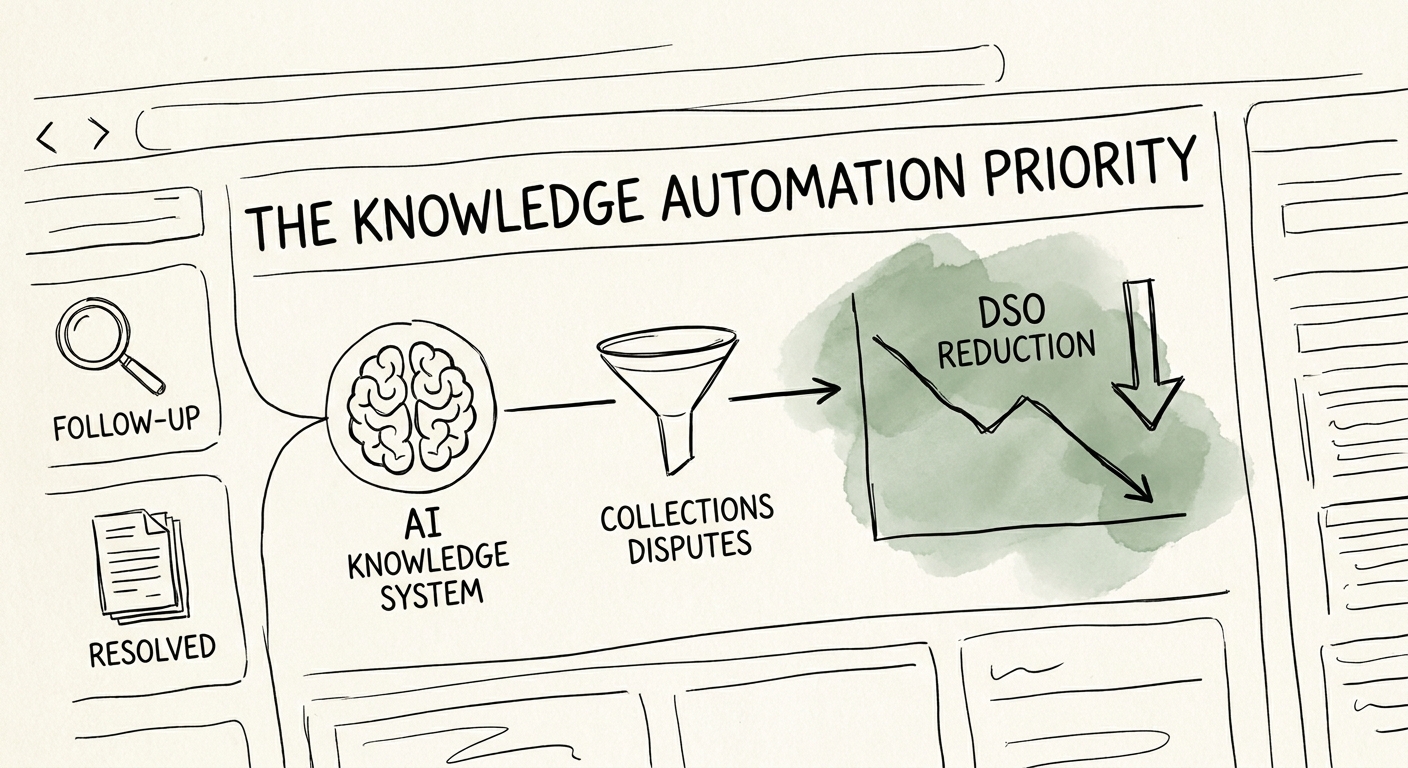
The invoice isn't late because they forgot. It's late because you can't prove the work.
Picture a 60-person B2B services firm. An invoice for $48,000 hits 45 days past due. The person assigned to chase it opens the accounting system and sees the number — but not the master services agreement that says net-60 not net-30, not the change order that added scope in week three, not the support ticket where the client flagged a missed SLA, not the account note saying their AP contact left in March. So the reminder goes out generic and slightly wrong, the client replies "we're disputing this," and now a collectible invoice is a 30-day argument.
That is the real failure mode, and it's why the first AI move here is not a smarter dunning sequence. The Salesforce State of Sales report keeps revenue execution tied to data quality and relationship context rather than to message cadence — and collections is the same animal pointed at cash already earned. The IBM Institute for Business Value AI capabilities research makes the operational version of the point: AI value shows up when the source material is repetitive, the data is trusted, and a human stays in the loop. Late-invoice follow-up checks every box — the same four sources get reassembled by hand, over and over, every single time.
Build the collections packet, not the collections bot
The first release should assemble facts, not send messages. Before anyone drafts outreach, the model pulls from four sources and reconciles them into one packet: contract terms (real payment window, scope, signed change orders), the invoice and delivery status, open support tickets or disputes tied to that account, and account context like who actually owns AP now. That packet lands in a reviewed queue. Finance reads it, confirms the position is defensible, and only then approves the follow-up. The human still owns every decision; the AI just kills the 25-minute scavenger hunt that used to precede it.
Draw the retrieval boundary before you wire any of this. The NIST AI Risk Management Framework gives the right shape — map which repositories are in scope, measure whether retrieval is reliable, manage what happens when it isn't, and keep oversight inside the workflow. Concretely that means: name the four systems, list which fields the model may summarize, and require that every recommended next step shows the evidence beside it (the clause, the ticket number, the delivery timestamp). If the packet can't cite where a claim came from, it doesn't go in the queue. The fastest way to lose a disputed invoice is to chase it with a number you can't source.
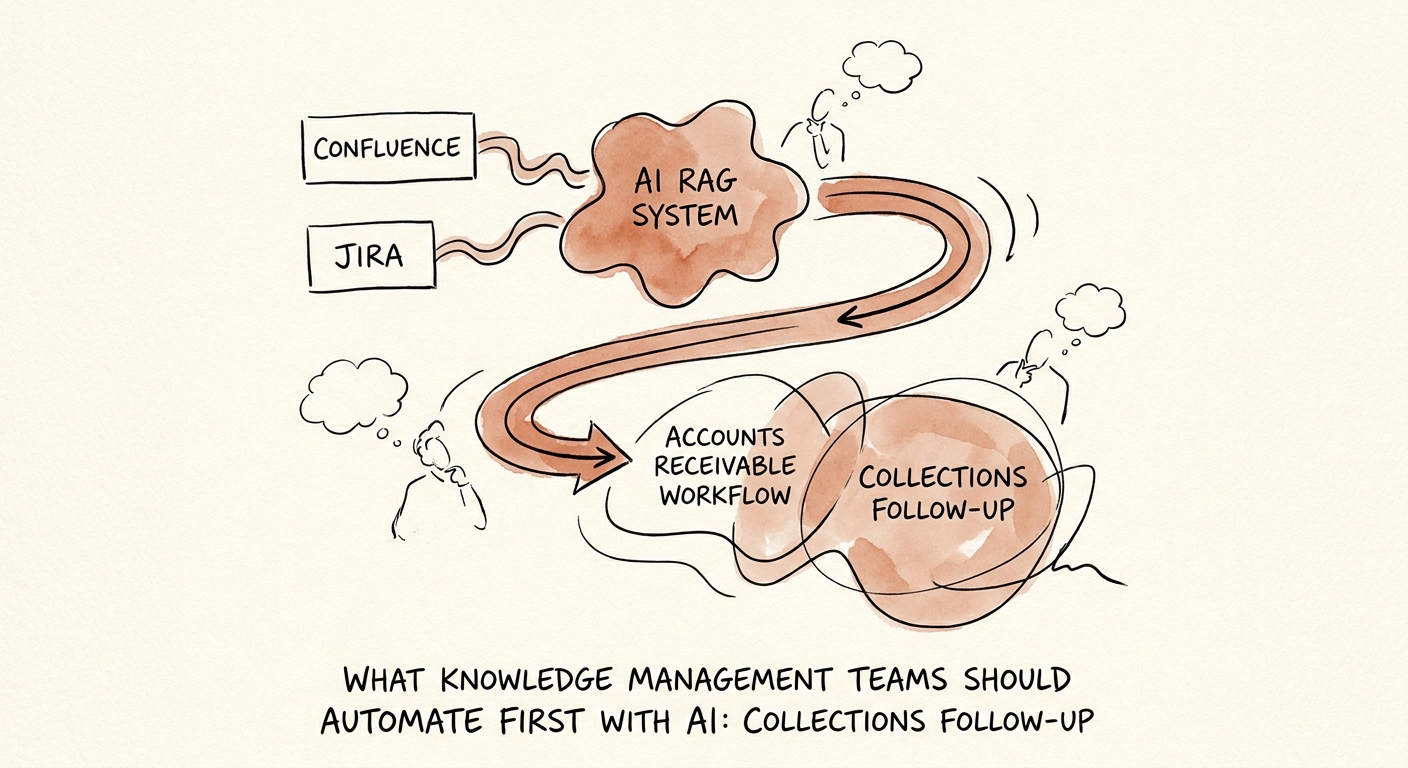
If it speeds up reminders but creates disputes, you built the wrong thing
The trap is measuring days-sales-outstanding alone and calling it a win. A faster, wronger reminder shaves DSO this week and manufactures a churned client next quarter. So track cash quality and relationship quality on the same dashboard: average research time per invoice (the thing you're actually automating), dispute rate, response accuracy, escalation rate, and a read on customer sentiment. The McKinsey State of AI research and the PwC Responsible AI survey both land in the same place — responsible adoption is an operating system around the tool, not the tool. If disputes tick up, you've automated friction, not collections.
Monday version: pull your last 20 invoices that went 30+ days late and time how long it takes one person to reassemble the full story on each from the four systems. That number is your baseline and your business case. To pressure-test whether a build pays off, Human Renaissance usually starts with a QuickStart AI Audit, then runs the numbers through the AI ROI Calculator to see if reclaimed research time and cleaner dispute resolution justify it.