
The practical answer
- Short answer
- ServiceNow partner M&A fails when culture is ignored. Learn why 33% of technical talent leaves post-close and how to protect your Elite Partner status with a retention-first integration playbook.
- Best fit
- Industry: Private Equity / Technology Services. Function: Post-Merger Integration
- Operating path
- Migration & Integration → Turnaround & Restructuring → Transaction Advisory Services
- Key metric
- $150k Replacement cost of a single ServiceNow CTA (recruiting + ramp + lost billing)
The Asset That Goes Down the Elevator Every Night
When you acquire a ServiceNow Elite or Global Elite partner, you aren't buying IP or recurring revenue in the traditional SaaS sense. You are buying a roster of Certified Technical Architects (CTAs) and Certified Master Architects (CMAs). In the current market, these are the most volatile assets on your balance sheet.
The data is brutal. Industry benchmarks show that "acqui-hire" deals—which most ServiceNow bolt-ons effectively are—suffer from 33% attrition in the first 12 months post-close. In the ServiceNow ecosystem, where demand for technical talent is outstripping supply by nearly 2:1, that number can easily hit 50% if the integration is mishandled. Competitors are actively headhunting your newly acquired staff the moment the press release drops.
This isn't just an HR headache; it's a direct hit to your deal model. Losing a single CTA triggers a replacement cost that exceeds $150,000. This includes the $7,000+ certification program fee, the 3-5 years of required prerequisite experience, recruiting fees (often 25% of base), and—most critically—the 4-6 months of lost billable utilization while a new hire ramps. If you lose five architects in the first quarter, you haven't just lost culture; you've eroded $750k+ of EBITDA and potentially jeopardized the firm's Elite Partner status.
In professional services M&A, you don't own the assets. You just rent their attention. If you break the culture, the rent stops being paid.
The "Craftsman vs. Factory" Conflict
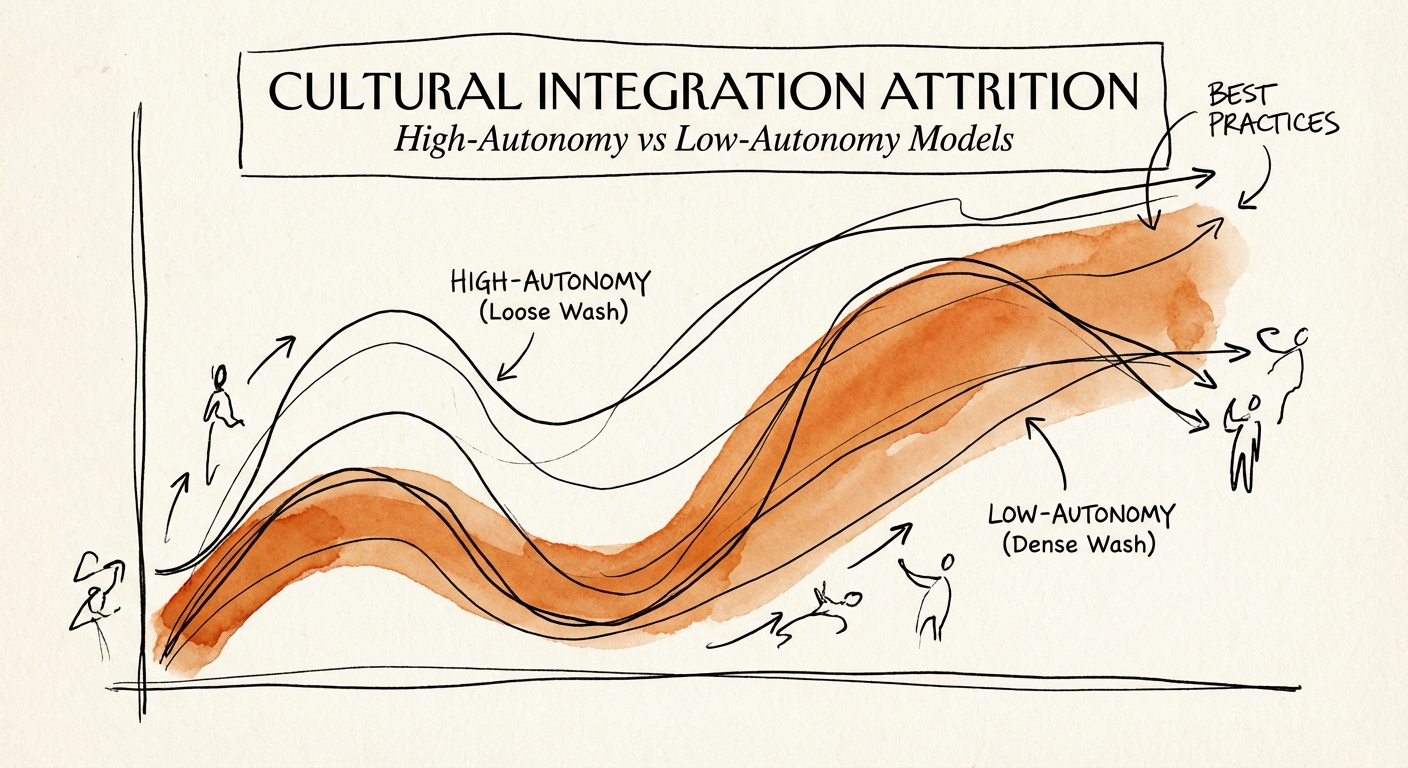
The primary driver of this attrition isn't compensation; it's the clash between the "Craftsman" culture of the boutique target and the "Factory" culture of the PE-backed platform. Most acquired ServiceNow partners are founder-led firms where senior architects have high autonomy. They operate like craftsmen: customized solutions, fluid processes, and a "hero" mentality to save client go-lives.
Your platform thesis, however, relies on scalability: standardized SOPs, rigorous utilization tracking, and margin optimization. When you force a Craftsman into a Factory environment on Day 1, they don't argue—they just leave. Post-merger culture clash is cited as the reason for deal failure in 30% of cases, but in professional services, it's the leading cause of value destruction.
The Utilization Trap
We frequently see Operating Partners impose strict time-entry and utilization targets (e.g., 90% billable) immediately post-close. While mathematically sound, this signals to the acquired team that they are now "cogs in the machine." The result is a spike in attrition exactly when you need stability to cross-sell into the platform's client base. The loss of "tribal knowledge"—the unwritten shortcuts and client context that the craftsmen hold—makes the remaining delivery team less efficient, ironically lowering the very margins you tried to optimize.
The Retention-First Integration Playbook
To protect your multiple, you must treat cultural integration as a risk management discipline, not an HR initiative. Here is the operator's playbook for ServiceNow partner integration:
1. Ring-Fence the Certification Budget
ServiceNow certifications (CSA, CAD, CIS, CTA/CMA) are the currency of your consultants' careers. In the chaos of integration cost-cutting, training budgets often get frozen. Do not do this. Explicitly guarantee—and even increase—the certification budget for the acquired team. This signals that the "Factory" values their "Craftsmanship."
2. The "Billable Autonomy" Grace Period
Delay the full integration of time-tracking and rigorous utilization management for 90-120 days. Use this period to map their existing delivery processes to your SOPs rather than overwriting them overnight. Allow the acquired founders to maintain their "hero" status with key accounts during this transition to ensure projected synergies actually materialize.
3. Map Career Velocities
The number one reason top talent stays in a roll-up is access to larger, more complex projects that a boutique firm couldn't win. Immediately place acquired architects on "Platform-level" enterprise accounts. Show them that the merger accelerates their career velocity. If they feel like they are doing the same job but with more bureaucracy, they will leave. If they see a path to becoming a Practice Lead for the combined entity, they will stay and build value.