What Klarna Actually Did: In-House Build vs. Alternative SaaS
The most-cited SaaS replacement story is wrong as popularly told. What Klarna actually did with Salesforce and Workday - consolidation, vendor swaps, selective internal builds - and the decision playbook it really teaches.
CEOs, CFOs, and CTOs who keep hearing 'Klarna replaced its SaaS with AI' in board meetings and want the real sequence before copying it.
Use this when the Klarna story - or any 'company X deleted its SaaS stack' headline - enters a budget conversation as evidence for a build decision.
What the headline claimed
Never - this is the version to stop citing. 'Klarna replaced Salesforce and Workday with AI-built software' spread from an August 2024 investor call and is repeated by vendors, consultants, and boards to this day.
Any pitch - from a development shop, an AI platform, or an internal champion - that leans on this version of the story as evidence.
Nothing. The claim doesn't survive contact with Klarna's own statements.
What Klarna actually did
As the real playbook: consolidate overlapping systems, swap vendors where a better fit existed (Deel for HR), build selectively on an internal knowledge stack - and keep the tools that worked, including Slack.
Skipping the part where Klarna's CEO walked it back: 'No, we did not replace SaaS with an LLM' - and publicly reversed course on AI-only customer service, rehiring humans after quality slipped.
A consolidation-first sequence: overlap audit, vendor-fit review, and selective builds only where internal capability already existed.
What your company should take from it
Always: treat every 'we deleted our SaaS' story as a triage case study, not a build mandate. The five-option test - renew, renegotiate, switch, consolidate, build - is what Klarna's sequence actually looks like with the mythology removed.
Anchoring on any single company's outcome. Klarna is an engineering-heavy fintech with a pre-existing internal platform; the transferable lesson is the sequence, not the destination.
Your own triage: which of the five moves each material tool gets, decided on your usage evidence and your ownership capacity.
How to make the call
- Step 1
Trace any headline claim to the primary record
The Klarna correction took seven months to catch up with the original story. Before a case study enters your budget conversation, find what the company itself said - especially what it said later, quietly.
- Step 2
Separate consolidation from replacement
Most of what gets reported as 'built it themselves' is actually killing overlap and swapping vendors. Consolidation is the highest-yield, lowest-risk move on the menu - and the least newsworthy, which is why headlines skip it.
- Step 3
Check the capability behind the story
Klarna built on an internal knowledge stack it already operated, with engineering depth most mid-market companies don't carry. Copying the move without the capability is how 80%-complete internal builds happen.
- Step 4
Watch for the reversal
The same company that headlined AI-replaces-everything publicly rehired humans for customer service when quality dropped. Reversals are the most instructive part of any case - they show where the original claim exceeded reality.
- Step 5
Run your own five-option test
The durable lesson: renew what earns it, renegotiate what doesn't, switch where fit beats familiarity, consolidate the overlap, and build only what passes an ownership screen. That is what actually happened - and it's copyable.
Every software budget conversation in the mid-market eventually collides with the same sentence: “Klarna replaced Salesforce and Workday with AI.”
It’s a load-bearing sentence - used to justify build proposals, AI-tooling purchases, and vendor exits - and it is wrong as popularly told.
The verifiable sequence: in August 2024, Klarna’s CEO told investors the company was shutting down SaaS providers as it consolidated, naming Salesforce and Workday (reported by Inc. among many others). The replacements turned out to be a mix of alternative SaaS - Deel for HR - and internal tools on Klarna’s existing knowledge stack, with Slack retained (CX Today’s correction). By March 2025, Siemiatkowski was explicit: “No, we did not replace SaaS with an LLM.” Around the same time, Klarna publicly walked back its AI-only customer-service push and resumed hiring humans after quality suffered.
Strip the mythology and what remains is genuinely useful - a disciplined triage a mid-market company can copy: audit the overlap, consolidate hard, switch vendors where fit beats incumbency, and build selectively where internal capability already exists. What cannot be copied is the version that never happened.
The meta-lesson matters more than the case. In this market, every party quoting a replacement story has a position - vendors selling platforms, shops selling builds, consultancies selling programs. The Klarna myth survived seven months because it was useful to almost everyone repeating it. Your decisions deserve inputs that survive checking, from advisors paid the same whichever answer wins.
Where the decision turns into work
Office of the CFO
ARR waterfalls, board reporting, FP&A, unit economics, forecast accuracy, and finance infrastructure for technology companies scaling or preparing for exit.
Performance Improvement
Revenue, margin, delivery, technical debt, and operating-system improvement for technology firms with stalled growth or compressed EBITDA.
Frequently asked
- So did Klarna save money by dropping Salesforce and Workday?
- Klarna described the move as consolidation creating a 'much more lightweight tech stack,' and declined to disclose system-by-system economics. No audited savings figure exists in the public record - which is itself the lesson: the loudest replacement stories rarely publish the math.
- Didn't Klarna's CEO literally say they were shutting down their SaaS providers?
- Yes - on an August 2024 earnings call: 'We are shutting down a lot of our SaaS providers as we are able to consolidate.' The correction came later: the replacements were a mix of alternative SaaS and internal tools, and by March 2025 he stated directly, 'No, we did not replace SaaS with an LLM,' adding he was embarrassed by how the story spiraled.
- Is there any well-documented case of a company successfully insourcing at scale?
- The best-audited one is Norway's labor administration (NAV), which brought 100+ systems in-house and built a 300-person internal engineering organization. It worked - but peer-reviewed researchers examining it could not find clear evidence of the cost savings that justified it. The benefits that materialized were ownership, motivation, speed, and quality. That asymmetry - real benefits, unproven savings - is the honest base rate for these decisions.
- Why does an advisory firm publish a correction like this?
- Because the decision only comes out right if the inputs are true. We help companies run the renew-renegotiate-switch-consolidate-build triage, and we're paid the same whatever the answer is - which means the case studies we use have to survive scrutiny, including the famous ones that don't.
Articles that support the decision
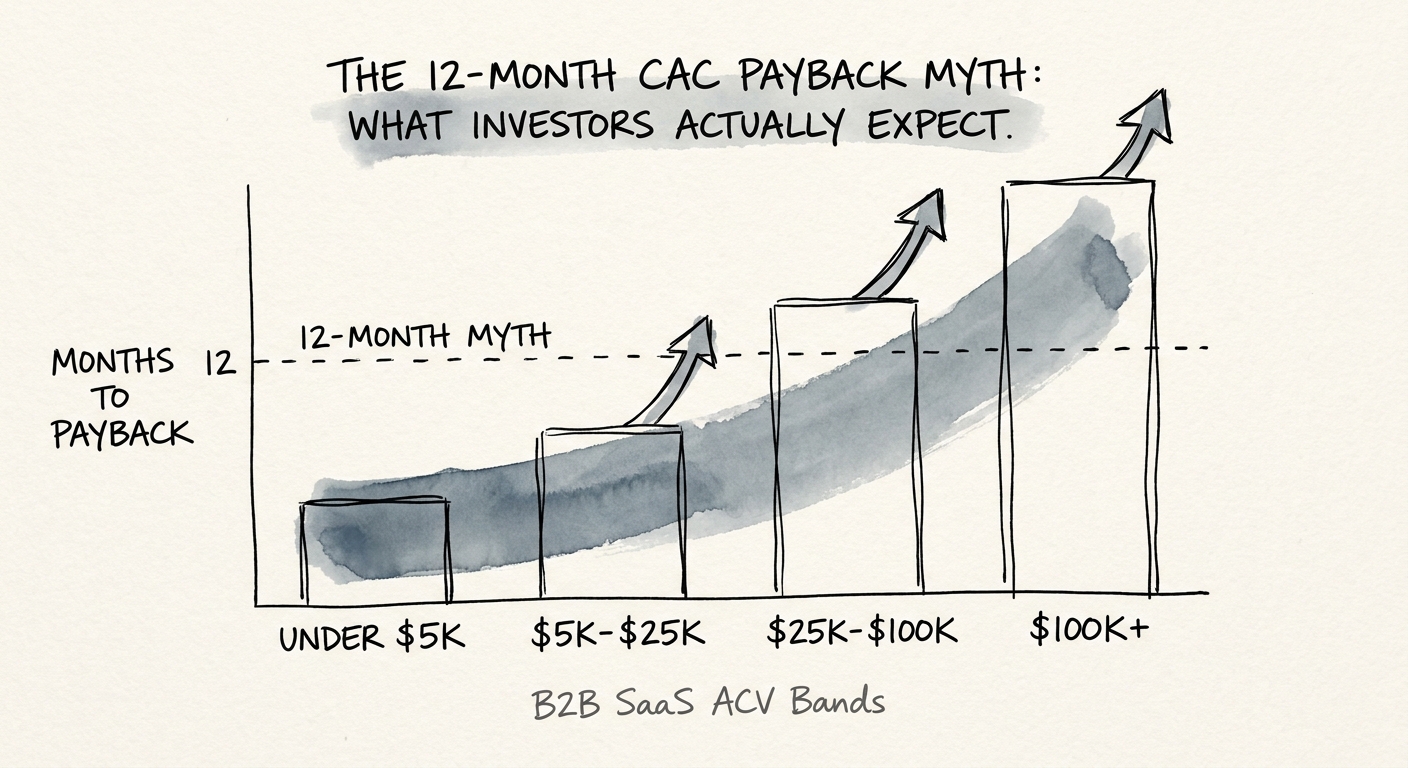
BRIEF · FINANCIAL INFRASTRUCTURE
The 12-Month CAC Payback Rule Is Costing You the Enterprise
A "perfect" 12-month blended CAC payback often hides a starved enterprise pipeline. Here's the cohort math buyers actually underwrite — and the 88% NRR it exposes.
18 Months (Median B2B SaaS CAC Payback)
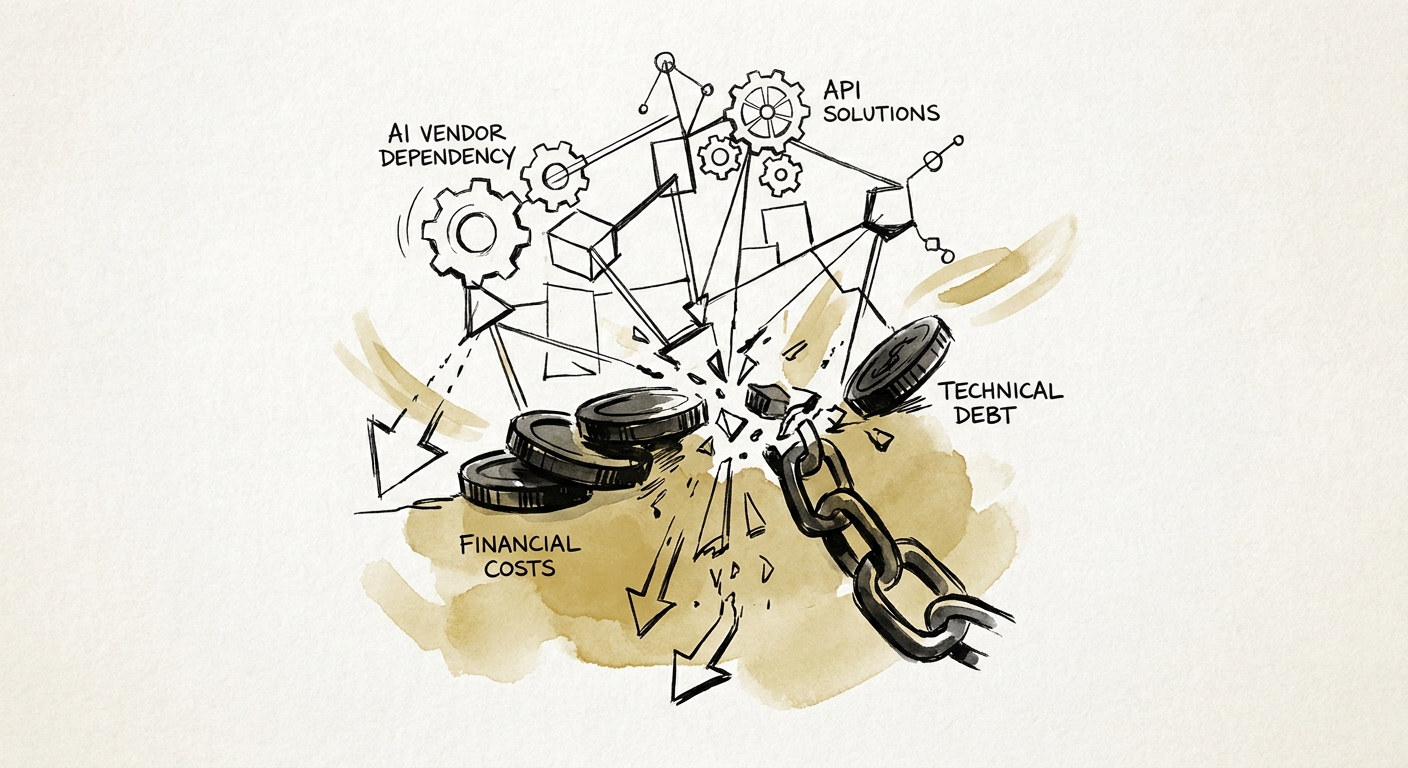
BRIEF · TECHNICAL DEBT
The Margin That Wasn't There: Auditing AI Vendor Dependency Before You Sign
A SaaS target's 82% gross margin can hide a single-vendor API bill that quietly halves it. How to diligence AI dependency, model drift, and COGS before LOI.
349% Increase in AI Infrastructure COGS
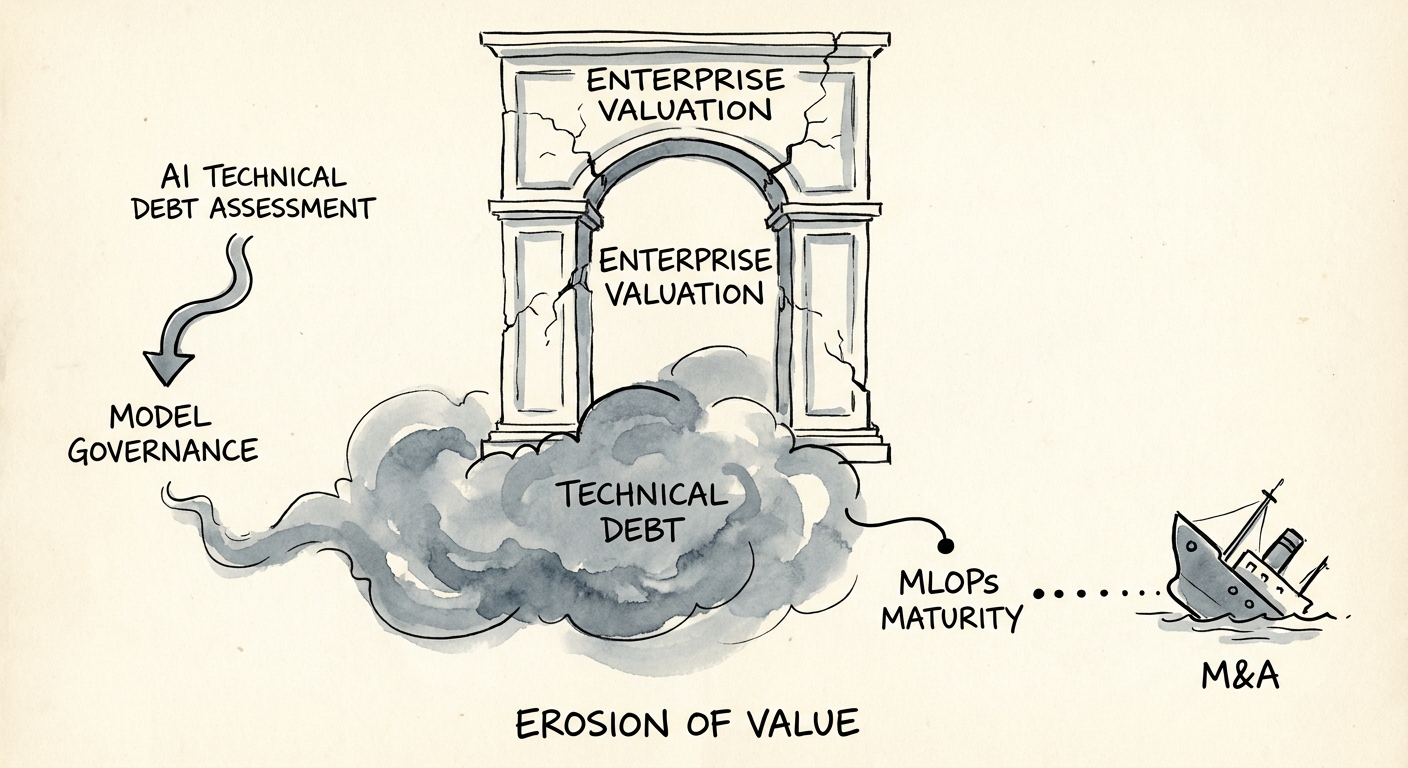
BRIEF · TECHNICAL DEBT
The MLOps Audit: How to Price an AI Target Before the Models Quietly Rot
AI targets don't fail in the codebase—they fail in the retraining pipeline. A buyer's field guide to auditing MLOps maturity, model drift, and registry gaps.
400% Maintenance vs. Development Cost Ratio for Ungoverned AI
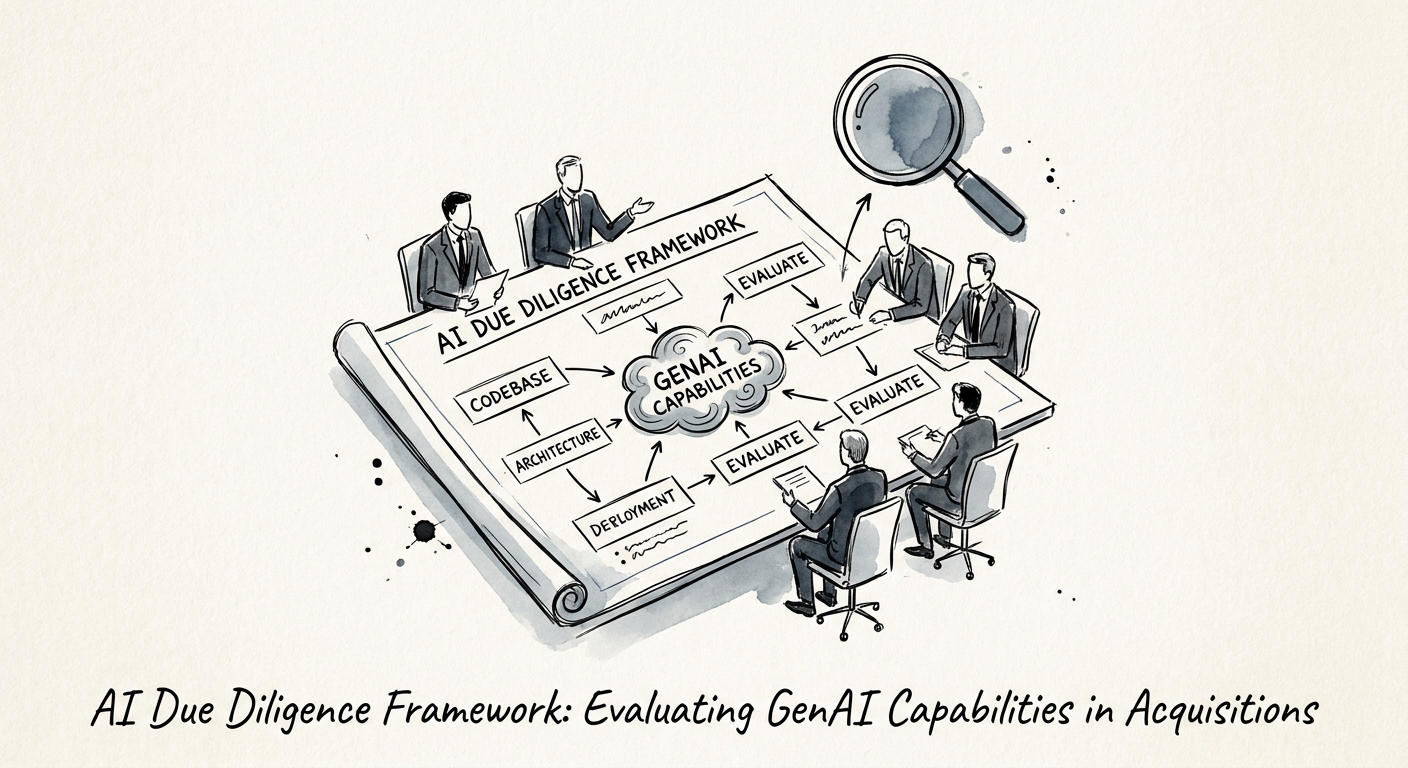
BRIEF · TECHNICAL DEBT
How to Diligence a GenAI Acquisition: Reading the CIM Against the Inference Bill
A PE diligence playbook for tech M&A: separate a real GenAI moat from a $25/month API wrapper, audit the IP chain, and price inference cost before you sign.
95% GenAI Pilot Failure Rate
BRIEF · TECHNICAL DEBT
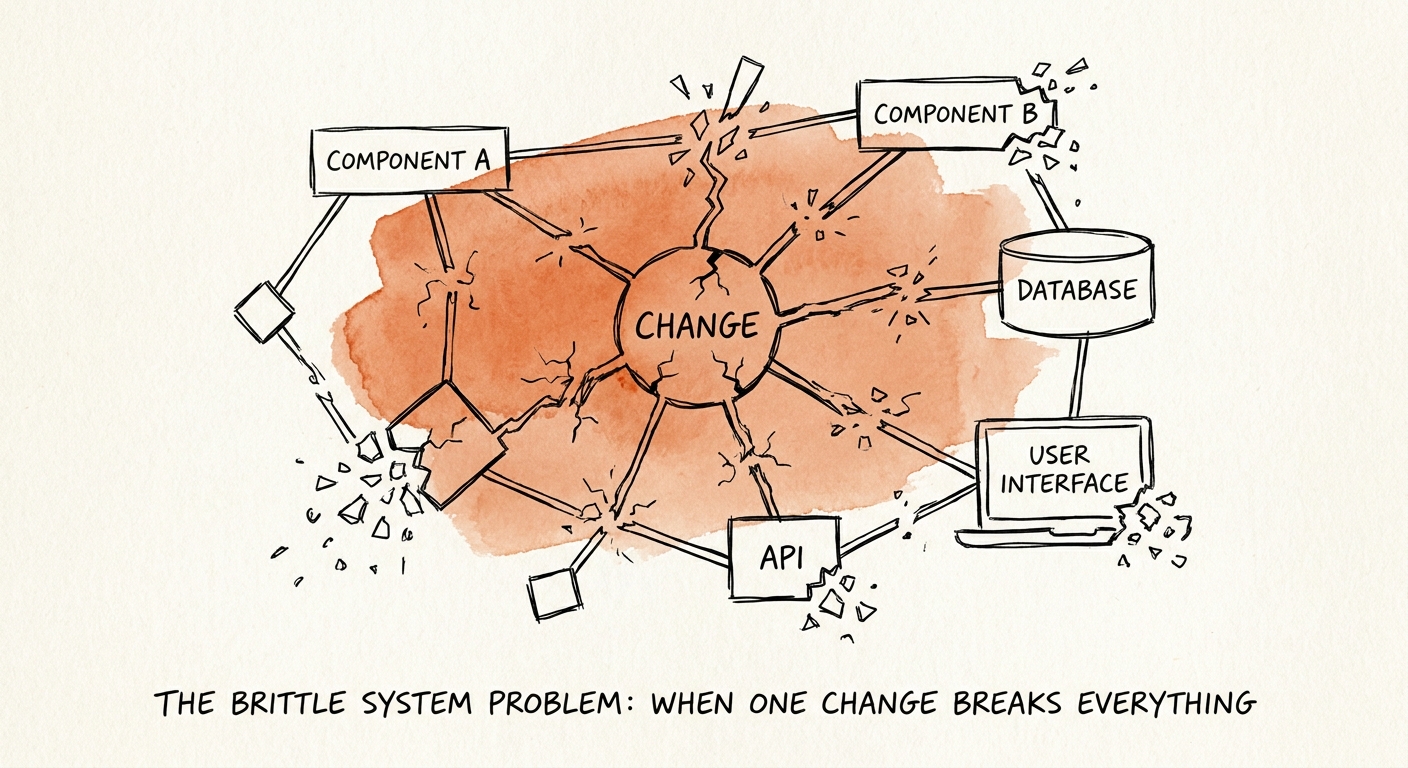
The Brittle System Problem: When a Dashboard Tweak Takes Down Billing
A two-line change to a reporting page shouldn't crash your payment gateway. When it can, buyers cut the price. Here's how brittleness becomes a 22% discount.
22% M&A Valuation Discount Applied to Brittle Architectures
BRIEF · TECHNICAL DEBT
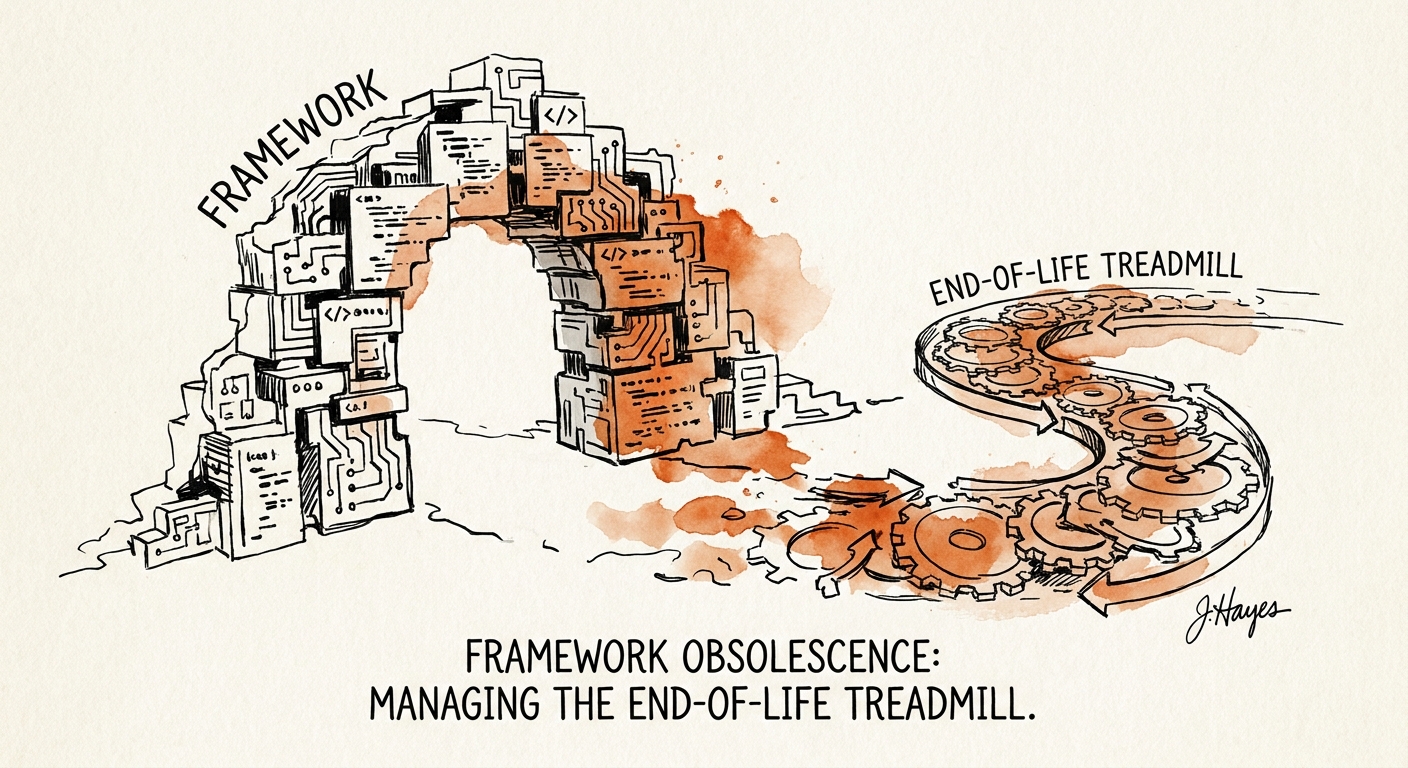
The End-of-Life Treadmill: How Dead Frameworks Sink SaaS Valuations
A frozen framework version is a diligence landmine. How SaaS leaders inventory end-of-life dependencies and run AI-assisted migration without freezing the roadmap.
EOL register first control for framework obsolescence