The seat price is a rounding error
A bookkeeping manager at a 60-person services firm tells you the AI tool is $30 a seat, twelve seats, so $360 a month, can we go. Three months later the project has cost $40,000 and isn't live. Nobody lied. The seat price was just the smallest number in the room.
Here is the part that trips up growing businesses specifically: at your size, you don't have a data team to absorb the hidden work, and you don't have an enterprise budget to throw at it either. So the cost shows up as your own people's time, which is invisible on a spreadsheet right up until the project stalls. The RSM middle-market AI survey shows mid-market leaders piling into AI; the San Francisco Fed analysis of AI and small businesses shows the smallest firms wrestling with the same questions on a thinner margin for error.
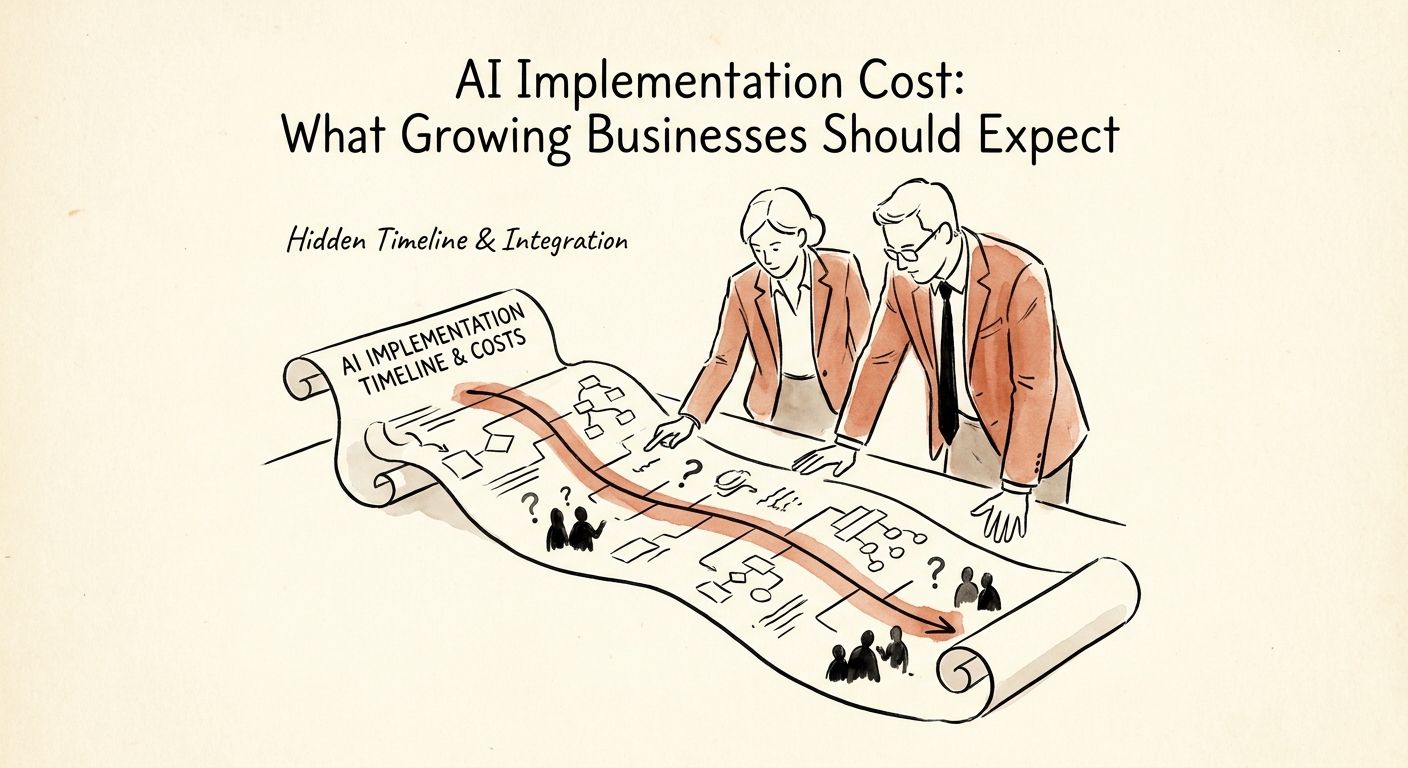
The real invoice has five lines, and only one of them is the tool: figuring out which workflow you're actually changing, getting the source data into a usable state, the tool or build itself, the controls and security review, and the weeks of adoption work before anyone trusts the output. Price the workflow, not the demo — and run the AI use-case scoring model before you call a single vendor, because a narrow workflow with one named owner is something you can estimate, and "AI transformation" is not.
Setup is a one-time bill; production is a subscription you keep paying
The two costs that get conflated will wreck your forecast. Setup is the dig-out: cleaning the data, deciding who can see what, writing the review checklist, training the team. You pay it once per workflow. Production is what it costs to run the thing every month after — the usage, the person who spot-checks output, the time spent handling the cases the model gets wrong. Budget them on the same line and you'll either underfund the launch or get blindsided by the recurring spend in month four.
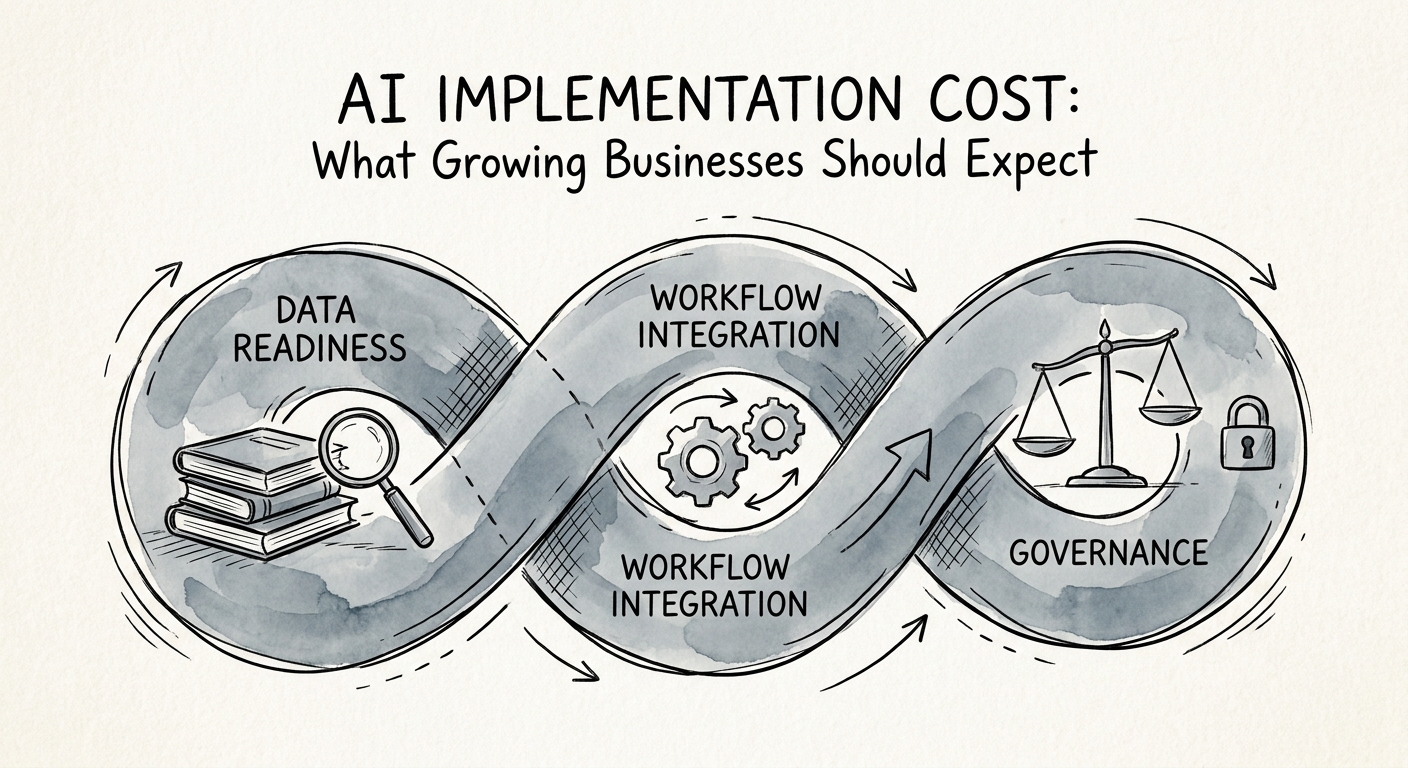
The OECD report on AI adoption by small and medium-sized enterprises is blunt about why this lands harder on smaller firms: adoption rides on data quality, skills, process ownership, and governance — and growing businesses usually have gaps in all four. Each gap is a setup-cost line, not a footnote. The NIST AI Risk Management Framework gives you the shopping list in plain terms: govern the program, map where it's used, measure the risk, manage the controls. Translated to dollars, that's source access, reviewer rules, logging, and a way to catch exceptions — quoted before launch, not bolted on after an output goes sideways in front of a customer.
And do the math on value honestly. "Saved the team six hours a week" is not money unless those hours change something you can see on the P&L. Use AI ROI measurement without fake savings to test it: did throughput rise, did quality improve, did you avoid a hire, did you hold price? If the saved time just evaporates into other tasks, you bought convenience, not return — fine, but price it like convenience.
Earn the right to spend more by shipping one workflow first
The cheapest way to control AI implementation cost is to refuse to scale until one workflow is genuinely working. Pick something small enough to launch this quarter but real enough to matter — say, drafting the first-pass response on inbound support tickets, or reconciling a recurring report. Give it a named owner, a tight set of source documents it's allowed to draw from, a training session, a number you're watching, and a rule for switching it off if it misbehaves. That's roughly a 90-day cycle: scope it, pilot it, review it. The Deloitte State of AI report keeps landing on the same point — the value lives in the process change, not the tool sitting next to it.
Treat the Gartner agentic AI project forecast as a warning written for your budget: a large share of agentic projects get canceled when value, data quality, cost, and controls were never pinned down. Cancelled projects are the most expensive kind — you paid the setup bill and got nothing back. Prove one governed workflow, then let it fund the next.
Monday move: list every AI idea floating around your company, then circle the single one with a clear owner and clean-enough data. That's your first budget. Turn it into scope, owners, controls, and weekly evidence with a 90-day AI implementation plan.
