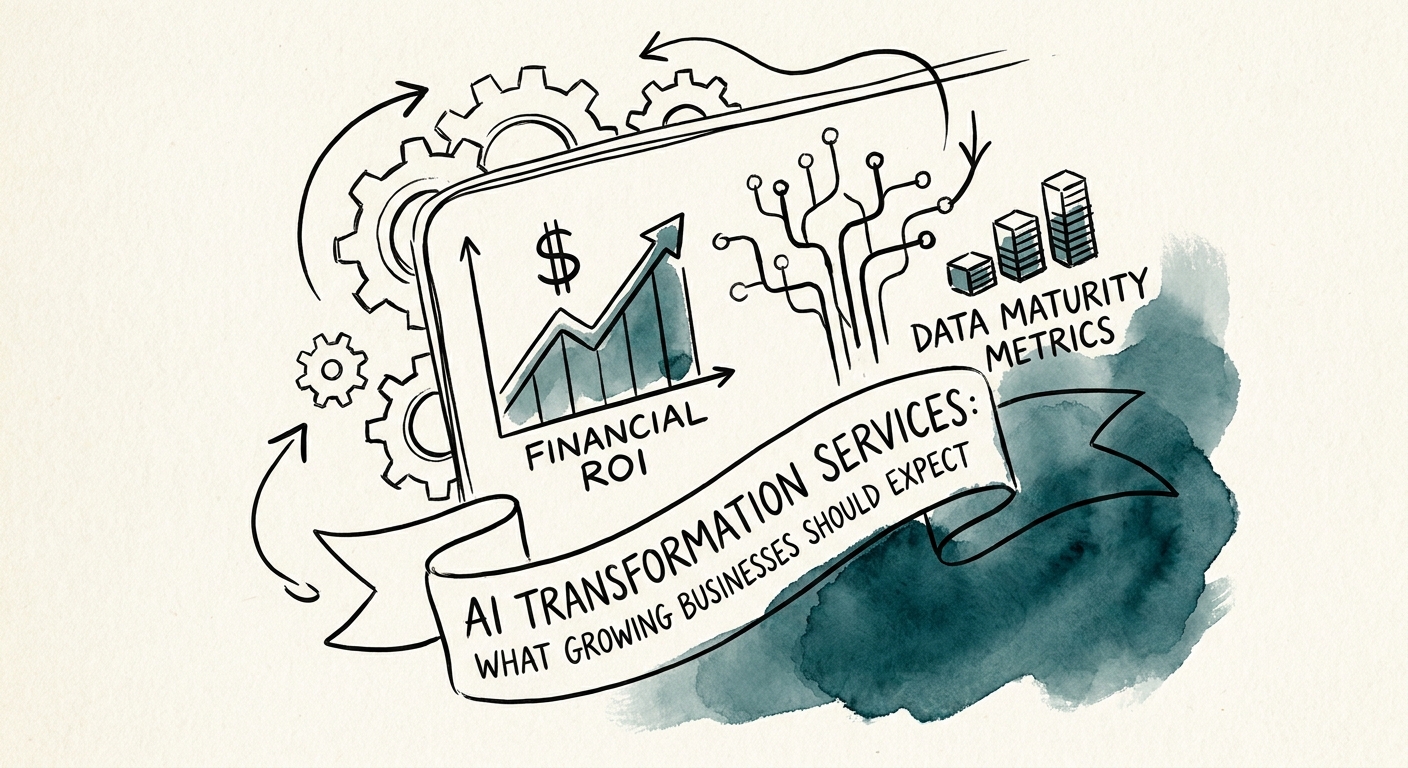
The proposal looks great. That's the problem.
Picture the meeting. A vendor has just run a flawless demo: an AI assistant that drafts your customer follow-ups, summarizes a contract in four seconds, answers a support question in your brand voice. The slide says "AI Transformation." The number at the bottom is real money. Everyone in the room is nodding. You are about to sign something you cannot actually evaluate, because the demo answered a question you weren't asking.
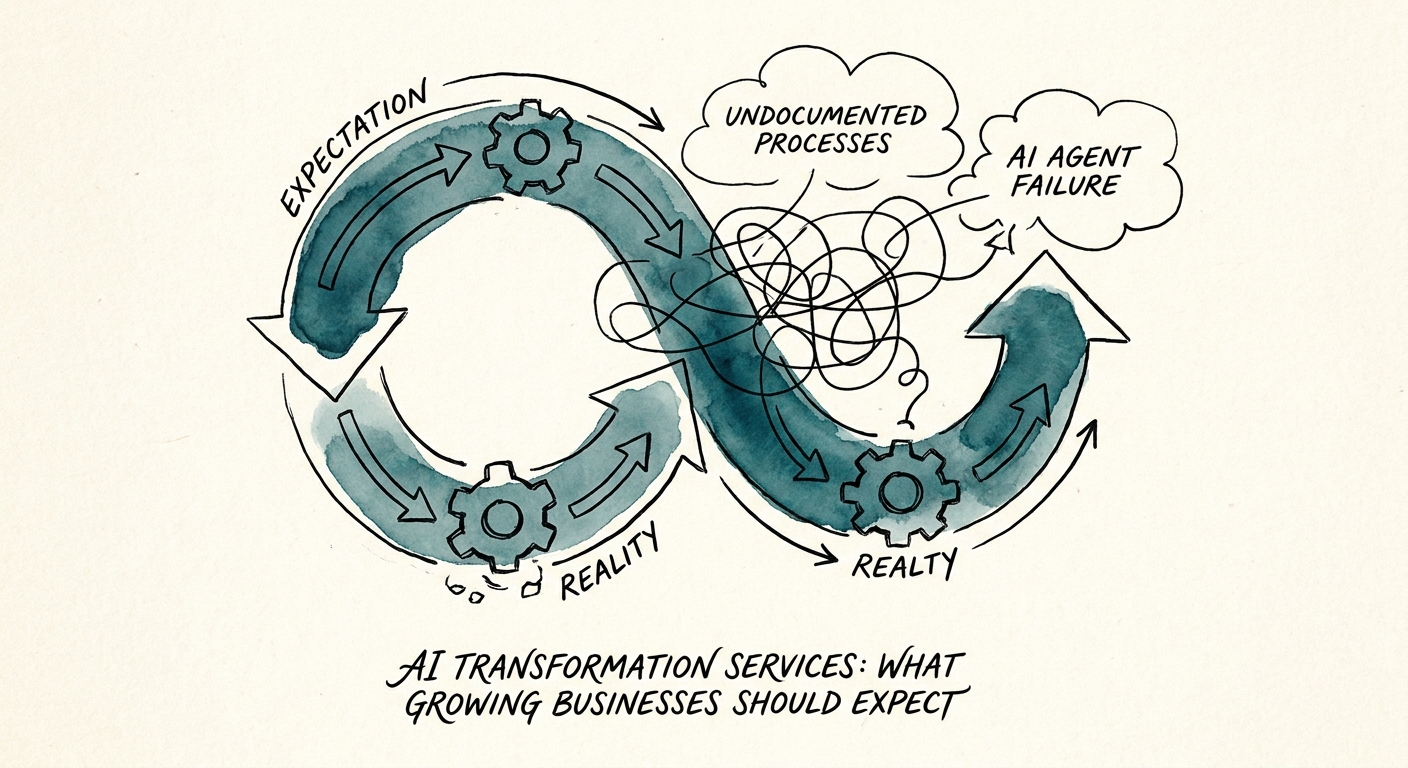
The demo proves the model can produce an output once, on a clean input, with the vendor at the keyboard. It says nothing about Tuesday — when the input is a forwarded email with three attachments, the person who knows the exception is on PTO, and the AI confidently produces an answer that's wrong in a way nobody catches for a week. The gap between "it worked in the room" and "it runs in my business" is the entire job. A transformation proposal that doesn't address that gap is a software install wearing a strategy costume.
So before you react to the demo, change the question you're answering. Not "is the AI impressive?" but "what does this engagement leave behind that my operators can run without the vendor in the room?" If you're still mapping whether transformation is even the right shape of help, the practical AI transformation services guide compares a full engagement against a single narrow tool build — sometimes the smaller buy is the honest answer.
Read the scope like a contract, because it is one
Open the statement of work and look for nouns, not adjectives. A scope built on "transformation," "synergy," "AI-powered," and "intelligent automation" is unmanageable on purpose — you can't hold a vendor to a theme. A scope you can govern names specific things. Run it against five questions and watch how fast a vague proposal collapses:
1. Which workflows, by name? Not "sales and marketing." The thing itself: "drafting renewal-quote emails from CRM data," "triaging inbound support tickets into three queues." If it's a category, not a workflow, push back. 2. What's the source of truth? The AI has to read from somewhere. If your real data lives in one manager's spreadsheet and his head, the first phase is documenting that, not automating it. 3. Who approves the output, and what's the review rule? Every AI workflow needs a human owner and a clear "this goes out automatically" versus "this needs eyes" line. 4. What's the rollback? When the AI starts producing garbage — and it will, after a system change or a data drift — how does the work revert to manual without stopping? 5. What gets excluded? A good advisor says no in writing: this contract is too risky, that one too vague to measure.
If the proposal can't answer those, it isn't ready to govern — it's ready to sell. This isn't a fringe opinion. The recurring finding across McKinsey, PwC, and MIT Sloan Management Review is that value comes from redesigning the workflow, getting the data ready, governing the output, and earning adoption — not from buying access to a better model. The model is the cheap part. The five questions above are where the money actually goes.
Price it by the operating change, then watch adoption
Here's the test that separates a useful engagement from an expensive prototype: at the end, can a manager who wasn't in any of the meetings run the workflow off the documentation alone? If yes, you bought transformation. If the workflow only works while the vendor babysits it, you rented a demo on a retainer.
That reframes how you judge value. Don't let anyone multiply "minutes saved per task" by your headcount and call it ROI — that math counts time that just leaks into other busywork. Pick one or two workflows with enough volume to matter and enough structure to survive, and measure something a leader can act on: how fast renewal quotes go out, how many support tickets resolve before escalation, whether your weekly report exists by Monday 9am instead of Wednesday. Say a 40-person services firm targets quote turnaround — month one maps the process and the data, month two builds and tests with the actual owners, month three runs it live with review and logged exceptions. That's the realistic arc, and AI pilot vs. production workflow shows where pilots quietly die before they reach it.
Then watch the one metric vendors never put on a slide: do your people actually use it? A workflow employees route around is not transformed, no matter how clean the technology is. If the team trusts the output, knows when to override it, and clears exceptions faster than before, the change took. If they've built a quiet workaround, it didn't — and no demo will tell you which is happening. If you're not sure which workflow to put first, run the AI Opportunity Score to rank candidates by value, feasibility, risk, and how hard adoption will be. Start with the one you can govern and measure — not the one that looked best in the room.