The tell is in the first thirty minutes
Picture the kickoff. A consultant has your calendar for an hour to scope an AI automation project. Watch what they open with. If the first words are "Are you on OpenAI or Anthropic?" or "Let me show you what the agent can do," you are watching a product demo wearing a strategy hat. The good ones open with a question that has nothing to do with software: "Walk me through the last time this process broke and someone had to clean it up by hand."
That difference is not stylistic. It is the whole game. AI automation almost never fails at the model. It fails at the seam between the software and the people who used to do the work — the moment a record doesn't match, the approval that nobody owns now, the exception that used to get a human's judgment and now gets a confident wrong answer. A consultant who hasn't asked who owns the decision can't possibly design for the moment that decision goes sideways.
The pattern shows up in the research too. McKinsey's 2025 State of AI, the IBM Institute for Business Value, and PwC's 2025 Responsible AI survey keep landing on the same unglamorous conclusion: the businesses getting value aren't the ones with the fanciest models. They're the ones who treated adoption and governance as the actual project. The model was the easy part.
The five artifacts that should land on your desk
By the end of a serious engagement you should be holding five things, and you should be able to point at each one. Not slides — working artifacts.
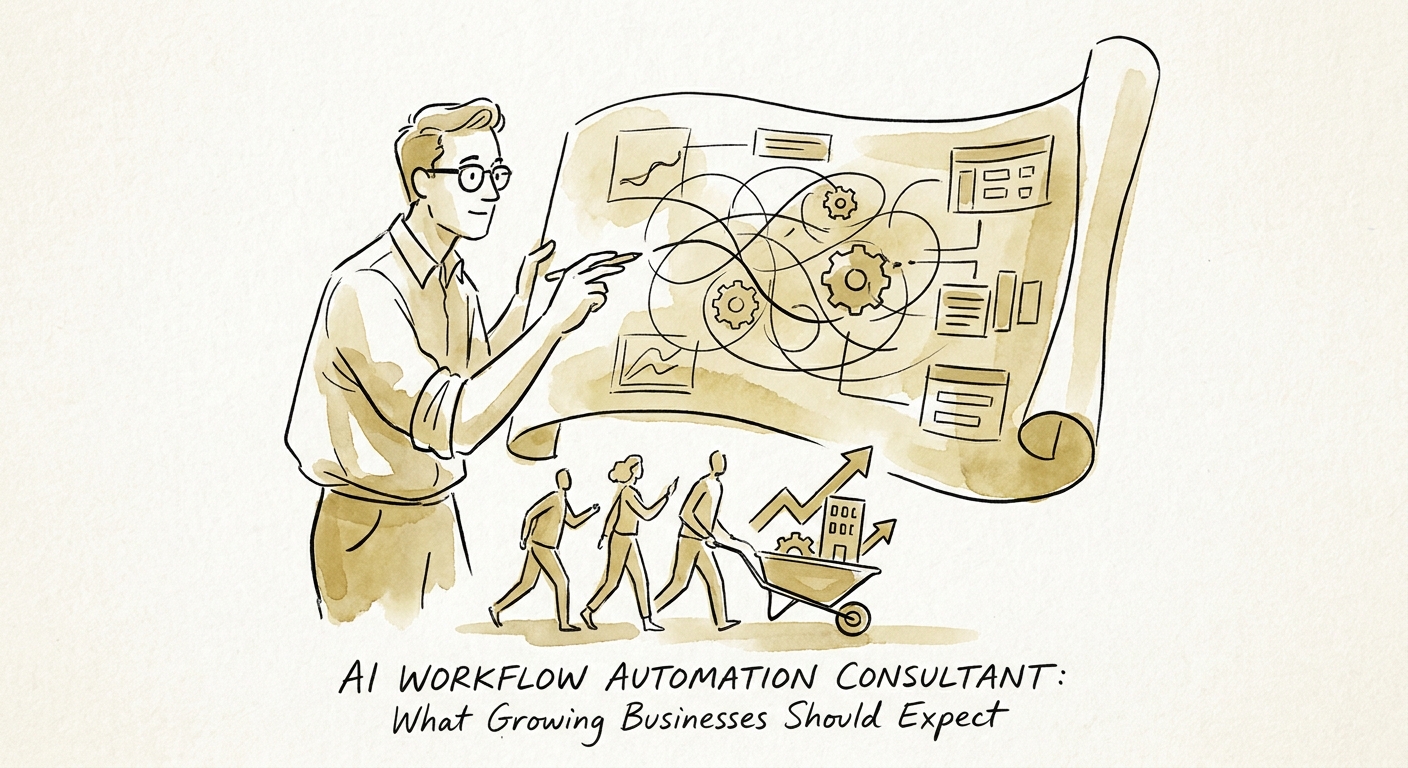
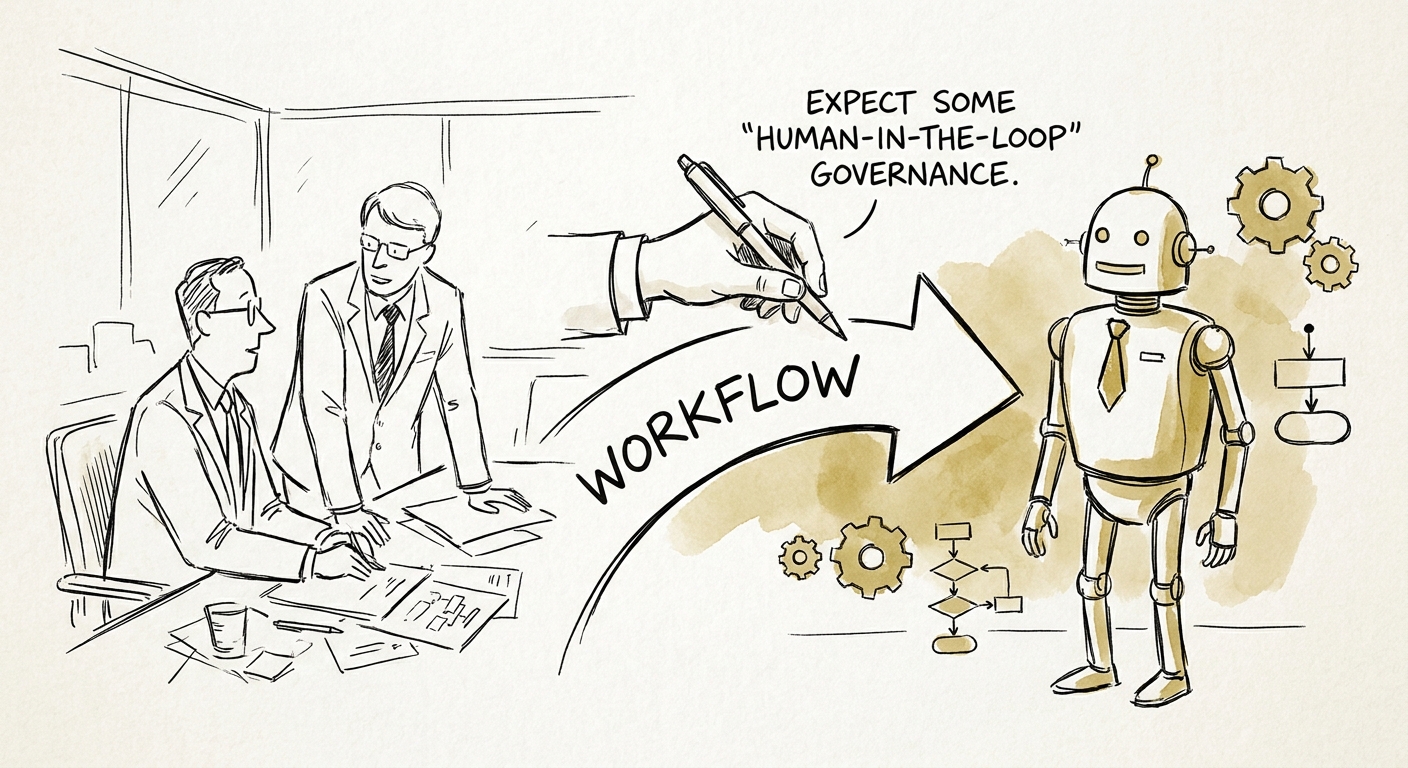
A workflow map that shows the trigger, the source systems, the decision owner, the approval rule, and the exception path — drawn for one specific process, like "a new vendor invoice arrives," not "accounts payable" in the abstract. A source-system inventory that says, in plain language, which data the AI is allowed to trust and which is too messy to feed it yet. A control model naming exactly where a human approves, overrides, or escalates — this is where the NIST AI Risk Management Framework earns its keep, because "who catches it when it's wrong" is a design decision, not an afterthought. An adoption plan with names attached: who gets trained, who owns the workflow after the consultant leaves. And a scorecard that defines what "it worked" means before you spend a dollar building.
Here's the artifact that tells you the most: the list of what they refuse to automate yet. Bain's 2025 agentic AI research makes the case that real transformation means redesigning a few core workflows deliberately, not scattering a dozen pilots. A consultant who will tell you "your refund-approval process isn't clean enough to automate — fix the policy first" is governing the work. One who says yes to everything is selling hours. Before you even pick a workflow to hand them, the manual-work guide helps you bring a strong candidate to the table.
Pressure-test them on the bad day, not the demo
Demos are designed to go well. Production is where you find out. So before you sign, hand the consultant four scenarios and listen to whether they have real answers: What happens when two source systems disagree about the same customer? What happens when the model's confidence is low — does it guess, or does it flag a human? What happens when an employee overrides the AI three times in a row? And six months from now, when a regulator or a board member asks "why did the system make that call," can you reconstruct it?
If those answers are crisp, you've got someone who has shipped this before. If they're hand-wavy, you've got someone who has demoed it. The first real build should be narrow on purpose — one workflow you can watch closely, measure honestly, and fix fast. Get that one right and the same design pattern travels to the next process. Get greedy and automate five things at once, and you've built five places to fail at the same time.
When you're ready for a partner who designs the operating work before the software, that's what AI Workflow Automation is built around — and when your team is ready to actually build, the 90-Day AI Implementation Sprint turns the map into a running workflow.