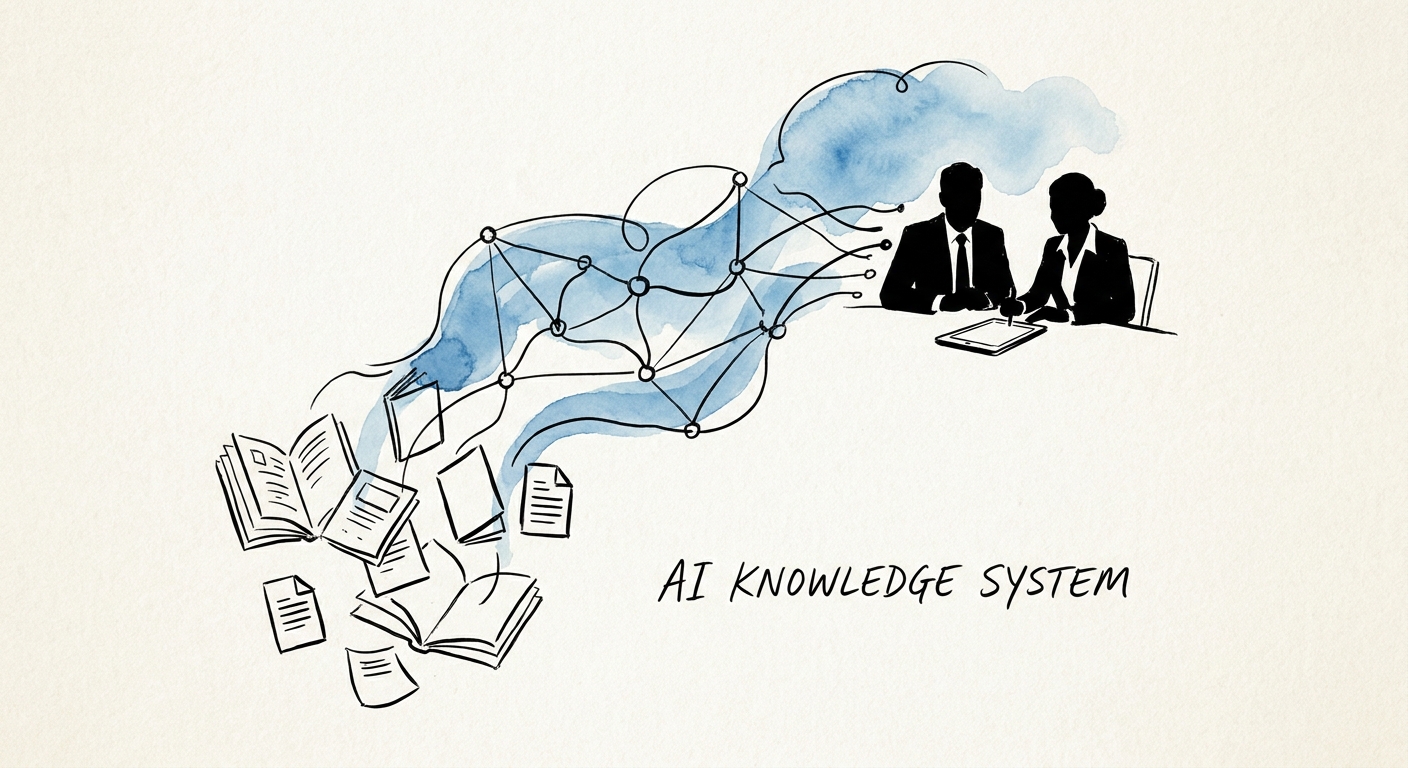
The answer was right. Eighteen months ago.
Picture a 60-person professional services firm that implements a SaaS platform for its clients. A delivery consultant, mid-call, asks the new internal assistant how to configure a particular integration. It returns clean, confident, step-by-step instructions. The consultant follows them. The steps are for a settings panel the vendor moved two releases ago. The client's environment doesn't match. Now there's a support escalation, a credibility dent, and an afternoon of cleanup.
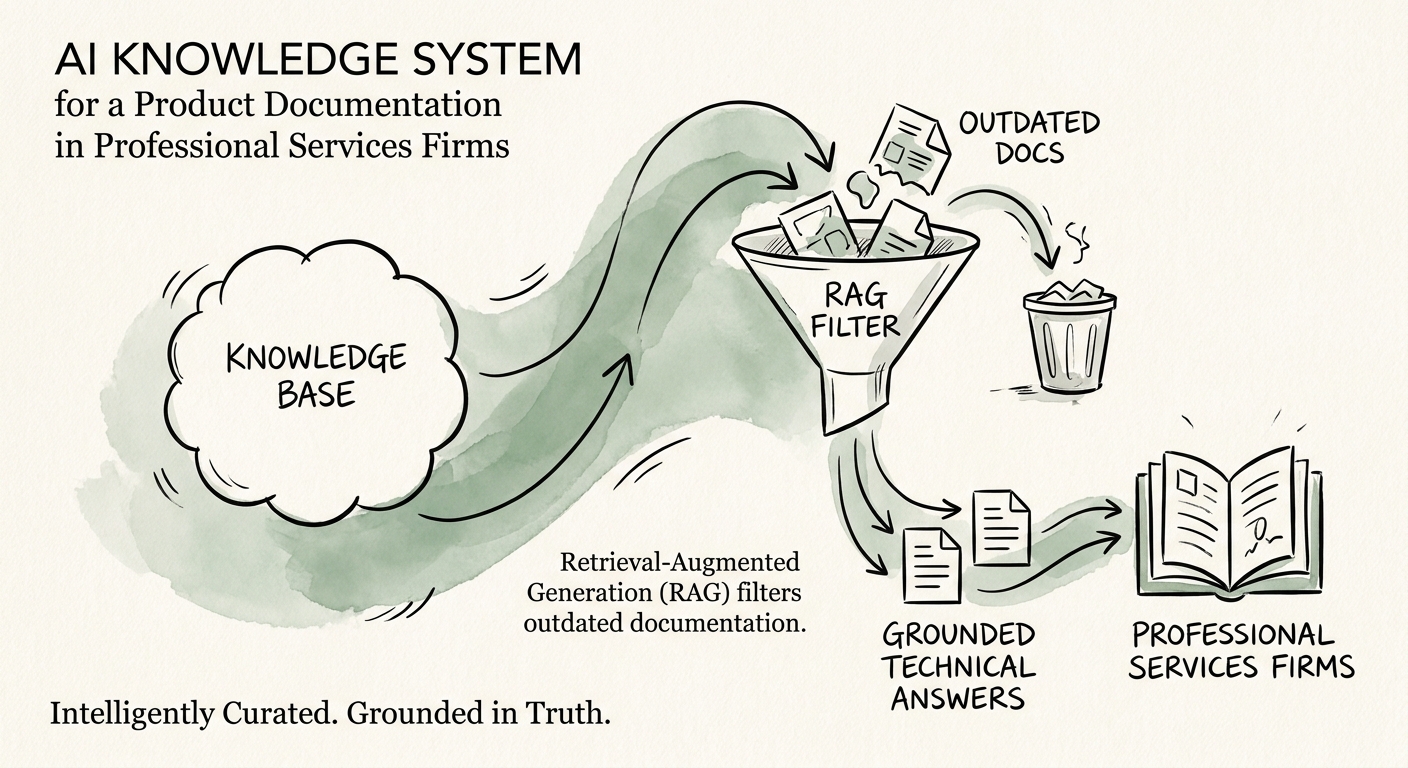
Nothing was hallucinated. The assistant faithfully retrieved a real document — a release note from a version nobody runs anymore that was still sitting in the shared drive. That is the specific failure mode product documentation creates, and it's different from the risk in proposals or contracts. Product docs don't just go stale; they actively contradict each other across versions while every copy still reads as authoritative.
The research consensus points the same direction before you pick a model. Deloitte State of AI in the Enterprise 2026 and the RSM middle-market AI survey both land on the same operating requirement: production AI needs governed workflows and a named business owner, not just good retrieval. For product documentation, governance starts with one unglamorous question — when the platform shipped v8, did anyone retire the v6 docs, or are they still in the index waiting to be retrieved with full confidence?
Version and audience are the two axes that break
Most product-doc libraries inside a services firm are layered, not clean. There's vendor-published documentation, your own internal release notes, retired instructions nobody deleted, customer-specific workarounds that apply to exactly one account, and support-only guidance that should never reach a client deliverable. A naive retrieval system treats all of it as equally true. The work is teaching the assistant which layer it's pulling from before it speaks.
Concretely, that means every document carries two pieces of metadata the model must respect: which product version it applies to, and who it's for. Say a consultant asks about a feature — the system should know whether the client is on v7 or v9 and answer from the matching docs, and it should never surface a one-off workaround built for Client A as general guidance for Client B. The NIST AI Risk Management Framework and CISA AI Data Security Best Practices translate cleanly here: version control, permission boundaries, logged answers, and a forced escalation to a human reviewer the moment a question touches a live client implementation rather than a general "how does this work."
There's a procurement step that's easy to skip and expensive to miss. Client-specific workarounds and internal release notes are some of your most sensitive content — they describe how named accounts are configured. Before any of it enters a hosted AI environment, confirm the data controls. OpenAI Enterprise Privacy is reasonable diligence material, but the obligation is yours: verify retention, training-use, and administrative-access terms for whatever environment you choose, because "the vendor is reputable" is not a data-handling policy. For the governed-retrieval mechanics that apply across this whole category, the policy question answering pattern for professional services firms covers the same permission-boundary discipline.
Scope the first release to one product, and measure rework
The temptation is to ingest every product the firm supports on day one. Resist it. A product-doc assistant earns trust the way a junior consultant does — by being reliably right about a narrow domain, then expanding. For the first production release, pick one product (ideally one you've implemented many times and know cold), one current version, one owner who can approve and retire documents, and one user group of delivery consultants. Hold there until it's proven under real delivery pressure, not a demo.
And measure the right thing. The win is not "search is faster" — that's a vanity metric. The win is fewer escalations caused by stale references, less rework on configurations that were done against the wrong version, and uncertain answers landing on a reviewer's desk instead of in front of a client. Track how often the assistant correctly defers versus how often someone has to undo what it suggested. Before you green-light a second product or a wider rollout, read how to measure AI ROI without fake savings so the expansion case rests on real delivery outcomes — and use the manual-work scoring guide to confirm the library is even ready before you start.
