The proposal that won in 2024 is the one that gets you sued in 2026
Picture the scene at a 35-person agency on a Tuesday afternoon. A strategist is building a new-business pitch due Thursday. She does what everyone does: opens the shared drive, finds the deck that closed a similar client last spring, and starts copying. The retainer scope, the "we drove a 41% lift in qualified leads" case-study line, the media-rate assumptions, the kill-fee language. Twenty minutes of reuse, saved.
Here's what she can't see in that file. The 41% number was a client-specific result a former AE rounded up and the client never formally approved for reuse. The media rates are eight months stale. The scope quietly assumed two rounds of revisions when this prospect's RFP demands unlimited. She just pasted three landmines into a binding-looking document, and nobody downstream will catch them because the language reads clean.
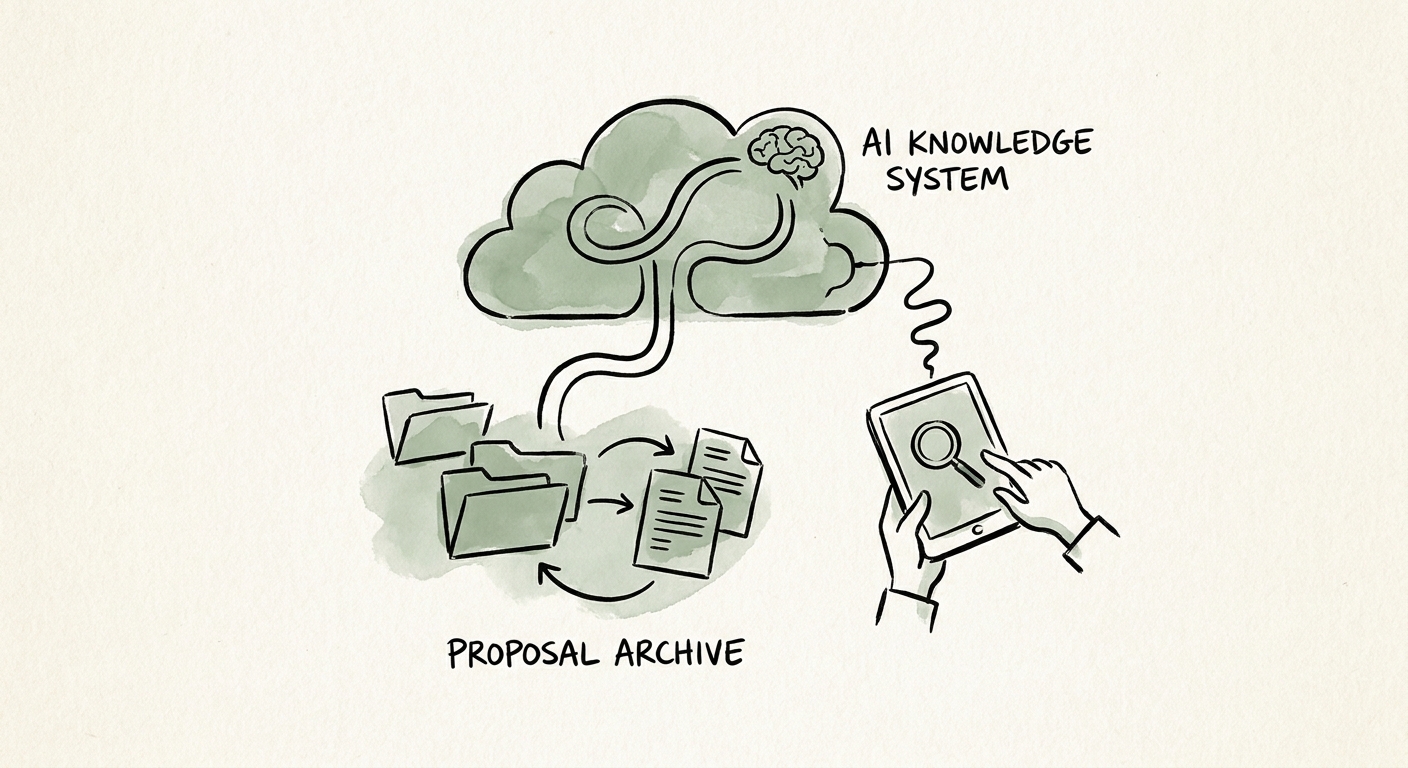
This is the actual problem with letting AI retrieve from a proposal archive. The risk was never that AI invents something. The risk is that AI is too good at surfacing your most persuasive past language at exactly the moment that language has expired. A polished sentence about a result, a price, or a deliverable is the most dangerous thing in your drive precisely because it sounds finished. The Census Bureau's data on AI use at U.S. businesses shows adoption climbing fastest in firms your size, and the OECD's research on SME adoption says the same. But adoption pressure is not the same as a safe workflow, and a proposal is the one document where a confident wrong answer goes out under your signature.
Three things every retrieved line must carry before it touches a draft
The fix is not a smarter model. It's deciding, per reused element, what has to travel with the language. I'd attach three tags to anything pulled from the archive, and I'd make them visible to the strategist inside the draft, not buried in a log she'll never open.
An approval status for every claim. Every performance number, every named-client reference, every "we increased / we reduced" line gets one of three states: approved for reuse, approved only for the original client, or never approved. The 41% lift line should have stopped the strategist cold with a flag that said "client-specific, not cleared for external reuse." This is the rights-sensitive layer agencies forget — a case-study result you have permission to show is not automatically one you have permission to re-sell as a forward-looking promise.
A freshness stamp on every assumption. Pricing notes, media rates, and rate-card math should retrieve with the date they were true. AI can do something a strategist won't bother to: surface "this rate is 247 days old — confirm before sending" next to the number. That single behavior kills the most common margin leak in agency proposals, which is quoting last year's economics into this year's contract.
A scope-delta against the new brief. The most useful thing AI can do isn't paste old scope — it's compare old scope to the current RFP and flag the gaps. Old proposal assumed two revision rounds; this prospect wants unlimited. Old one excluded paid media management; this one implies it. That delta, shown plainly, is worth more than the entire retrieval feature.
This is exactly the contextual-risk posture the NIST AI Risk Management Framework describes: a sentence that's harmless in a draft becomes material the instant it enters a binding document. And because proposal archives are stuffed with client names, rates, and confidential results, the permission boundary, retention window, and access log for those records should follow CISA's guidance on securing the data used to operate AI systems — and if you're running this on a hosted model, confirm your client data sits under the kind of enterprise privacy commitments that keep it out of training. Deloitte's 2026 read on enterprise AI lands on the same point: value comes from a process you can review, not from the demo.
What to do Monday, and how to know in 90 days if it's working
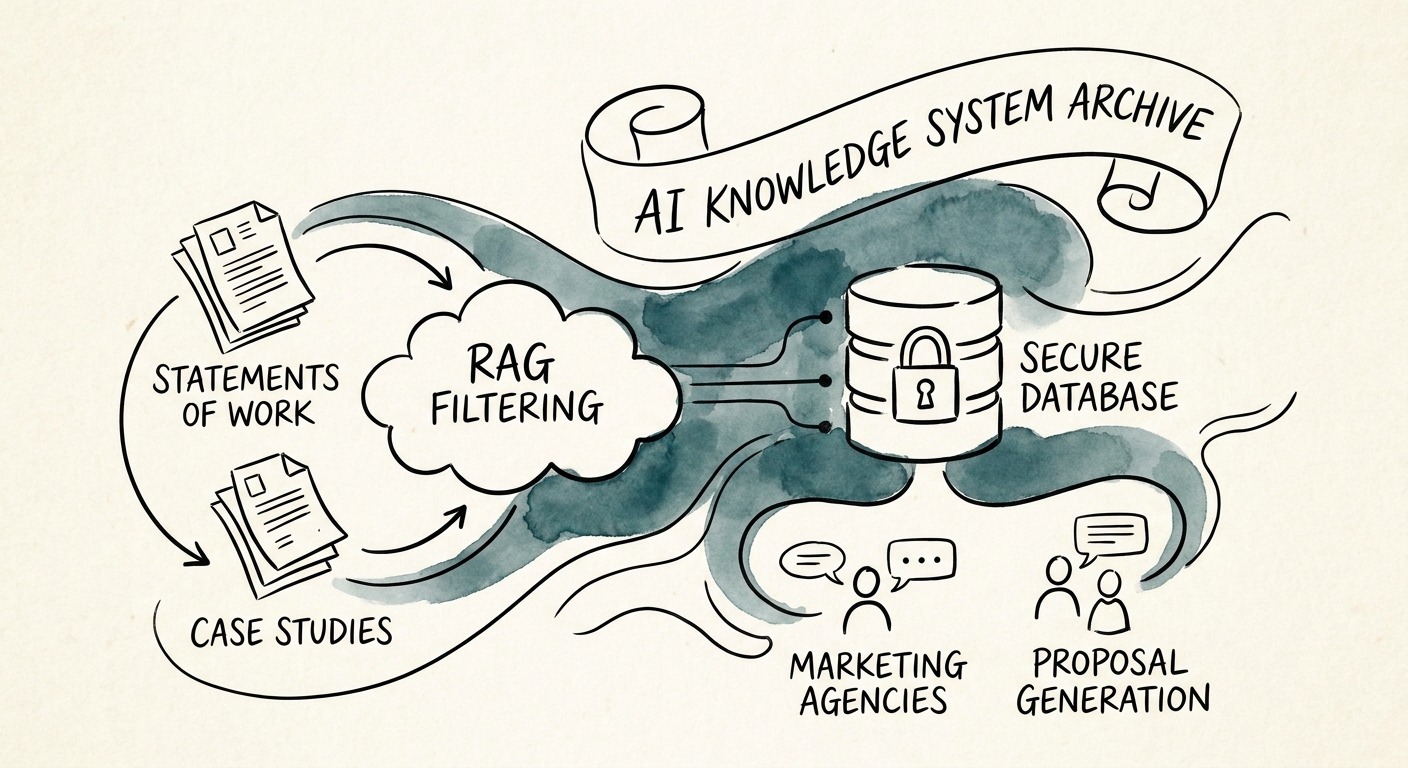
Don't roll this out across the whole drive. Pick one motion: inbound RFP responses, or net-new pitch builds — not both. Name one person, probably your head of growth or new business, who owns which archived elements are allowed to be reused at all. In the first 30 days, the only job is curation: walk the existing archive and tag every reusable claim, every price assumption, and every case study with its approval status. Most agencies discover here that a third of their "greatest hits" language was never cleared for reuse. That discovery alone justifies the project.
Days 31 to 60, run it live but with a human gate. Every retrieved element shows up in the draft with its three tags, and the growth lead signs off before anything goes to a prospect. You're not measuring "did AI write the proposal." You're measuring four things: how often a stale price got caught before sending, how many uncleared claims got blocked, how many scope gaps against the brief got flagged, and how much faster a first draft reached review. By day 90 you'll know which way to go. A good outcome feels boring — fewer rewrites, fewer "wait, can we actually say this?" Slack threads, faster turnarounds. A bad outcome looks polished but your growth lead is still hand-checking every line, which means you've built a second review queue instead of removing one.
If you're weighing this against other places to start with AI, run it through the AI Opportunity Score before you commit a quarter to it, and save the AI ROI Calculator for after you have real cycle-time and catch-rate evidence from the pilot. When you're ready to sequence this into the next workflow without losing the source discipline, that's what the AI Transformation Blueprint is built to map.