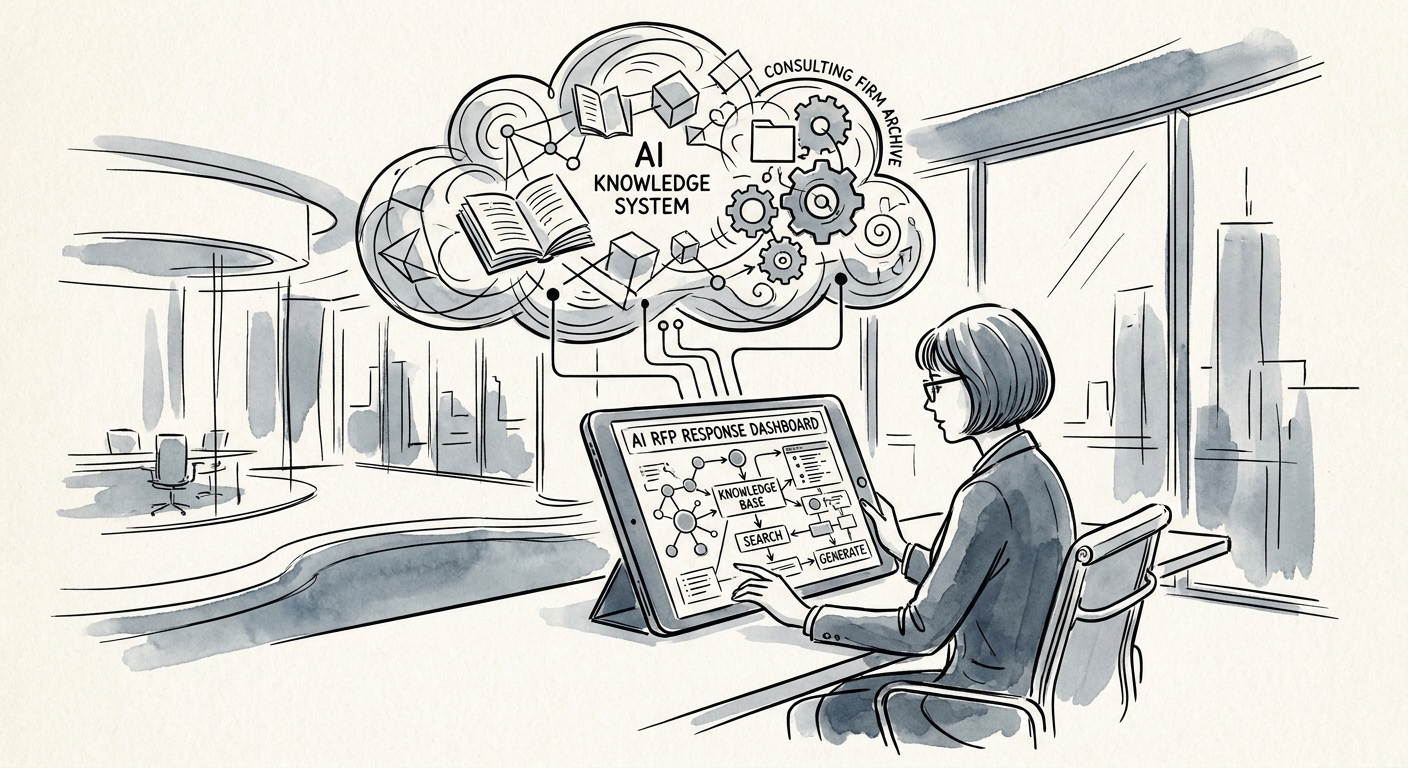
The 4 p.m. Friday copy-paste that wins the deal and loses the dispute
Picture a 60-person consulting firm chasing a $1.4M engagement. The RFP lands Tuesday, due Friday. By Thursday afternoon the proposal lead is doing what every proposal lead does under deadline: opening last quarter's winning response and pasting. The security questionnaire answer says the firm holds SOC 2 Type II. It did — the audit lapsed six weeks ago and renewal is mid-cycle. The SLA section commits to a four-hour incident response that the delivery team quietly stopped offering after a staffing change. Nobody catches it. The firm wins. Then, eight months in, a client lawyer reads the contract back to them.
This is the specific failure an AI RFP library should kill: not bad writing, but confident reuse of language that was true once. The point of automation here isn't a slicker draft. Deloitte's production-AI framing draws the right line — value shows up as a faster first response that still respects who is allowed to commit the firm to what. An RFP answer is a contract draft wearing a marketing costume. Treat it like marketing copy and you ship liability at the speed of a paste.
Make the expiration date a field, not a memory
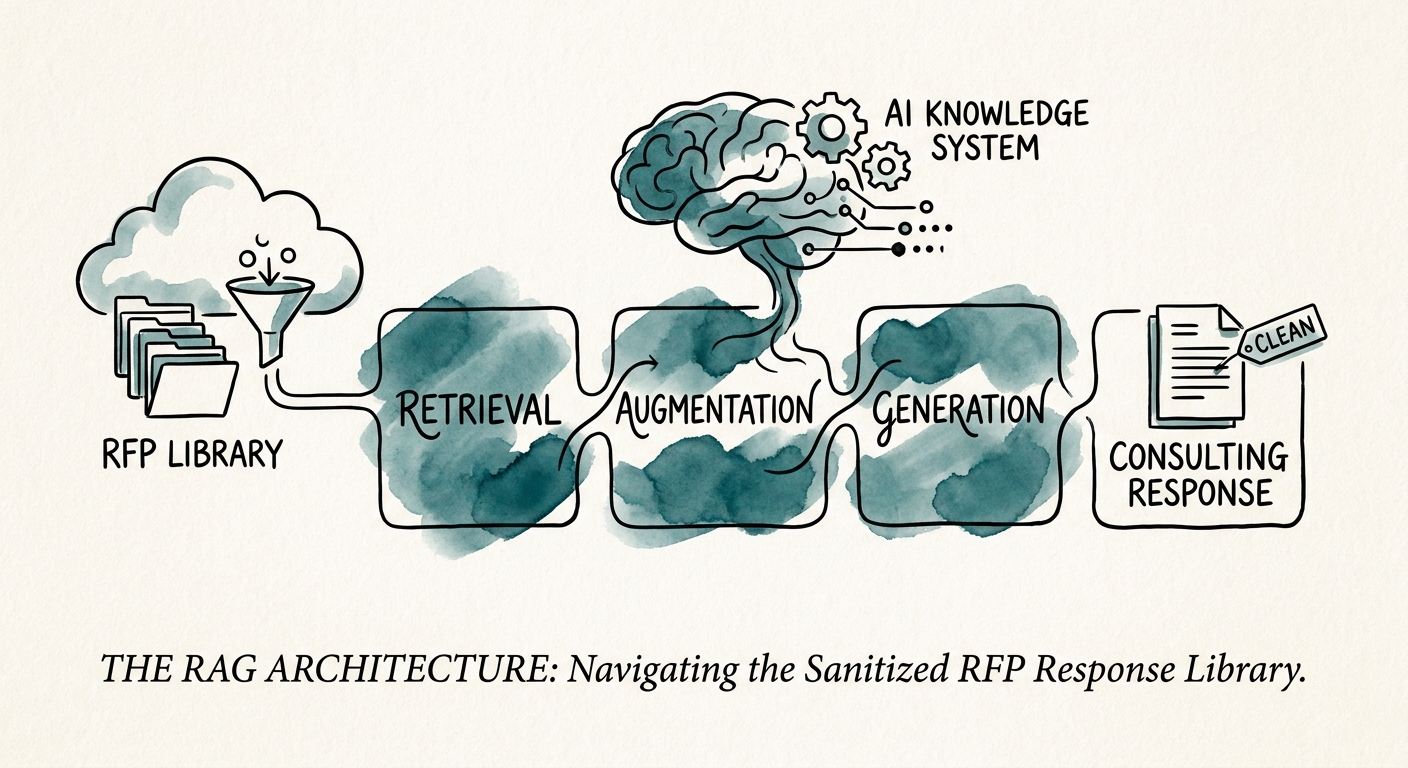
The thing that separates a real RFP library from a folder of old proposals is that every answer block carries metadata the assistant can act on: a named owner, an approval date, a hard expiration date, the proof point it relies on, the buyer context it fits, compliance tags, and the reviewer who must sign before it leaves the building. When a proposal lead pulls the SOC 2 answer, the assistant shouldn't just retrieve it — it should surface that the underlying attestation expires in 14 days and route the block to the security reviewer automatically. That single behavior would have caught the lapsed-audit scenario.
NIST's AI risk guidance is useful for drawing the stop line: draft support for capability narratives and past-project summaries is low-stakes and fine to automate aggressively. But anything binding — security postures, regulated claims, SLA commitments, pricing, indemnification language — needs a human gate the AI cannot route around. CISA's data-security guidance earns its place because an RFP library is one of the most sensitive corpora a firm owns: it holds client names you may be under NDA not to disclose, your own security architecture, your delivery methods, and your commercial terms. The assistant must respect those permissions, log which approved blocks it served, and never let a block tagged for one client's pursuit bleed into another's. Start with one proposal category — say, the security questionnaire — not the entire sales library.
The monthly hour that keeps the library honest
Don't build this when your "library" is three years of unsorted prior submissions in a shared drive. Feeding that to AI doesn't organize it — it makes the stale answers easier to find and faster to reuse, which is the opposite of what you want. The prerequisite is governance: answer blocks with named owners and a known review path. If you don't have that yet, that's the project, not the AI.
When you do pilot it, measure the things a proposal team actually feels. Time from RFP receipt to credible first draft. Volume of late-cycle reviewer edits — the painful kind that arrive Thursday night. Number of sections kicked back for unsupported or expired claims before submission, not after a client catches them. And the count you most want to drive to zero: binding commitments that reached a buyer without a reviewer's name attached. If those numbers don't move, fix ownership and source quality before adding more automation — more retrieval on a bad corpus just compounds the problem.
The operating habit that makes this durable is unglamorous: a monthly hour with proposal, legal, security, and delivery leads in the room to retire weak answer blocks, refresh proof points, and fold in reviewer notes from the last pursuit. A firm that holds that meeting ends each quarter with a cleaner library than it started with — and an AI assistant that gets safer, not riskier, as it ingests more. When you're ready to scope what that pilot and its real cost look like, the practical next step is a structured AI roadmap.