The $400-an-hour search problem
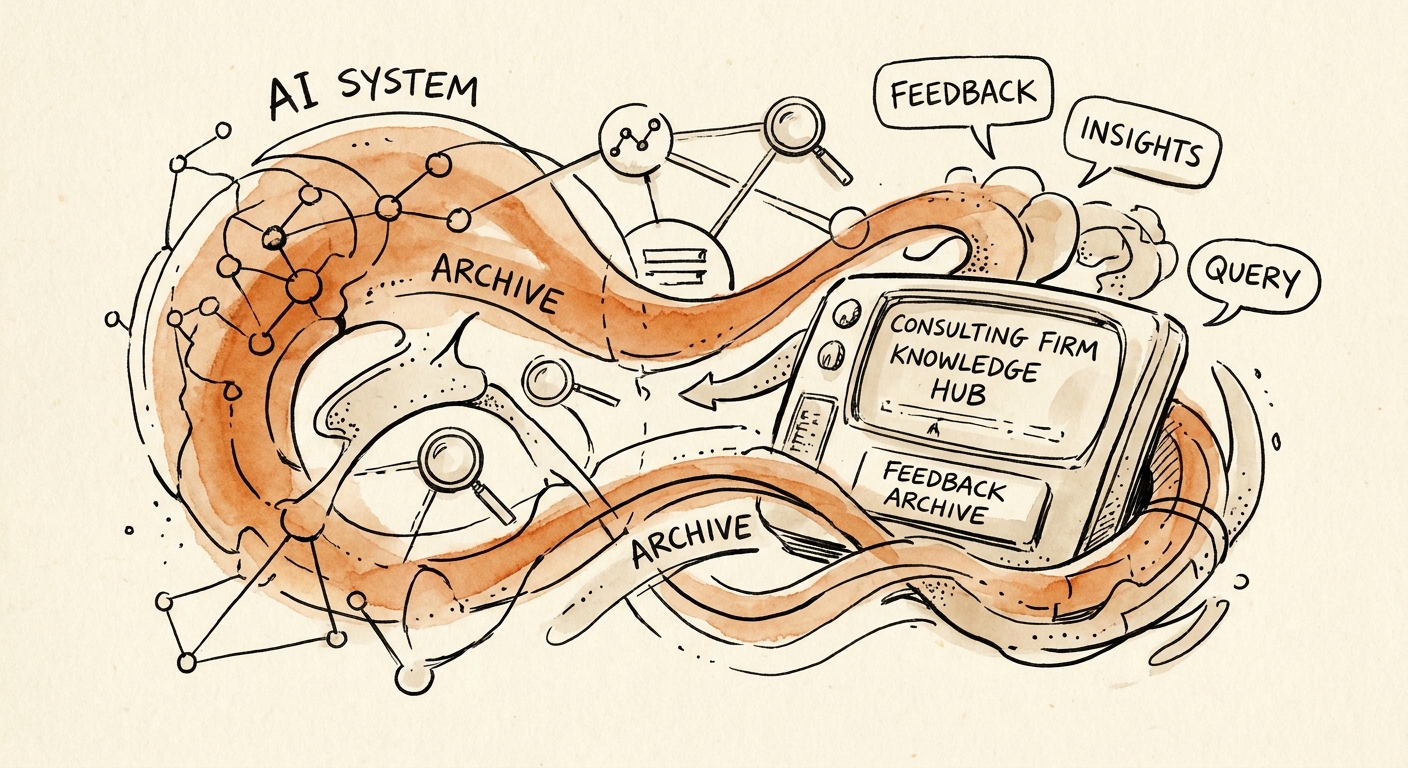
Picture a 120-person consulting firm. A manager is writing a pursuit deck for a new healthcare client and wants to reuse the post-engagement feedback from the two healthcare projects the firm ran last year — the part where the client said what actually moved the needle. That language is gold. It exists. It's in a survey export, a partner's call notes, a closeout deck, and a Slack thread. Finding the current, client-approved version takes forty minutes, or a "quick" interruption of a partner who is in a room, or — most often — the manager just rewrites it from memory and the best evidence never makes the deck.
That is not a document shortage. Consulting firms drown in documents. It's a retrieval-and-trust problem, and it's expensive precisely because the people doing the searching bill at the highest rates in the building. The Census Bureau reported in May 2026 that AI adoption climbs sharply with firm size — 32% of firms with 100 to 249 employees and 37% of firms with at least 250 employees are using it. A firm your size is squarely in the band that has enough scattered institutional knowledge to make AI worth it, but not so much governance maturity that you can point a chatbot at the shared drive and walk away.
Why "feedback archives" is the worst place to be careless
Customer feedback is the single document type where mixing up access boundaries hurts most. An NPS comment naming a client's CFO, a candid note about a relationship that nearly went sideways, a renewal-risk flag — that material is genuinely useful for sharpening the next proposal, and genuinely damaging if it surfaces in front of the wrong consultant or, worse, the wrong client. So the first build step isn't choosing a model. It's tagging the archive: by client, by engagement, by date, by source system, by permission group, and by whether the feedback is reusable operating knowledge or restricted relationship intelligence.
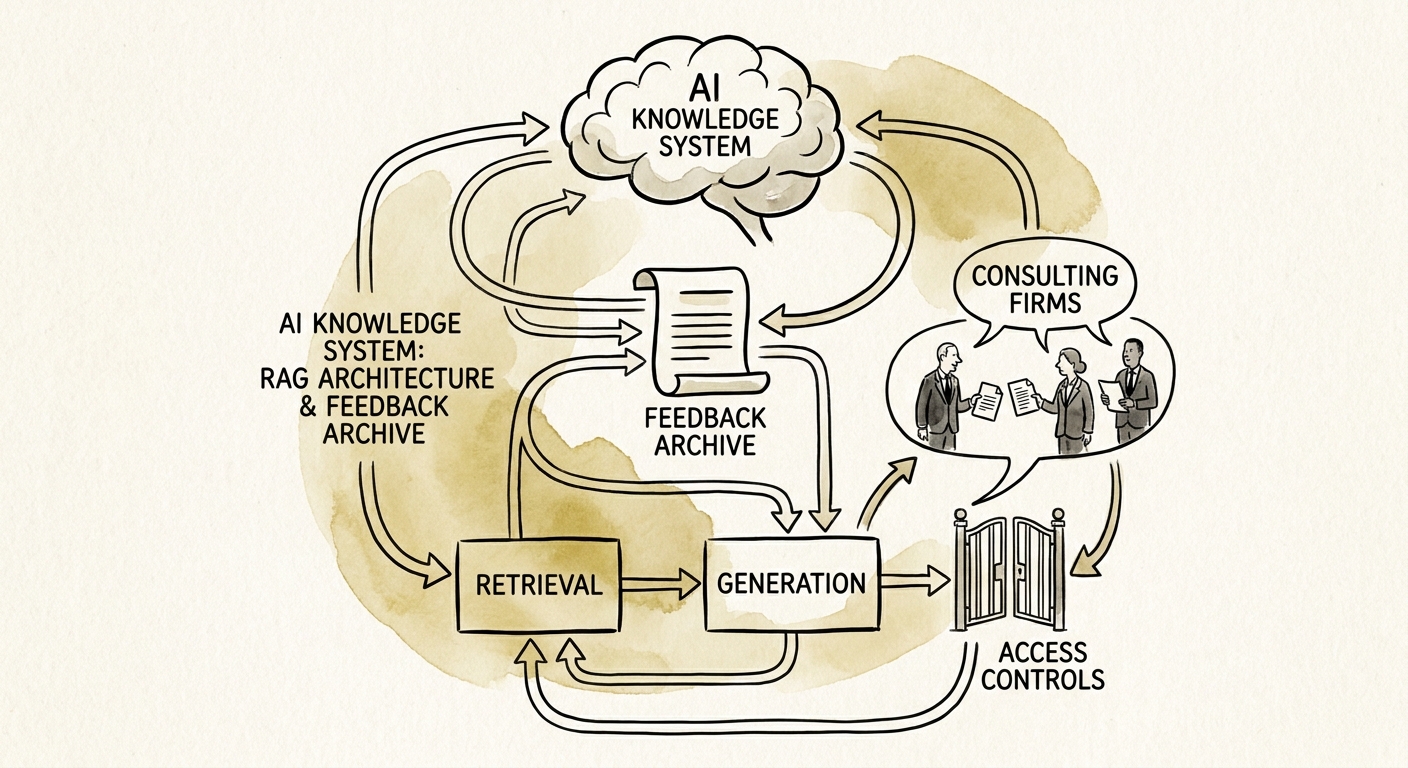
CISA's guidance on securing the data used to train and operate AI systems makes the point that the data layer is where the risk lives — for a firm your size, that translates to access control, source approval, and logging set up before anyone gets a search box. Run the program on the NIST AI Risk Management Framework: map which feedback the assistant may touch, measure whether it retrieves the right approved source, govern who owns the answer library, and manage how it changes as new engagements close. The assistant answers only from approved material, cites the closeout deck or survey it pulled from, says "I don't have an approved source for that" instead of guessing, and routes the uncertain cases to a named owner — your engagement-quality lead, not a generic queue. This is a governed RAG knowledge system, not a side experiment a curious associate stood up over a weekend.
Twenty questions, then production — not a demo
Skip the tool-shopping. Start by writing the twenty questions your consultants actually ask the feedback archive: "What did clients in this vertical say drove value?" "Which engagements had renewal-risk flags and why?" "What's the approved testimonial language for this account?" For each one, name the single approved source that holds the answer. Now you have a retrieval test set — score any tool on whether it returns the right source and never leaks restricted relationship notes across the access boundary. That test set is also your honesty check on vendors: make privacy, retention, and data-use review part of selection, because feedback archives are exactly the data a buyer should refuse to take on faith.
The reason to be this disciplined: Deloitte's 2026 enterprise research found only 25% of leaders had moved 40% or more of their AI pilots into production. Pilots stall because no one owns them after the demo applause. Give this one a production owner from day one, then measure the things a managing partner cares about — partner interruptions avoided, time from "I need the feedback" to "it's in the deck," and answer quality scored against the test set. Get those moving and you've earned the right to expand. The build details live in our guide to standing up an internal knowledge assistant, and we use the AI Transformation Blueprint to turn that first governed win into a roadmap across the rest of the firm.