Your AI is making decks faster. Your accounts are still slipping.
Picture a 35-person agency with eleven retainers. The creative team adopted AI a year ago and now turns drafts around in half the time. Leadership expected margins to climb. Instead, the same two accounts are quietly churning, the Monday status calls still run 40 minutes, and account managers are spending Thursday nights rebuilding reports the client "didn't understand last month."
Faster content didn't touch any of that. The drag in an agency isn't drafting — it's the connective tissue around the work: the brief that comes back vague and triggers three revision rounds, the campaign report that's a different format for every client, the account knowledge that lives in one person's head until they take PTO. That's the operating system, and it's where AI actually changes your economics.
This isn't a hunch. McKinsey's 2025 State of AI and the IBM Institute for Business Value both find that returns come from redesigning workflows, not from handing people a tool. And PwC's 2025 Responsible AI survey is blunt about the agency-specific risk: anything client-facing needs a named human owner before it goes out, or you've traded revision rounds for trust erosion.
Start with the brief — it's where agency rework is born
Pick one workflow, not ten. For most agencies the highest-leverage place to start is the brief, because a weak brief poisons everything downstream: misaligned creative, scope debates, the "this isn't what we asked for" email that costs you a relationship.
Here's the shape of it. When a request comes in — from a client email, a kickoff call transcript, a Slack thread — AI assembles a draft brief against your standing record for that account: the brand guidelines, the approved messaging, what's in scope on the retainer versus what's a change order, the audience, the success metric, and the open risks from the last campaign. It flags what's missing instead of guessing. The account lead reviews, fills the gaps, and approves. Now creative starts from a complete brief, and the change-order conversation happens before work begins, not after.
Two non-negotiables. First, the source has to be visible — every line in the brief points back to the email or call it came from, so the AM can verify in seconds rather than trust a black box. Second, an account owner approves anything that reaches the client. AI assembles; a person commits. That single gate is what separates a governed agency workflow from the "AI sent the client something off-brand" story you do not want to tell. When you're ready to extend this across research, campaign ops, and follow-up, that's AI for Sales and Marketing.
Measure account health, not output volume
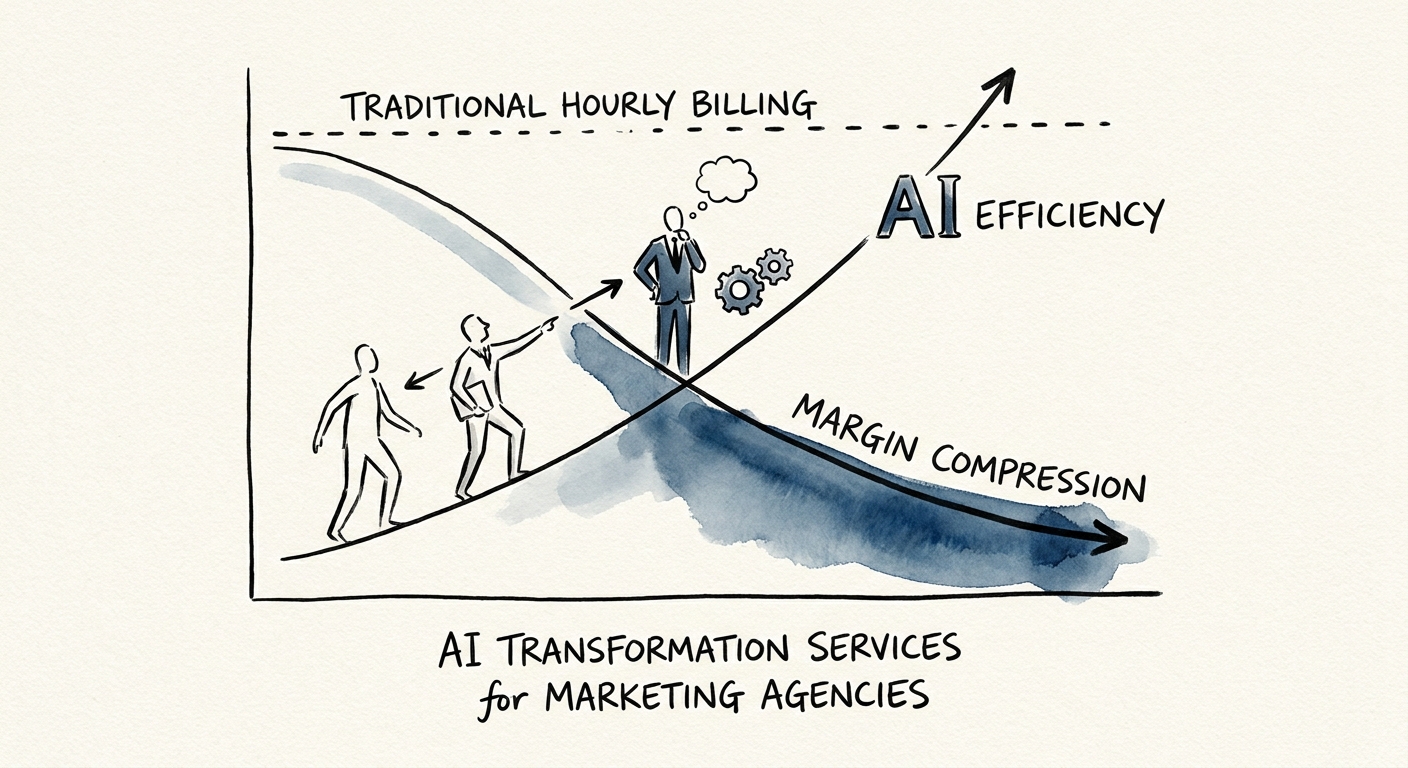
The trap is celebrating speed. More drafts, more variations, faster turnaround — none of it proves the account is healthier. Track the things a client actually feels: how often briefs are complete on the first pass, how many revision rounds a campaign takes, how long the status report takes to produce, how many times the same client asks the same question (a sign your reporting isn't answering it), and whether follow-ups after a call actually close out. Watch those over a quarter on the one workflow you changed. If revision rounds drop and the Monday call shortens because the report stands on its own, the AI earned its place.
Then expand deliberately into the next workflow — campaign reporting is usually the natural second, since the account record you built for briefs already holds most of what a report needs. Keep the approval gate firmly around anything that changes scope, makes a performance claim, or commits the agency to a client. The Bain 2025 agentic AI report and the NIST AI Risk Management Framework both point the same direction: govern the workflow as you scale it, don't bolt governance on after something goes wrong.
Monday move: pull your last five client briefs and mark which fields were missing or fuzzy at kickoff. That gap list is your AI starting spec. To design the build, use AI Workflow Automation, or run the numbers on reduced rework with the AI ROI Calculator.