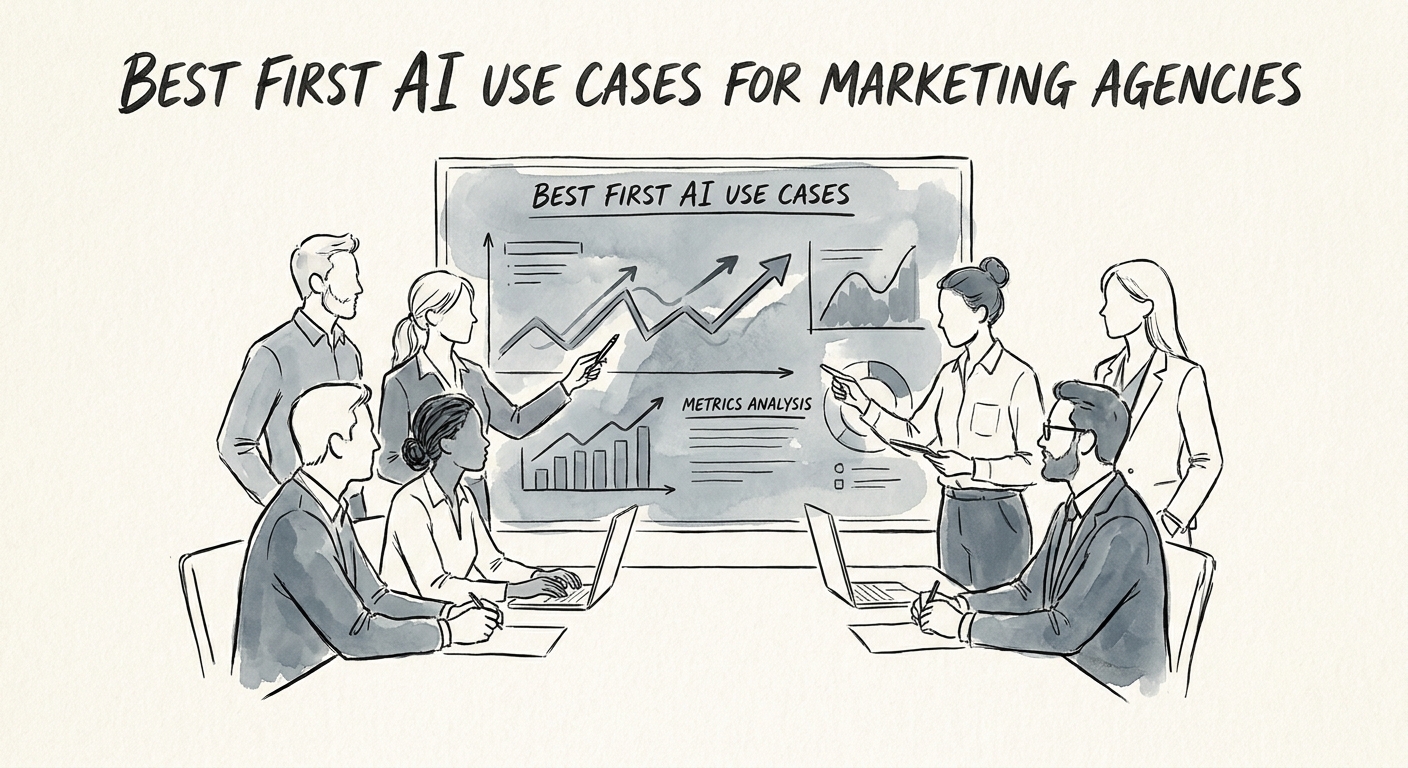
The headline isn't where your hours go
Walk into most agencies and the AI conversation starts in the wrong place: "Can it write the ad?" Sure, it can write the ad. But that's not where a 30-person shop is bleeding. The bleed is the strategist who spent Tuesday re-doing a campaign deck because the kickoff brief skipped the offer details, the audience was described as "millennials-ish," and nobody captured what the client said on the call about the legal-approved claims. The copy was never the bottleneck. The handoff was.
So the best first AI use cases for an agency are the unglamorous ones around delivery: brief intake, campaign reporting, account research, creative QA, and meeting follow-up. None of those touch the client relationship directly, which is exactly why they're safe to automate first. They cut the coordination drag between your account team and your makers while leaving strategy and client judgment firmly in human hands.
This isn't a hunch. The pattern across McKinsey's 2025 State of AI, IBM's Institute for Business Value, and PwC's 2025 Responsible AI survey is consistent: value shows up where the operating design, governance, and adoption are sound — not where the demo was flashiest. An agency that aims AI at the brief before the billboard is reading that research correctly.
Client context is the thing that breaks, so make it the control point
Here's the trap agencies fall into. They wire up an AI tool, point it at a blank prompt, and ask it to draft a paid social plan for Client X. It produces something confident and wrong, because it never saw the brand guidelines, the approved claims, the offer structure, the audience notes, or last quarter's performance. The output reads great in a vacuum and gets torn apart in the first internal review.
The fix is to invert the order. Before AI produces anything, it should retrieve and summarize the client context that already exists — the brand book, the campaign goals, the scope of the retainer, the claims legal signed off on, the prior-performance numbers. Then it works from that, and it shows you the source it pulled from. Say a 25-person agency runs a paid-and-creative retainer: the win is an intake step that reads the kickoff notes, flags "no conversion goal captured" and "offer pricing missing" before a strategist ever opens a deck. The flag is worth more than the draft.
And the rule that keeps you out of trouble: anything that moves a client-facing claim, a strategy recommendation, or a delivery commitment gets an account owner's signature before it leaves the building. The AI assembles and surfaces; the account lead decides. When you want this running across research, campaign operations, and follow-up, that's the territory AI for Sales and Marketing covers.
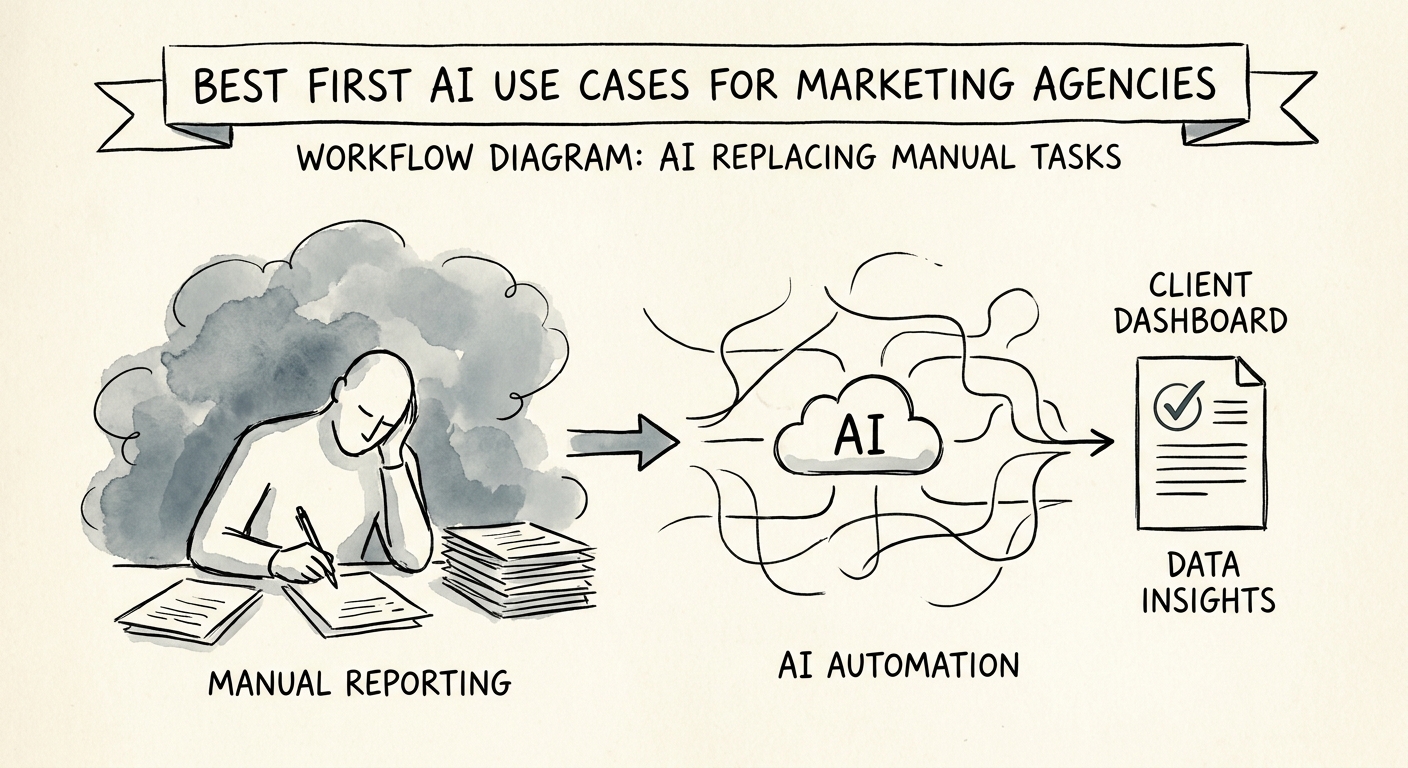
If it just makes more copy, it failed — measure the handoff instead
The honest test of an agency AI rollout is not "are we producing more deliverables." You could double output and still be drowning in rework. The numbers that tell you whether AI fixed the operating problem are: brief completeness on day one, reporting turnaround time, hours spent on account research, QA rework cycles, follow-ups that slipped past the promised date, and how often the same client question comes back because nobody documented the answer. If those don't move, the tool is decorative.
Start narrow on purpose. Pick one service package or one account — a single paid-media retainer, say — and prove the intake-and-approval loop there. Once the team trusts that the source record is accurate and the sign-off path is real, expand to the adjacent delivery tasks: reporting first, then research, then creative QA. Resist the urge to roll it across every account in week one; the trust is what you're actually building.
Two practical next moves: stand up AI Knowledge Systems and RAG so retrieval pulls only from approved client material, and run the math on what reclaimed rework hours are worth with the AI ROI Calculator before you commit budget. For frameworks on getting this right rather than fast, the Bain 2025 agentic AI report and the NIST AI Risk Management Framework are worth the read.
