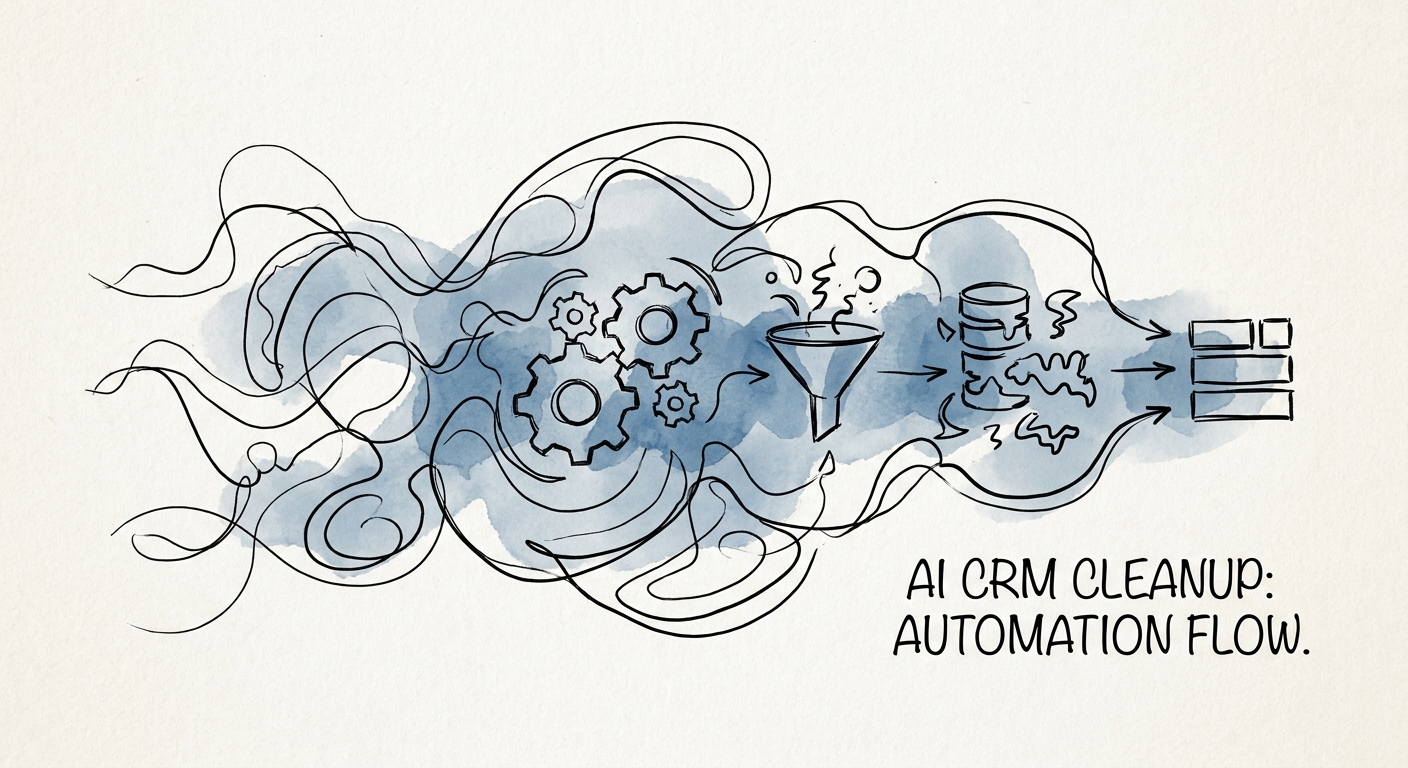
Your CRM has 4,000 contacts and your reps trust about 600 of them
Every revenue operations leader knows the file. Three records for the same company spelled three ways. A pipeline stage that says "Negotiation" on a deal nobody has touched since the last fiscal year. An account owner who left in March. Reps stop trusting the search bar, build private spreadsheets, and your forecast quietly becomes fiction. The Salesforce State of Sales report keeps making the same point: sales outcomes ride on whether account, contact, opportunity, and activity data can be trusted — and most of it can't.
CRM cleanup is the best place to start with AI, but for a reason most teams miss. It is not that the task is easy. It is that the output is inspectable before it changes anything. AI can spot duplicates, dead owners, stage drift, blank required fields, and broken account hierarchies far faster than a human scrubbing rows. The mistake is letting it act on what it finds. The right first move is to have it build a cleanup queue — a list of proposed changes with evidence attached — not a bulk-update job. Say a 40-person agency runs this against 8,000 contacts: the win isn't 8,000 silent edits overnight, it's a ranked list RevOps can approve in an afternoon, with the highest-confidence duplicate merges at the top.
Lock the fields that decide who gets paid
Not all CRM fields carry the same blast radius. A misformatted phone number is a nuisance. A silently reassigned account owner is a comp dispute. This is where you draw the line that keeps your reps on your side. The NIST AI Risk Management Framework gives you the discipline to name the boundary explicitly: what the system may recommend on its own, what demands a human approval click, and how you handle the records that don't fit any rule.
My working split: let AI auto-apply only the low-stakes, high-confidence stuff — title casing, country normalization, obvious format fixes. Everything that touches money or relationships stays behind approval: account ownership, pipeline stage, renewal terms, and any customer-sensitive note. And every suggestion in the queue must carry its receipt. "Merge these two accounts" is useless; "merge these two accounts because matching domain, matching billing address, and zero conflicting open opportunities" is something a human can approve in two seconds. CRM cleanup also drags you across identity and audit boundaries the moment AI reads who-can-see-what — the Microsoft 365 Copilot architecture and data protection documentation is worth reading before you wire a tool into records governed by access controls, because the AI must respect the same permissions your reps do.
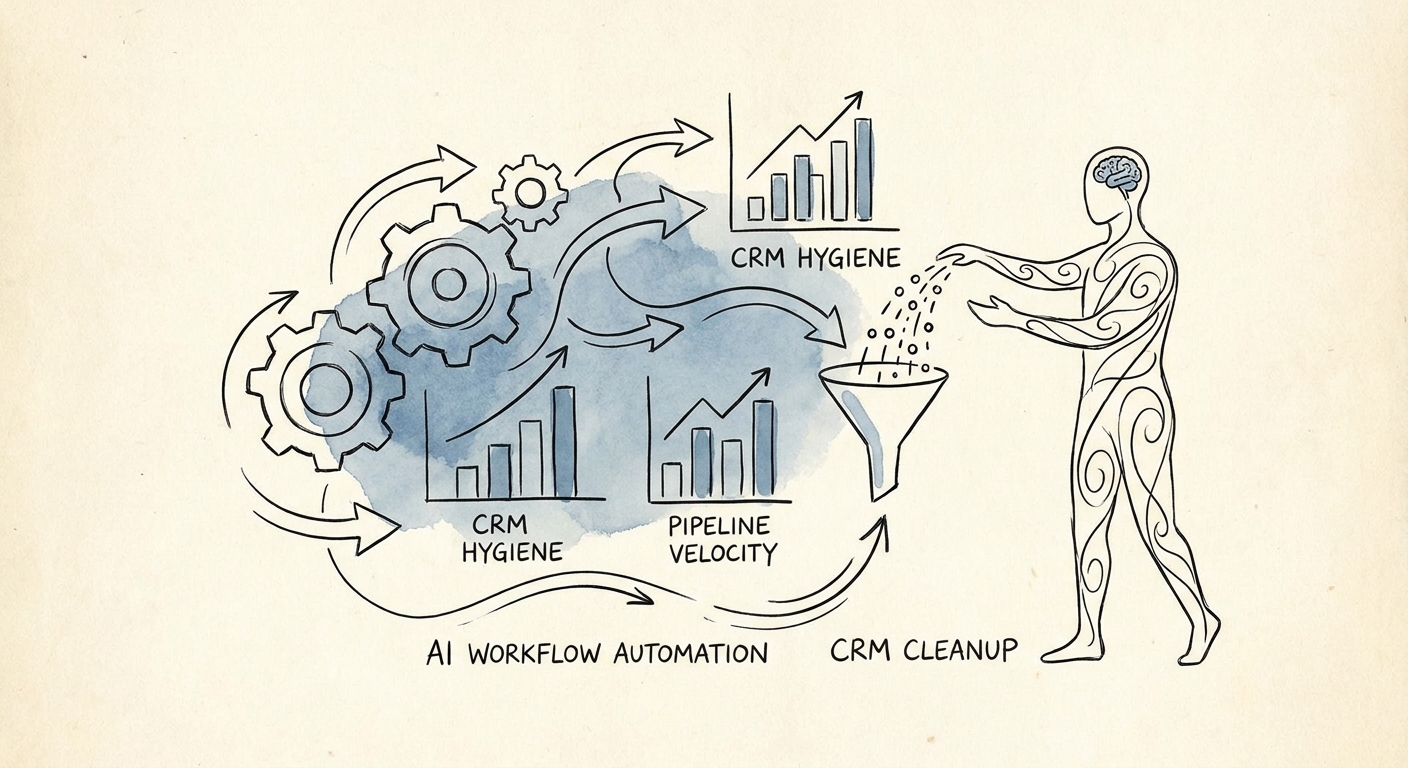
The success metric is not "records touched"
Here is the trap. Someone reports "the AI cleaned 6,200 records this month" and everyone nods. That number tells you nothing about whether the CRM is now trustworthy — it might mean 6,200 chances to introduce a new error. Measure the things that actually move adoption: accepted cleanup actions versus rejected ones (a high rejection rate means your rules are wrong, not your data), duplicate count reduction, required-field completion, and the rejection reasons themselves, which are your best signal for tuning. The deeper payoff shows up downstream — does forecast accuracy improve once the pipeline stages stop lying? IBM Institute for Business Value AI capabilities research ties the whole loop together: trusted data drives adoption, and adoption is what makes the next AI workflow possible.
What you can do Monday: pull a count of duplicate accounts and records with a departed or blank owner. That single number is your baseline and your business case. Then decide sequence — should cleanup come before you automate sales follow-up, account research, or reporting? Run the AI Opportunity Score to pressure-test the order before you commit a quarter to it.
