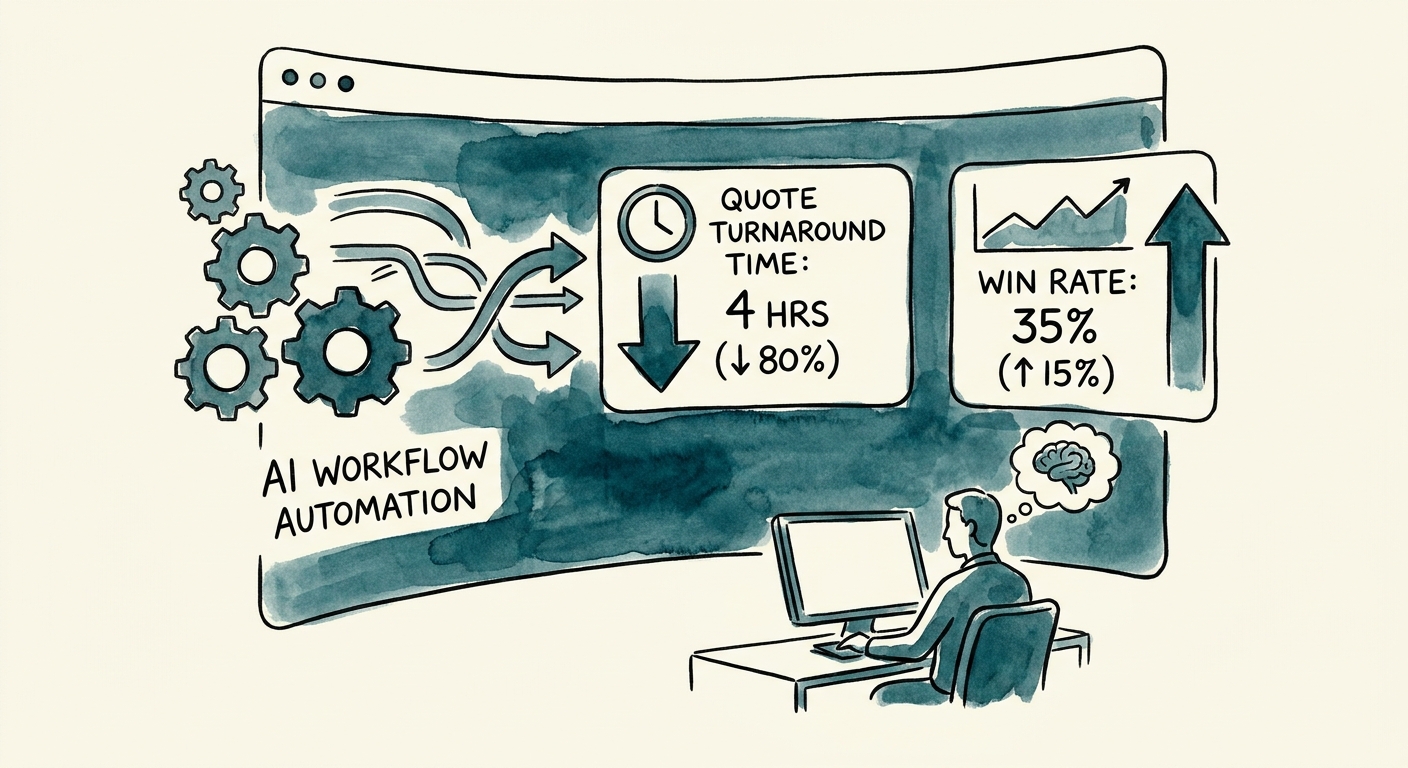
The quote isn't slow because pricing is hard — it's slow because four people own four pieces of it
Picture a 60-person managed services firm. A rep gets a request for a 200-seat migration plus ongoing support. To send a number, they need scope language from delivery, a discount band from finance, a data-handling clause from legal, and the account's renewal history out of the CRM. None of those people are waiting by their inbox. So the quote that should take an afternoon takes nine days, and by day six the prospect has a competing number in hand.
That delay is the actual problem, and it's a coordination problem, not a math problem. The Salesforce State of Sales report keeps surfacing the same pattern: reps lose a punishing share of their week to assembling information rather than selling it. In a quote workflow, that lost time is concentrated in the handoffs — the moment the rep has to go ask someone else for a piece of the answer.
AI is good at exactly the part that's bottlenecked. It can pull the account's prior contracts, surface the standard scope blocks for "migration + managed support," apply the published pricing rules to the seat count, and flag that this deal crosses the threshold where finance has to sign off. What it should not do is send the number. The difference between a tool that helps and a tool that burns you is whether the workflow makes the exception visible — what was the standard price, what got changed, and who said yes.
Build the approval path before you build the speed
Here's the failure mode I'd bet money on if you wire this up backwards: the AI assembles a beautiful quote in ninety seconds, the rep ships it, and three weeks later finance discovers it priced a custom data-residency requirement at the standard rate because nothing in the flow forced an escalation. You didn't save time. You moved the cost downstream and made it bigger.
So design the guardrails first. The IBM Institute for Business Value AI capabilities research frames AI value around the operating capabilities underneath it, and for quotes that means four unglamorous things have to be real before automation helps: a clean service catalog with current rates, explicit margin floors by deal type, CRM data you actually trust, and a defined escalation path for anything nonstandard. Miss one and the AI confidently automates a wrong answer.
Then draw a hard line on authority. The PwC Responsible AI survey points at controls that map cleanly onto quoting: version history so you can see what the AI changed, a named human responsible for each approval, and explicit limits on what the system can green-light on its own. My rule for a services firm: AI assembles and recommends; a human approves any term that touches margin, scope boundaries, or liability. A standard 200-seat renewal at list price can move automatically. A 200-seat deal with a 22% discount and a custom SLA stops and waits for a person — and the workflow records who that person was.
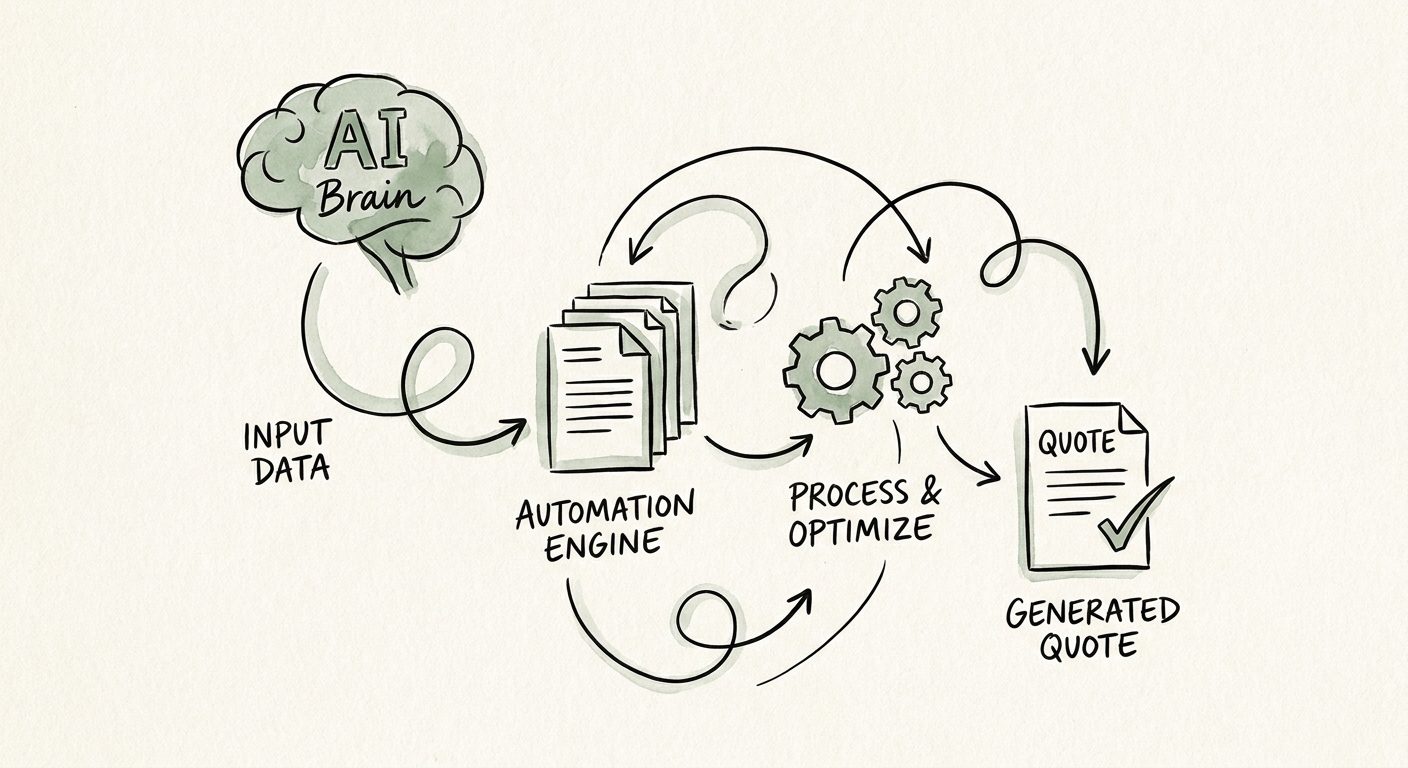
Track the quote that won and held its margin — not the quote that left fastest
If the only number you watch is cycle time, you'll optimize yourself into trouble. A quote that goes out in an hour but creates a delivery commitment nobody priced isn't a win; it's a problem with a faster fuse. The McKinsey State of AI 2025 read is consistent: the value shows up when you redesign the workflow and people actually adopt it, not when you bolt speed onto a broken process.
So measure the things that tell you whether the automation is healthy. Quote cycle time, yes — but next to it: rework rate (how often a sent quote gets clawed back or re-priced), where approvals actually stall, win rate split by quote type, and the frequency and size of margin exceptions. For that 60-person services firm, the honest scorecard is: turnaround dropped from nine days to one, rework held flat or fell, and the discount-exception rate didn't quietly creep up because the AI was nudging reps toward the bottom of the band to close faster.
If you want a concrete first step Monday: pull your last 30 quotes, mark which ones needed a nonstandard term, and time how long each handoff actually took. That single audit usually tells you where the nine days are hiding. Then use the AI ROI Calculator to put a dollar figure on the coordination time you'd reclaim, and see Sales and Marketing AI for where quoting fits in the wider revenue motion.
