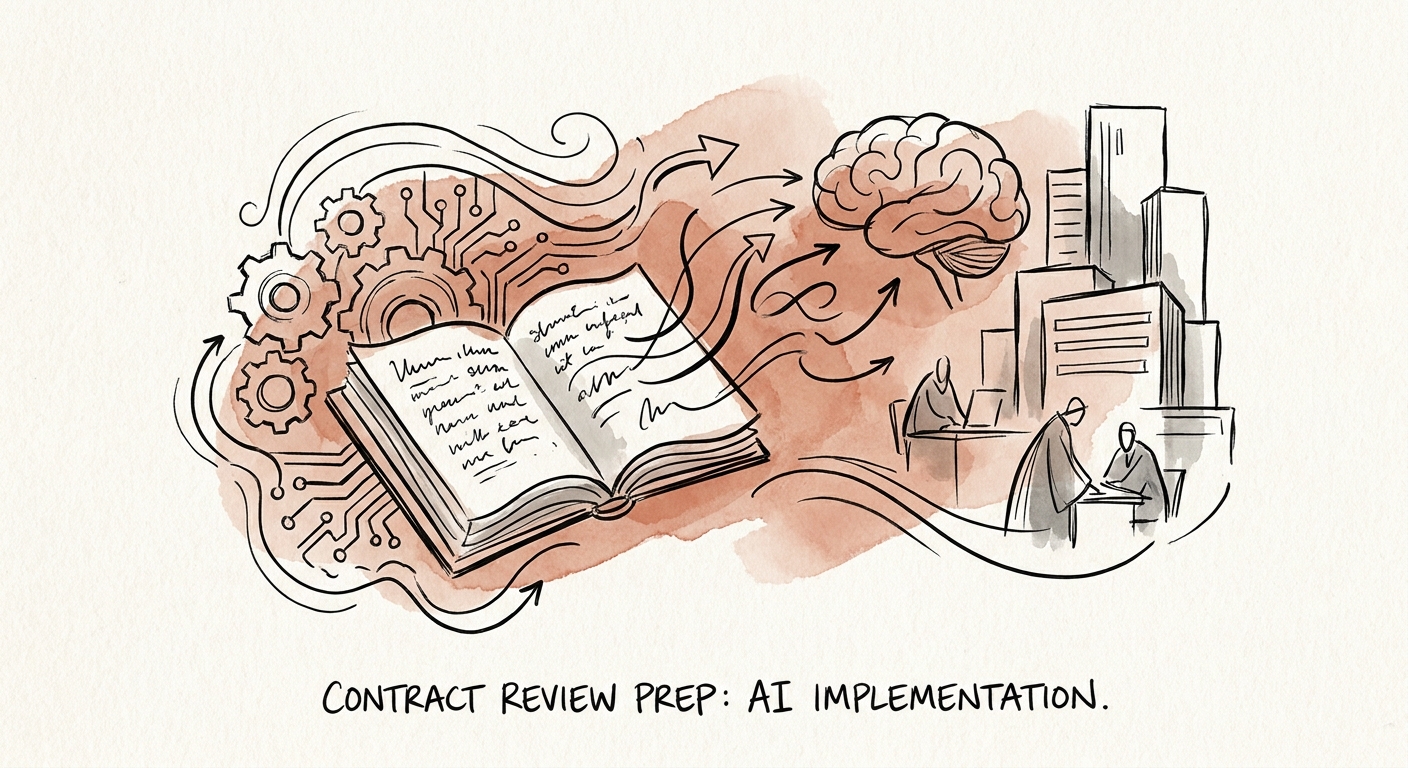
The 6pm redline problem
Here is the scene that actually drains margin at a professional services firm: a client sends back a marked-up engagement letter Friday afternoon, the deal partner is between two client calls, and the redline lands in an inbox alongside forty other things. The partner skims it, the indemnification language has quietly flipped from "mutual" to "one-way," nobody catches it, and the firm has just signed away its liability cap on a six-figure engagement. No one was negligent. The queue was just too deep for careful reading at the wrong hour.
That is the problem AI should be aimed at — not "review contracts," but "make sure the partner who signs sees what changed and why it matters before the clock runs out." Census Bureau data shows AI adoption concentrated among firms in the 100-249 employee band, and OECD research on SME adoption makes the trap clear: pressure to adopt is not the same as a workflow worth adopting. Deloitte's 2026 State of AI finding is blunt — value comes from a process you can measure after the demo, not from the demo.
So scope the first pilot tight. One document type — say, inbound client redlines to your standard engagement letter. One thing the AI produces — a diff that flags changes to four specific terms partners care about: the liability cap, indemnification direction, payment terms, and scope-of-work boundaries. And one hard line on what it never decides: whether to accept a clause, what counsel's position should be, or how to resolve a conflict. The machine surfaces; the partner rules.
What the partner sees, and the one report that proves it works
The output a partner opens should not be a chat window. It should be a one-page review packet: the original clause, the client's edit, a plain-language note on what the change does to the firm's risk, and a confidence flag where the AI is unsure. If the client struck the limitation-of-liability section entirely, that goes at the top in red, not buried in paragraph nine. The partner accepts, rejects, or overrides each flag — and every override teaches you where the model is weak. A loose summary in a chat box does none of this, because there's nothing to sign off on.
Two governance pieces have to be settled before this touches a live deal. The NIST AI Risk Management Framework point is that risk is contextual: a flagged clause is harmless in a practice draft and material the moment it's on a packet headed to signature, so the review gate belongs at exactly that boundary. And contracts carry confidential client terms, so the CISA data-security guidance should set who can feed contracts to the tool, how long redlines are retained, and whether anything leaves your tenant. A conflict check that exposes a client name to the wrong place is a worse outcome than the slow review you were trying to fix.
Track one number above all others: partner override rate on the AI's flags. If partners are correcting the tool on more than a handful of clauses per contract, the answer is never "automate more" — it's narrower scope or a cleaner clause library. Watch it alongside review cycle time and how often a liability or conflict issue is caught before signature versus after. When the same clause type keeps getting flagged wrong, that's a template problem to fix in your engagement-letter standard, not a prompt to retune.
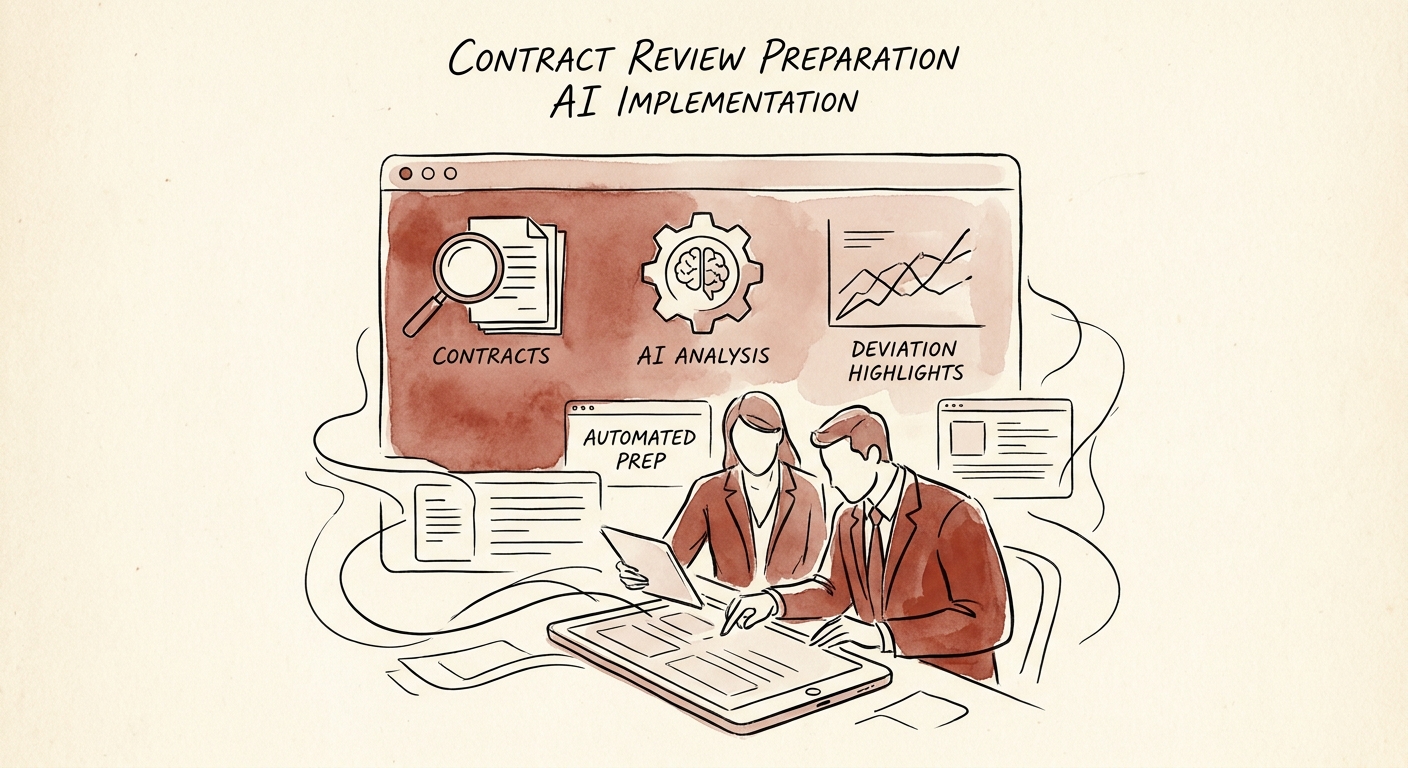
The 90-day test, and the difference between boring and broken
First 30 days: run the AI alongside your normal review on real inbound redlines, partner reviews both, and you log every disagreement. You are not measuring speed yet — you are finding the clause types where the tool is reliable (payment terms, simple scope edits) and where it isn't (anything requiring legal judgment on indemnification). Days 31-60: let the AI's packet be the partner's primary read on the reliable clause types, with the full contract still available, and watch whether override rate falls. By day 90 you decide — expand to a second document type like statements of work, hold at engagement letters only, or pause because your underlying clause library is too inconsistent to flag against.
A good outcome here feels almost dull. Partners open a clean packet, override one or two flags, and sign with the cap intact — no late-night scramble, no clause slipping through. A bad outcome looks impressive in a demo and still leaves a senior associate re-reading the whole contract by hand because nobody trusts the flags. For a firm where partner hours are the product, an AI layer that adds a review queue instead of clearing one is a net loss, full stop.
If contract review is competing with other places to start — intake, time capture, proposal drafting — run the AI Opportunity Score to rank them before you commit. Once the review path produces real evidence of recovered partner hours, the AI ROI Calculator turns that into a number you can defend to the management committee. We sequence the whole path inside the AI Transformation Blueprint, so contract review becomes the first governed workflow rather than a one-off experiment.