The expensive gap is the 36 hours after the call, not the email itself
A partner at a 40-person advisory firm finishes a strong discovery call at 4:45 on a Thursday. The prospect leaned in, asked about scope, said "send me something I can take to my CFO." Then the partner has three more calls, a proposal to review, and a kid's recital. The recap email goes out Monday afternoon, vague and late, and the deal cools a half-degree. Multiply that by every senior seller in the firm and you have your actual leak. It is not that nobody can write the email. It is that the people who should write it are the most expensive, most distracted, and most overbooked humans in the building.
That is the specific job AI sales follow-up is good at in a professional services firm, and it is narrower than the demos suggest. The win is not "automated outreach." The win is turning a 25-minute call into a tight, accurate recap before the partner leaves the building, so the relationship owner edits for two minutes instead of reconstructing from memory two days later. The draft exists to protect the seller's time and the prospect's momentum, not to replace the seller's voice.
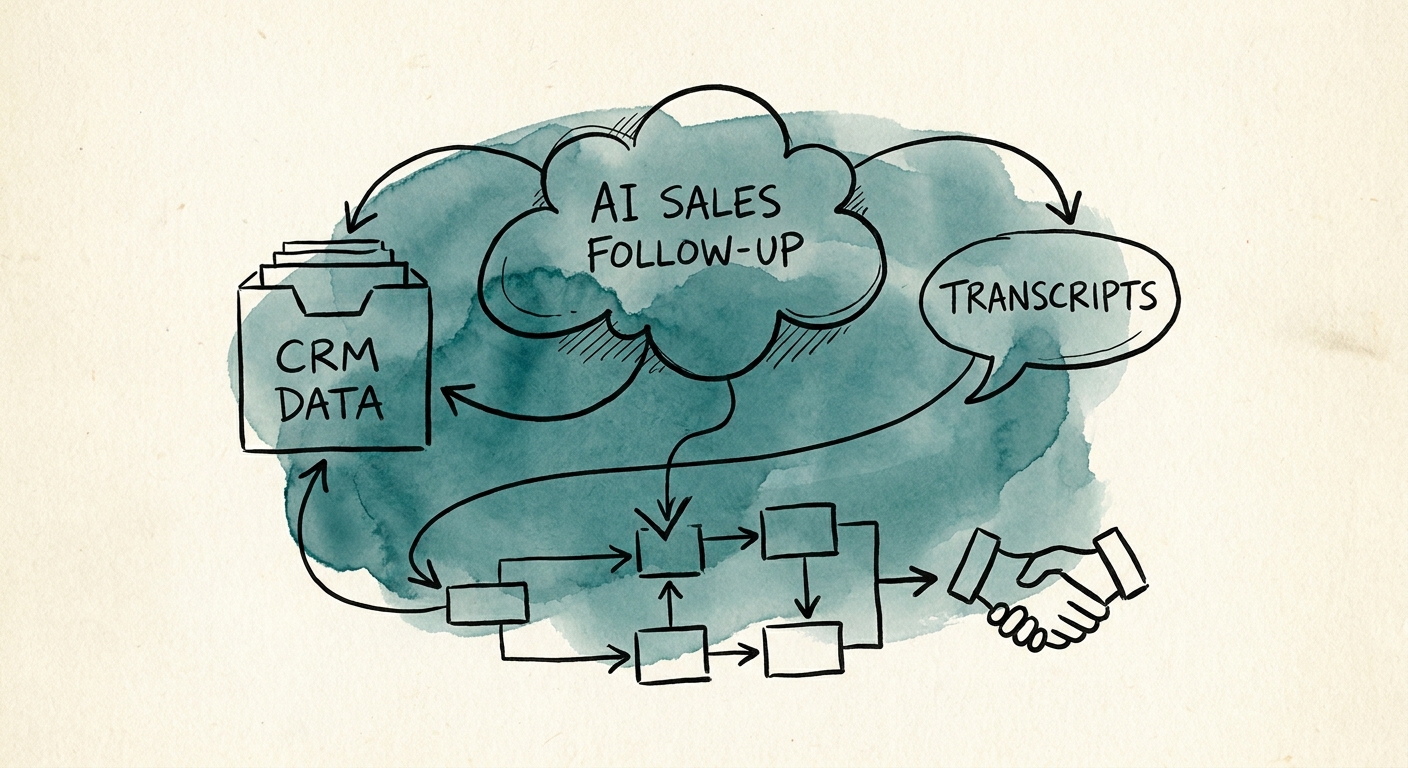
So the first thing the workflow needs is not a clever prompt. It is a clean answer to one question: what did we actually agree to do next? Pull that from meeting notes, the CRM stage, who was in the room, the open question they raised, and the specific artifact you promised. If those inputs are thin, no model fixes it, and the honest read is that your discovery discipline is the real project. Start there.
Provenance is the whole game when the message is a written promise
Here is the failure mode unique to relationship selling: an enthusiastic draft that says "as we discussed, we can have your SOC 2 readiness assessment wrapped by end of Q3" when you discussed no such timeline. In a trust business, that is not a typo. It is a fabricated commitment that your prospect screenshots and forwards to their board. The model did not lie maliciously; it pattern-matched a plausible next step. Your guardrail has to assume it will try.
So build the workflow around evidence, not fluency. Every claim, date, scope detail, and "as we discussed" in the draft should trace to a CRM field or a note from the actual call, or it does not go out. The NIST AI Risk Management Framework is useful here as a checklist of what to control for: unsupported claims, fabricated commitments, restricted client references, and language that quietly moves the commercial expectation. Translate that into four things the draft is forbidden to invent: a price, a date, a scope boundary, and a named reference to another client engagement.
The client-context side is just as load-bearing. Before you let any tool retrieve meeting notes or prior engagement detail, decide what it is allowed to touch. The CISA AI data-security guidance frames this as a data-handling decision, not a footer disclaimer: which notes get retained, how long, and which relationship details are simply too sensitive to feed a draft generator at all. For a firm whose entire asset is confidential client relationships, that decision is the product. A practical 90-day rollout looks less like a software install and more like CRM field hygiene, a two-minute partner review queue, and a feedback loop that logs every rejected draft by reason.
Measure pipeline movement, not how fast the email left the outbox
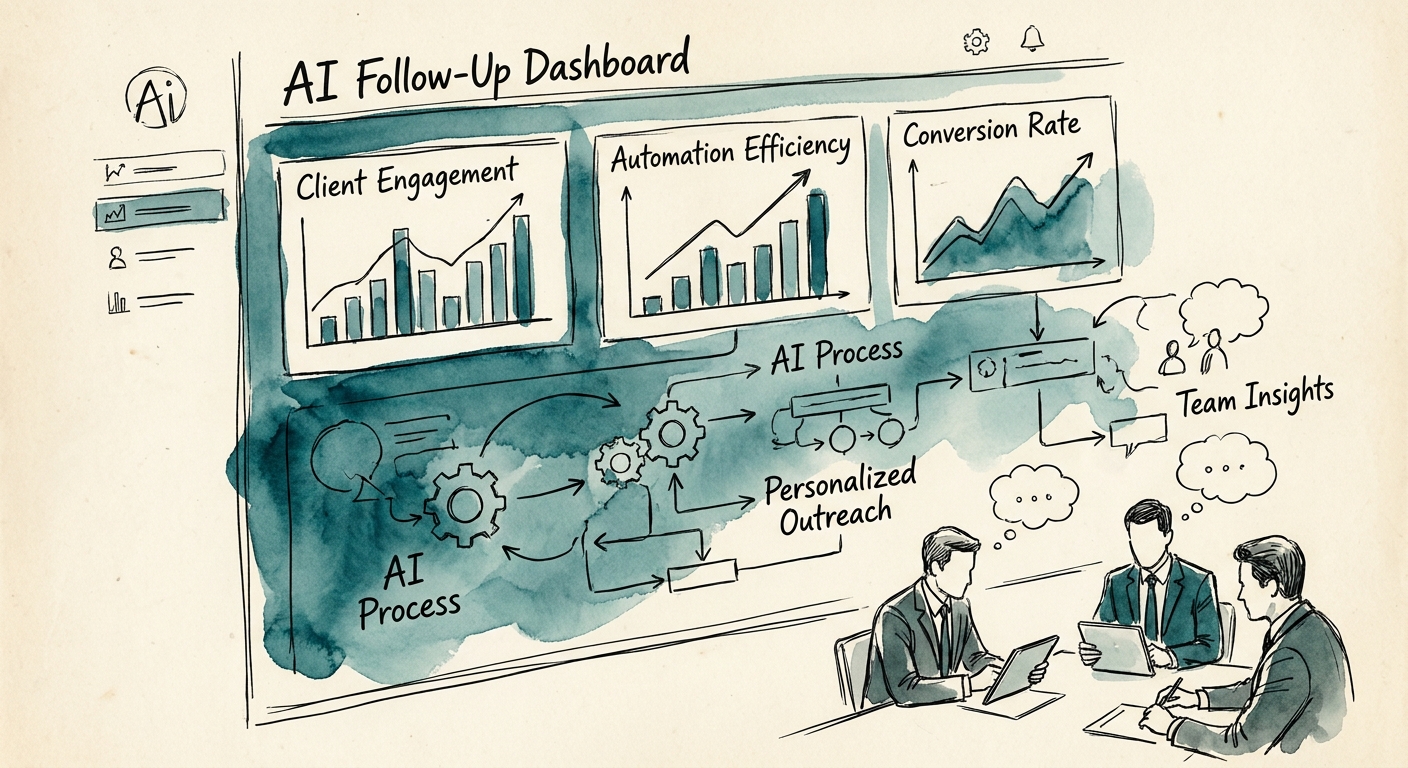
The vanity metric is "follow-ups sent within an hour." It looks great and tells you nothing. In a professional services pipeline the questions that matter are: did the next step the prospect agreed to actually happen, did the opportunity move a stage, and did the partner spend less time per follow-up while keeping their own voice. Track draft acceptance rate, how heavily sellers edit before sending, next-step completion, and stage movement on the opportunities that ran through the workflow.
Then track the metric most teams skip: rejected drafts, tagged by reason. When a partner kills a draft, was it bad meeting notes, stale CRM data, or a model overreaching on a commitment? Six weeks of that log tells you exactly where to invest, and it usually points at discovery hygiene rather than the AI. If most rejections trace to thin notes, you have a sales-process problem wearing an AI costume.
And know where to stop. When the deal strategy is still unsettled, the buyer context is politically sensitive, or the next move genuinely needs partner judgment, the AI prepares the recap and a couple of options, and the seller writes the note in their own words. That is not a failure of the tool; it is the tool staying in its lane. If you want the business case to hold up, anchor it to behavior, not output volume. Measuring AI ROI without fake savings walks through how to do that without counting "emails generated" as a win. Monday, pick one motion, post-discovery follow-up, instrument those few numbers, and let the first month of rejected-draft reasons tell you what to fix next.