The proposal that wins the deal and loses the margin
Picture a 60-person managed-services firm. A senior engineer spends Thursday afternoon assembling a proposal: pulling scope language from the last three SOWs, guessing at hours, copying an architecture diagram that mostly fits, and writing assumptions that nobody on the delivery side will read until the kickoff call. The proposal goes out, the client signs, and six weeks later the project manager discovers the "two-week migration" was scoped against a customer environment that has four undocumented integrations. The margin was gone before anyone wrote a line of code.
That is why proposal drafting is such a strong first AI job for operations teams — and why "draft speed" is the wrong thing to measure. The work is repetitive, the source material already exists in your closed-won folder, and the cost of a sloppy draft lands squarely on delivery, where you can see it. The RSM middle-market AI survey, the San Francisco Fed small-business AI analysis, and the OECD SME AI adoption report converge on the same uncomfortable point for firms your size: the use cases that pay off have an accountable owner, stable inputs, and a result you can actually weigh. A proposal assembler hits all three.
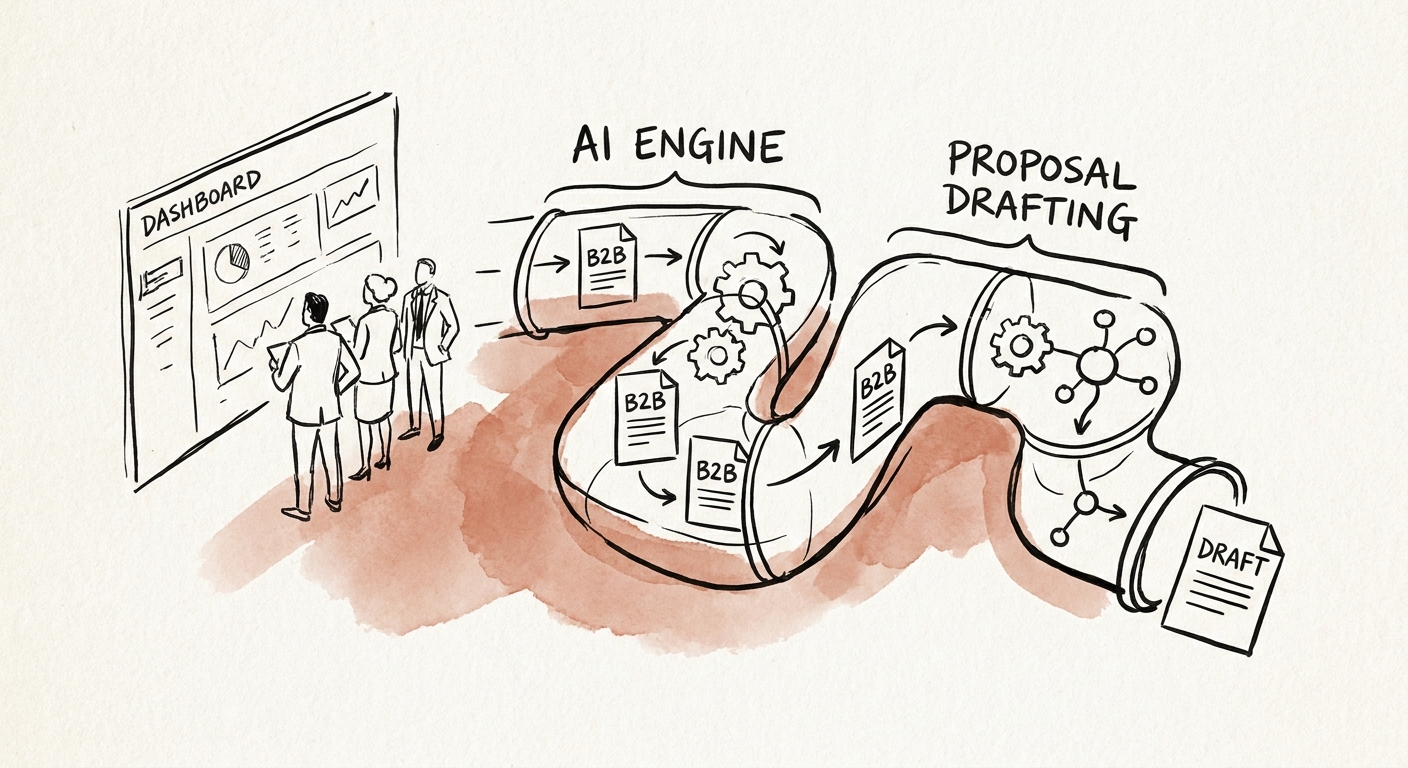
The trick is what you ask it to assemble. Not the pricing — the dependencies, the scope assumptions, the implementation risks, and the handoff notes that the engineer skipped on a Thursday afternoon. Run proposal operations through the workflow automation screen first to confirm the work repeats often enough and your past SOWs are clean enough to be worth drafting from.
The control that matters: capacity, not phrasing
Most teams wire a proposal AI to "approved language" and call the governance done. That is the easy half. The half that protects your firm is the half that knows you cannot staff three simultaneous data migrations in Q3. A drafting tool that can produce a beautiful, on-brand scope for work you have no engineers to deliver is more dangerous than a blank page, because it carries the firm's voice.
So the control layer for a proposal assembler is specific, and it is not generic AI policy. It needs: a library of approved scope and assumption language; current delivery-capacity rules that flag when a proposed timeline collides with committed work; legal-review triggers for non-standard terms; implementation-risk prompts that force the draft to name dependencies on the client's side; and a named human who owns every client-specific commitment before it leaves the building. The NIST AI Risk Management Framework is the right backbone here precisely because it centers accountable controls and human review rather than treating output as trustworthy by default. And because the assembler is reading your closed deals — pricing, client names, past scopes — the CISA AI Data Security Best Practices guidance on access boundaries, sensitive-data handling, and logging is not optional hygiene; it is the thing that keeps last quarter's client pricing from surfacing in this quarter's proposal.
Before you build any of it, score the use case honestly. Run proposal drafting through the AI use-case scoring model against scope risk, how ready your source SOWs actually are, the approval burden you are adding, and the real prize: a cleaner handoff from the people who sell to the people who deliver.
Measure the kickoff call, not the word count
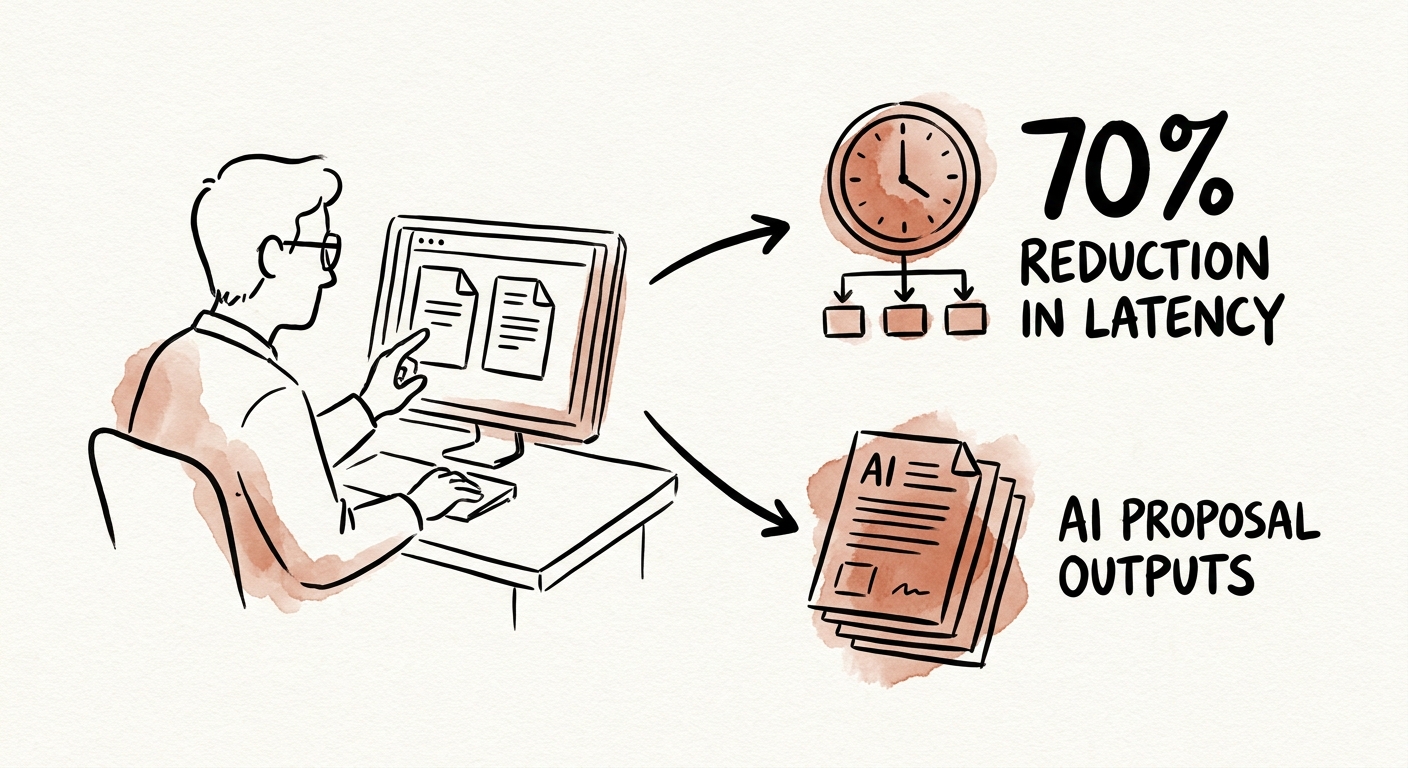
Here is the failure mode to watch for. You ship the tool, proposal volume goes up, the sales team is thrilled, and four months later your delivery leads are quietly more frustrated than before — because now there are more proposals, each one slightly over-promised, arriving faster. The Deloitte State of AI in the Enterprise 2026 read on this is blunt: producing more output is trivial, and improving the operation is the part most teams never get to. A proposal AI can make you look busier while making delivery harder.
So measure the seam, not the speed. Track how many scope exceptions surface at kickoff versus before. Track how often a proposal goes out missing a client-side dependency. Track reviewer edit volume — a falling number means the draft is learning your firm's real constraints. And ask the only question that counts: when a deal closes, can the delivery manager read the proposal and understand the promised work in one pass, or do they still need a translation meeting?
Stage it the boring way. Start with internal draft support — the assembler builds the scaffold, a human finalizes everything client-facing — and prove the handoff improves before you let anything touch a customer automatically. Use the 90-day AI implementation plan to sequence the approved-content library, the capacity checks, the review rules, and a contained rollout. The Monday version of this: open your last ten closed-won proposals and the kickoff notes that followed each one. Every gap between what was promised and what got discovered later is a control your assembler should be enforcing.
