The lead that died in the gap between two people
A demo request lands at 4:12 on a Thursday. It sits in a shared inbox. The rep who would own it is in back-to-back calls and assumes marketing qualified it; marketing assumes the rep saw the alert. By the time anyone replies, it's Monday morning and the prospect has already booked a call with the competitor who answered in eleven minutes. Nobody wrote a bad email. Nobody wrote any email. The lead died in the gap between two people who each thought it was the other's job.
This is why "speed up our sales follow-up" lands on the operations leader's desk and not the sales manager's. The bottleneck isn't reply quality — it's the handoff: who picks the lead up, with what context, and how fast. A faster email generator drops a Ferrari engine into a car with no transmission. You still can't move, because the part that was broken was never the words.
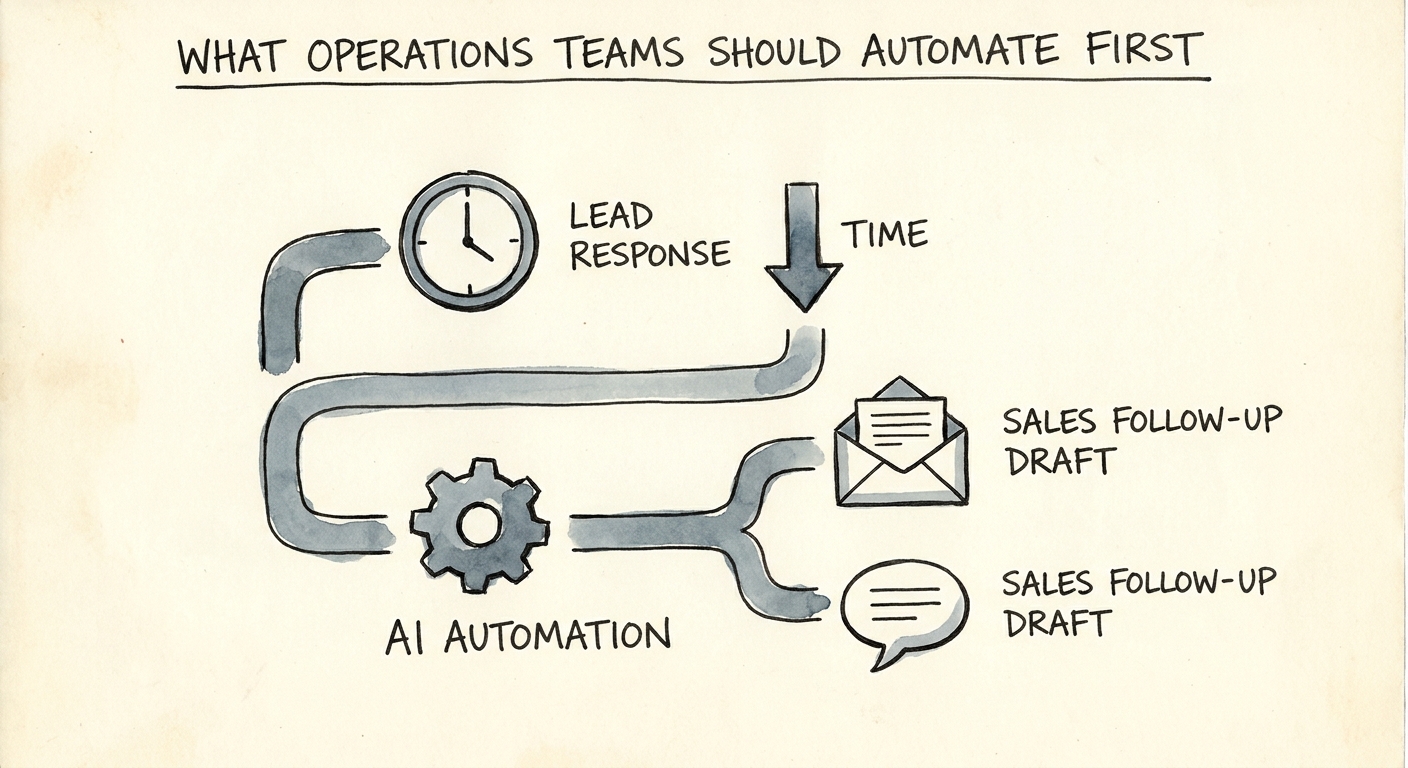
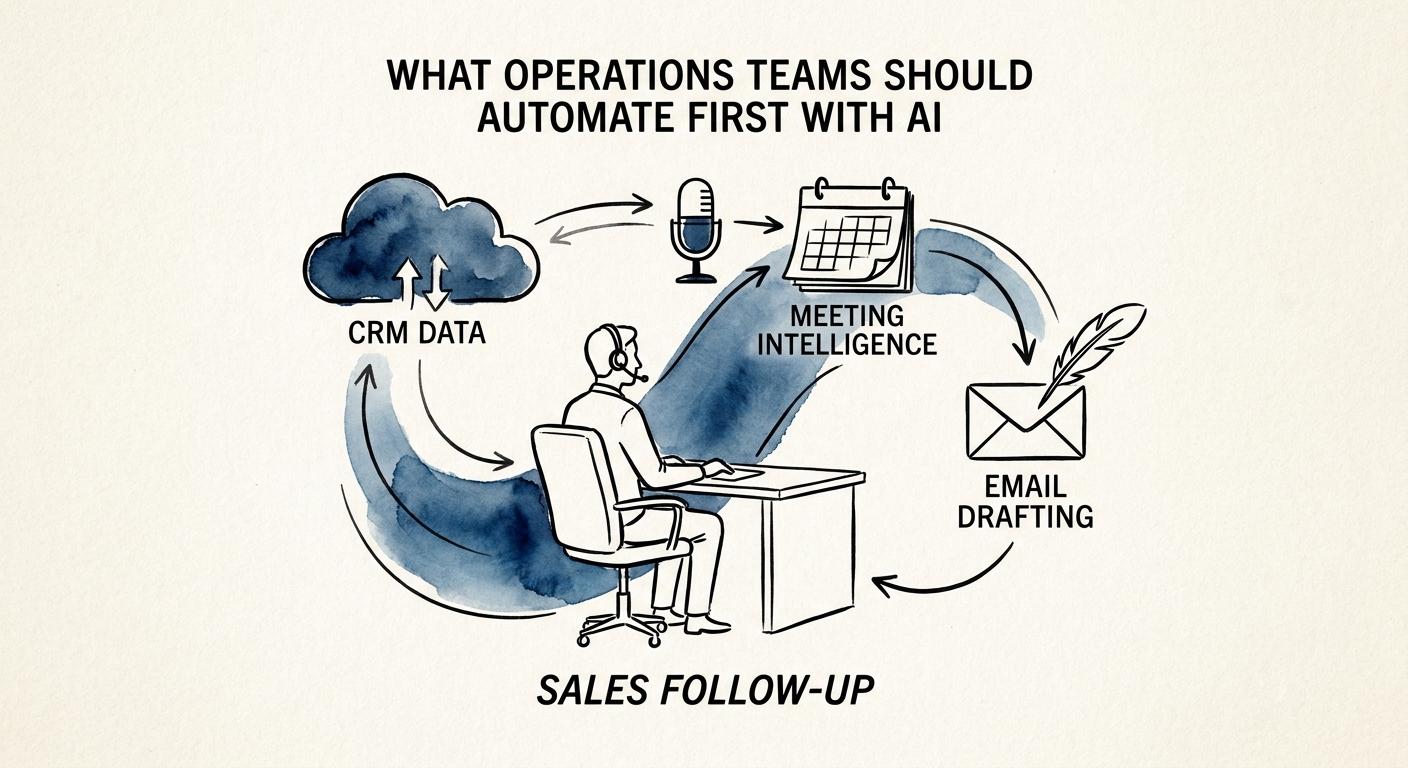
So when you're picking the first workflow to put AI behind, follow-up is a strong opening move precisely because it's an ops problem in disguise. The AI's job here is narrow and unglamorous: read the inbound inquiry, pull the matching account record, judge how hot it is, draft a first reply, and put it in front of the one human who actually owns the relationship. A person approves and sends. The machine just deletes the dead air around the handoff — which, on that Thursday, was the only thing that mattered.
Map the four handoffs before you touch the AI
Operations teams that automate follow-up well do something boring first: they draw the four places a lead changes hands, on a whiteboard, before anyone opens a tool. Skip this and you've automated a maze.
1. The intake handoff — which fields do you actually trust? A form submission, an event scan, a referral note, and a "saw your post" reply are not the same quality of data. Decide which sources feed the workflow and which fields are reliable enough to act on. AI can normalize a sloppy form, but it can't invent a title that was never entered.
2. The ownership handoff — who does the next thing? This is the one that killed the Thursday lead. Write the routing rule explicitly: by territory, by service line, by deal size, by named account. The AI assigns; a human can override; nobody gets to assume.
3. The message handoff — what can be drafted, and from what? The AI prepares a first reply and shows its work: "Drafted from the demo form, the existing account record, and last quarter's support ticket." It should refuse to guess. When the account has a duplicate record or two reps both claim it, it flags that instead of papering over it.
4. The feedback handoff — how does the outcome get back to the CRM? If the reply, the owner, and the result don't return to the system, the workflow can't learn and you can't measure it. This loop is the one teams quietly skip — and it's the one that decides whether month three is better than month one.
That's the whole sequence: source, owner, message, feedback. The research on early adopters keeps pointing at the same lesson — value shows up where AI is wired into a defined process with a human in the loop, not where it's bolted on to spray more messages. MIT Sloan Management Review and Bain both keep circling that point; PwC's work on responsible AI is blunt about the governance you need before a system drafts customer-facing copy. Keep the workflow pointed at response quality, not raw volume — the AI sales follow-up guide walks through how to do that without turning your pipeline into spam.
The six numbers that tell you it worked
Outbound message count is a vanity metric — it goes up the moment you turn the thing on and tells you nothing. The honest scorecard for an ops-led follow-up workflow is six operational measures, not one activity count:
Time to assignment (how long before a lead has a named owner) · percentage of leads arriving with complete context · owner acceptance rate (do reps take the routed leads, or quietly reroute them, which tells you the routing rule is wrong) · approval time on drafts (if humans rewrite every draft from scratch, the AI isn't helping) · duplicate records cleaned · and outcomes actually captured back in the CRM. McKinsey's recurring State of AI findings and the IBM Institute for Business Value tell the same story: the organizations getting returns are the ones tracking process reliability, while the rest are admiring their dashboards.
Start absurdly small. One lead source — say, demo requests only — or one service line. Keep a human approving every outbound message until routing, context, and that CRM feedback loop are genuinely stable, not just live. When the same lead lands cleanly with the right owner three weeks running, then you've earned the right to expand into scheduling, nurture segmentation, or automated account research.
When you're ready to turn the handoff into a governed, repeatable operating path, AI Workflow Automation is the place to build it. And if you're still deciding whether follow-up beats your other candidate workflows, run them through the AI Opportunity Score first — the worst first project is the one that automates a process you never actually fixed.