The recap nobody acts on
Picture a Thursday account review at a 60-person services firm. Six people, 50 minutes, real decisions: the client gets two extra onboarding sessions, the renewal date slips a quarter, and someone promised a revised SOW "by end of week." Everyone nods. The call ends. Then the account lead has back-to-back meetings until Friday, the SOW never gets drafted, the renewal date stays wrong in the CRM, and three weeks later the client emails asking about the sessions nobody logged.
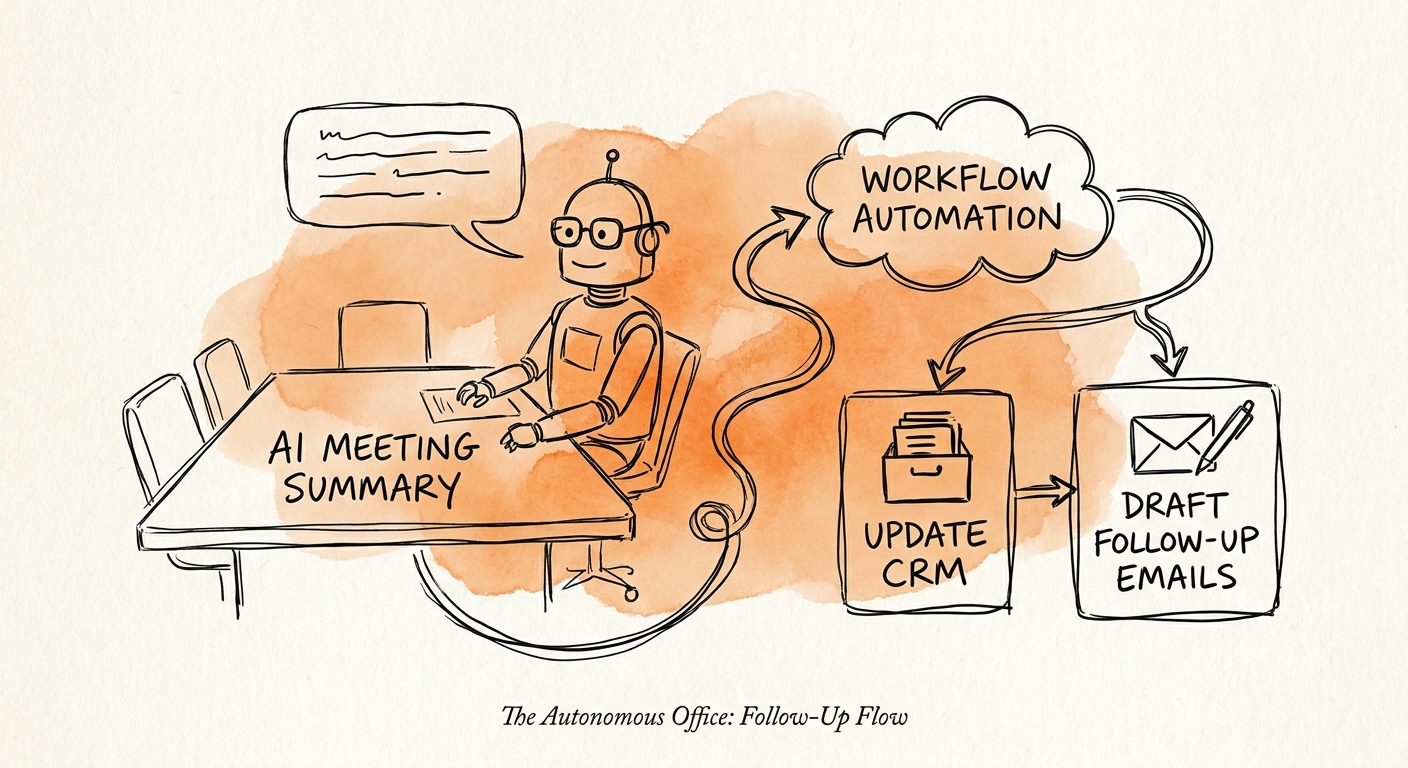
Nothing here was a knowledge problem. The conversation was clear. It was a handoff problem — the gap between what was decided in the room and what made it into a system anyone would check later. That gap is where meeting AI either earns its keep or becomes one more tool generating documents no one reads.
The easy demo is summarization: feed in the transcript, get back tidy bullets. But your team does not have a notes shortage. It has a follow-through shortage. The useful version of this automation does not stop at "here's what happened" — it produces the decisions, the owners, the due dates, and the draft CRM and ticketing updates, then puts a human in front of them before any of it touches a system of record. As research from McKinsey's State of AI repeatedly shows, the value lands when AI is wired into the operating workflow, not bolted on as a standalone output.
Four outputs, two trust levels
A meeting follow-up workflow produces four things, and the mistake most teams make is treating them as one. Here is the split that matters.
Summary — what happened. Decisions — what changed. These are low-stakes. If the AI gets a nuance wrong in the recap, the owner skims it and fixes a word. Let these move fast.
Actions — who owns what, by when. System updates — the renewal date, the deal stage, the support ticket, the new line item in the SOW. These are high-stakes, because they write into the systems other people make decisions from. A wrong renewal date in the CRM doesn't embarrass you in a notes doc — it triggers the wrong forecast and the wrong save play. So these get a hard stop: the AI drafts the update and shows the exact sentence in the transcript that justified it ("…we agreed to push the renewal to Q3"), and a named owner approves before it commits.
That source-text trace is the part teams skip and the part that builds trust. When a rep can see why the system proposed changing a deal stage, they approve in two seconds instead of ignoring the tool. Responsible-deployment work from PwC and the governance patterns covered by MIT Sloan Management Review both land on the same principle: AI proposes, the accountable human disposes, and the link between input and recommendation stays visible. Before you build any of it, use the manual-work guide to confirm meeting follow-up is actually a bottleneck for your team and not just the flashiest thing to automate.
Pick one meeting type and measure the lag
Do not roll this out across every call at once. Pick the single meeting type where dropped follow-up costs you the most — for a B2B services shop that is usually the customer onboarding kickoff or the account review, because that's where a missed commitment quietly becomes a churn risk. Define three things for that meeting type: the required fields it must produce (renewal date, next action, owner, ticket), the one person who approves before updates commit, and the destination system each output flows into.
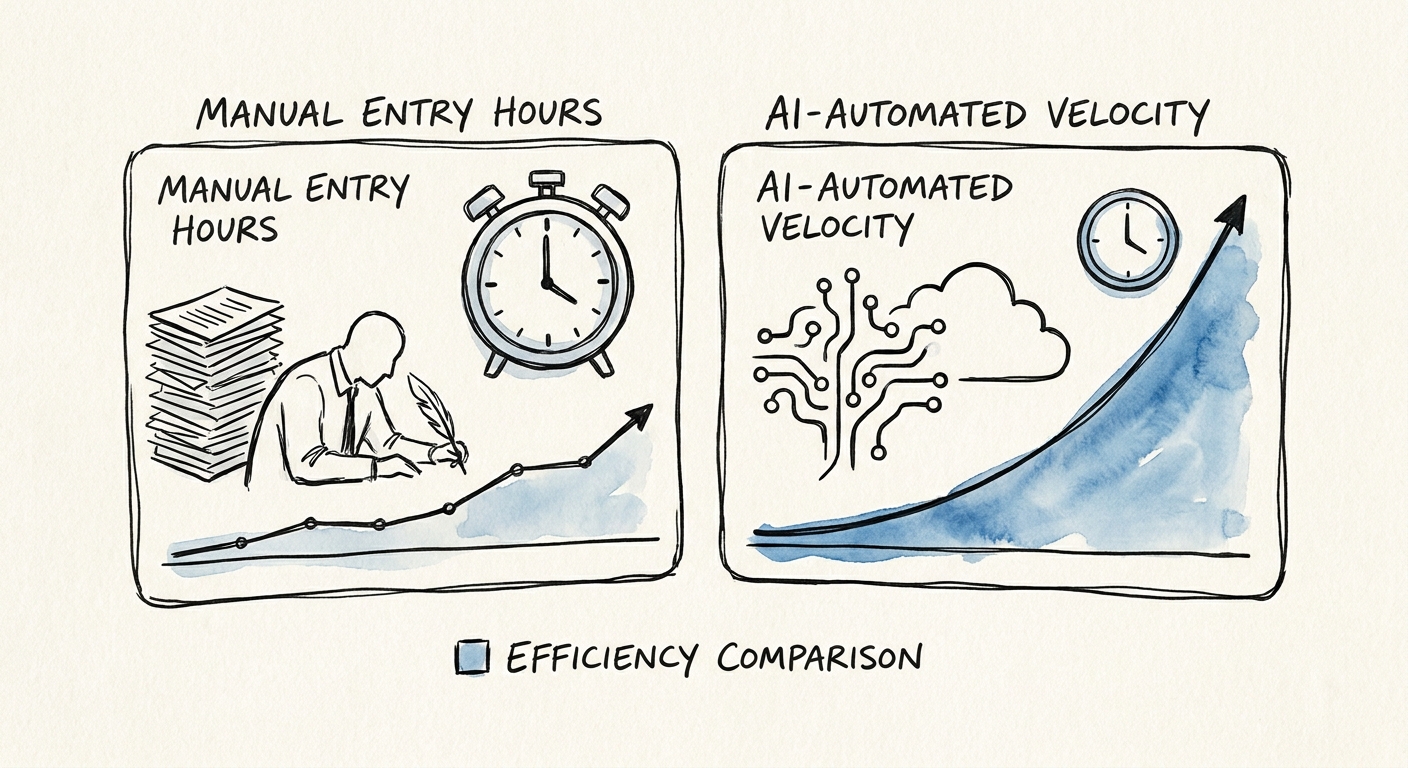
Then measure the right thing. Prettier notes is not the metric. Lag and leakage are. Track time from meeting end to recap delivered, hours until the CRM reflects the decision, the count of action items with no owner assigned, and the number of "wait, didn't we agree to…" questions that resurface in the next call. Run it for several cycles and compare. If the time-to-CRM-update dropped from days to minutes and reopened questions fell, the workflow is working. If you just have nicer documents, you automated the wrong half. The IBM Institute for Business Value (research here) and Bain both note that the ROI shows up in cycle-time and rework reduction, not output volume.
When you're ready to map the approval path and the destination systems, start with AI Workflow Automation. If you need to put a number on what follow-up lag and rework are costing you first, run the AI ROI Calculator before you build anything.
