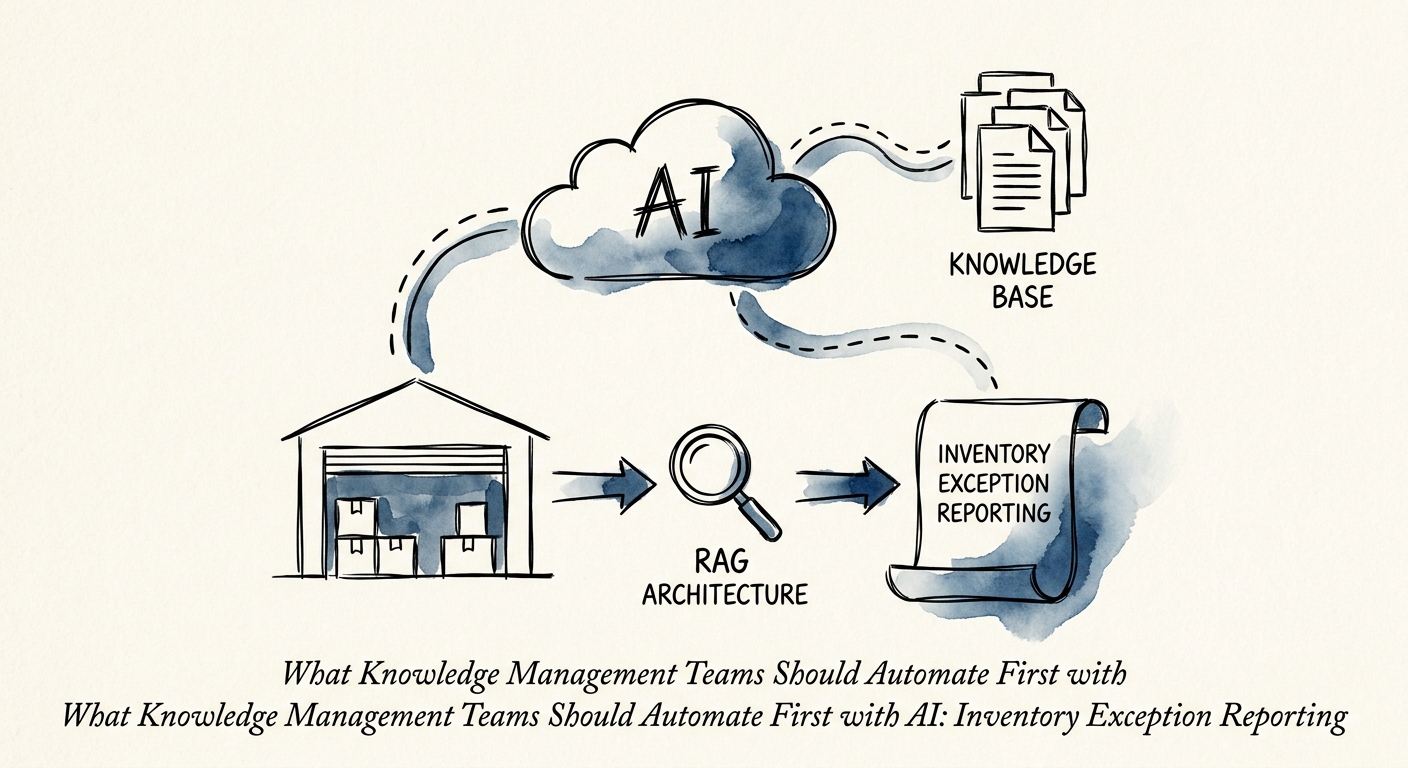
The exception nobody owns
Picture the Monday standup at a 90-person distributor. SKU 4471 shows 1,200 on hand in the WMS, the cycle count says 940, a customer expects 600 to ship Thursday, and the buyer already cut a PO assuming the 1,200 was real. Where does that discrepancy live? In a count sheet, a Slack thread, two emails, and a planner's spreadsheet tab nobody else opens. By the time someone reconstructs the story, the truck has left.
That is why inventory exception reporting is the right first AI workflow for a knowledge-management or operations team — not because it's glamorous, but because the raw material already exists. Your people are already reviewing variance, delayed receipts, stockout risk, and demand signals. The work isn't detecting the exception; it's assembling the story behind it fast enough to act. McKinsey's supply chain research keeps landing on the same point: performance comes from visibility and a fast operating response, not from one more dashboard nobody reads.
The job of the knowledge layer here is narrow and concrete: take the scattered notes and turn them into an exception packet. Four lines, every time — what changed, what source proves it changed, who owns the next action, and what customer or margin risk is attached. IBM's Institute for Business Value frames why this works as a starting point: AI produces useful output when the data, the operating model, and the measurement are all in place — and exception reporting is one of the few operations workflows where all three usually already are.
The risky step is the handoff, not the math
Detecting a variance is easy. The danger is what happens next, because an inventory exception touches purchasing, customer commitments, and working capital in the same breath. If the AI quietly "resolves" a stockout by recommending an expedite, or buries the operating cause under a tidy summary, you've automated a wrong decision at machine speed. Say a planner trusts an AI packet that flags a phantom overage; the buyer skips a reorder, and three weeks later a top account goes backordered. The model was confident and wrong, and no human saw the seam.
The NIST AI Risk Management Framework gives the right sequence, and it maps cleanly onto inventory: map the exception types worth flagging, measure where the AI gets variance attribution wrong, manage the controls — most importantly, keep a human in the loop for any exception carrying stockout, margin, or customer-commitment risk — and govern who owns the call before you let autonomy creep upward. In practice that means the AI explains and routes; it does not cut POs or promise dates.
There's also a less obvious prerequisite. Inventory context in a distribution shop is spread across documents, Teams channels, SharePoint folders, email chains, and planning spreadsheets — and a lot of those have stale permissions. Microsoft's guidance on Copilot data protection and auditing is blunt about why this matters: if an AI can read a folder it shouldn't, or pulls a six-month-old forecast as if it were current, your exception packet inherits the rot. Clean up source authority and access before anyone is asked to trust a summary.
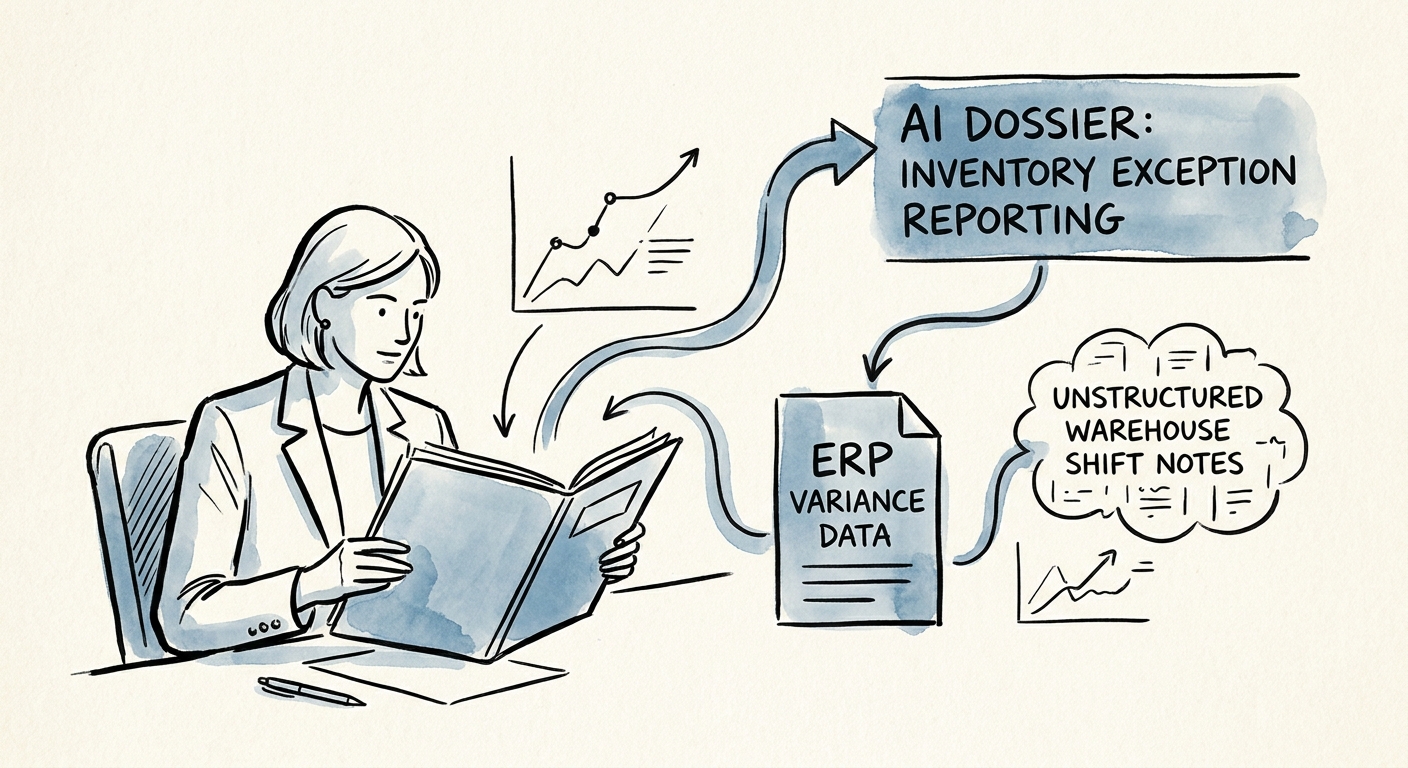
How you know it's working — and when to expand
Don't measure this by exceptions flagged. Measure it by whether a buyer or planner moves faster because of the packet. Track five things: exception precision (how often the flagged variance is real), source-link completeness (can someone click straight to the count sheet or receipt that proves it), human correction rate (how often operators have to fix the AI's attribution), escalation timeliness (did the right owner see it before the truck left), and recurring root causes (is the same SKU or supplier generating the same exception every week — a signal you can fix upstream).
The expansion rule is simple: you widen autonomy only when operators trust the packet enough to act on it without re-checking the source. Until then, the AI's job is to assemble and route, not decide. When the correction rate falls and the same people who used to dread Monday standups start clearing exceptions before the meeting, you've earned the right to add the next workflow.
For the boundary cases — the exceptions you should leave to a human for now — read when not to automate inventory exception reporting with AI. When you're ready to build the pipeline, start with AI workflow automation.