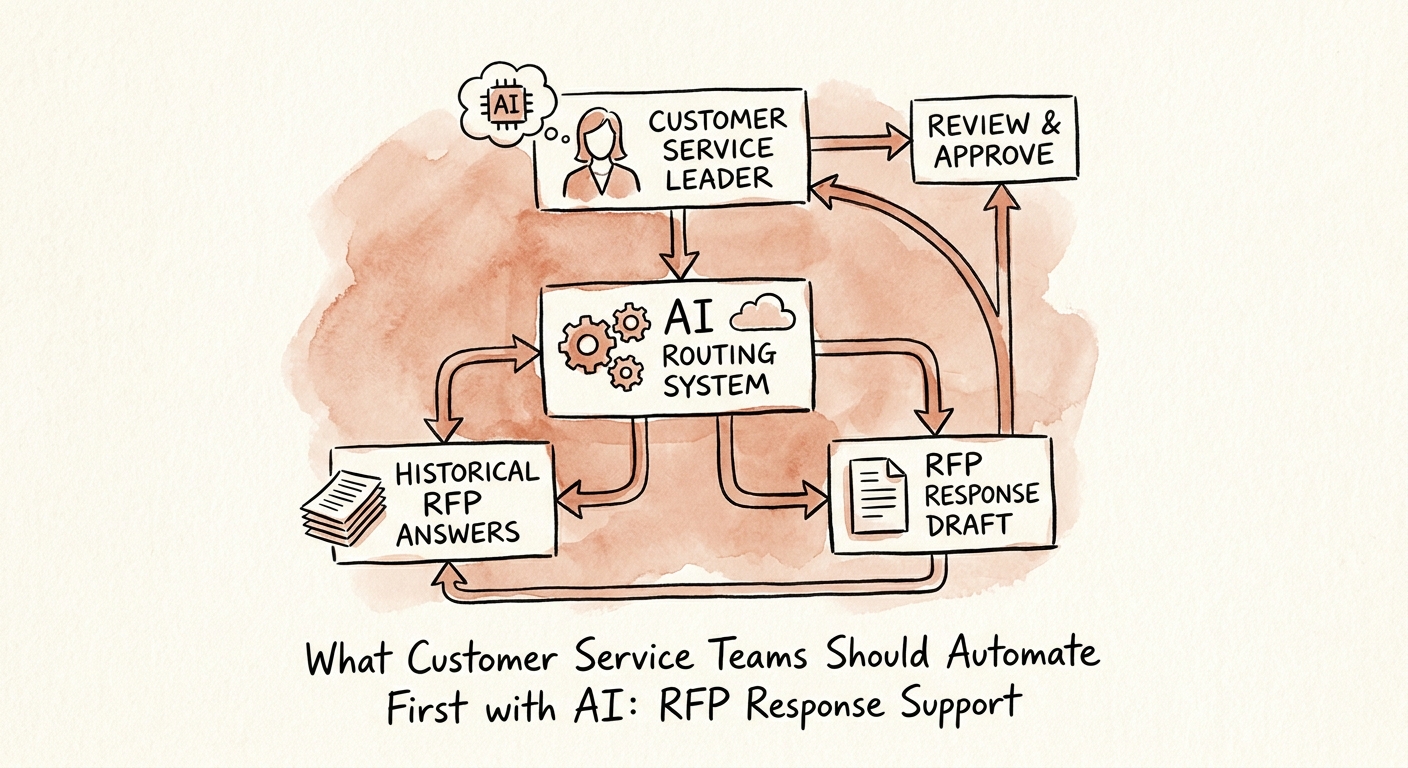
The Thursday-afternoon RFP scramble is the use case
A 180-question RFP and a 60-page security questionnaire land at 4 p.m. on a Thursday. The submission is due Monday morning. Your support lead, a sales engineer, someone from product, and whoever last touched SOC 2 all get pulled into the same shared doc, copy-pasting from old proposals, hunting Slack for "what did we say about data residency last time," and rewriting the company overview for the ninth time this quarter. That is the scene. For most B2B services firms, this is exactly where the first AI win lives — not a customer-facing chatbot, but the internal fire drill nobody owns.
The reason RFP support is a good first project is structural: most of the answer already exists somewhere. Your win rate doesn't hinge on inventing prose under deadline pressure; it hinges on quickly retrieving the response you already approved and getting the two or three genuinely new questions in front of the right person. An AI assistant built around an approved-answer-and-evidence library does the boring 80% — pulling standard responses, product facts, security posture notes, service-level commitments, and known exceptions — so your experts spend their Friday on the questions that actually need judgment.
The trap is letting the assistant fill a blank because a field is empty and the deadline is close. That is how a fabricated uptime number or an overstated compliance claim ends up in a signed proposal. The whole design rests on one rule: retrieve and assemble, never originate.
Start with one questionnaire type, and make evidence expire
Don't try to automate "RFPs" in general. Pick the single category you see most — say, the standard vendor security questionnaire, or the discovery-stage RFP for your core service line — and build the library for that one. A 40-person services firm can stand this up in weeks if it scopes to one document type instead of boiling the ocean. Define, up front: which answers are reusable verbatim, which carry an expiration date, which questions must route to legal or security before they go out, and who signs off before submission.
The expiration date is the part teams skip and later regret. Security answers, customer-reference examples, and control attestations go stale — a renewal lapses, a sub-processor changes, a feature ships. The CISA AI Data Security Best Practices should shape how that sensitive material is stored and retrieved: permissions on who can pull a given answer, restrictions on customer-specific or regulated content, and a clear owner for every claim about your security posture. If a stored answer says "encrypted at rest with AES-256," someone owns proving that's still true.
The NIST AI Risk Management Framework earns its place here because an RFP answer is a commitment a customer can hold you to. Map where each answer comes from, measure how often reviewers have to correct the assistant's retrieval, and manage the workflow with source links, a confidence flag, and a hard escalation path for any question the library can't support. The output of your first 90 days is a maintained answer library with named owners — not a clever prompt. If no one owns the proof point after the deal closes, the assistant will cheerfully resurface last year's expired evidence on the next bid.
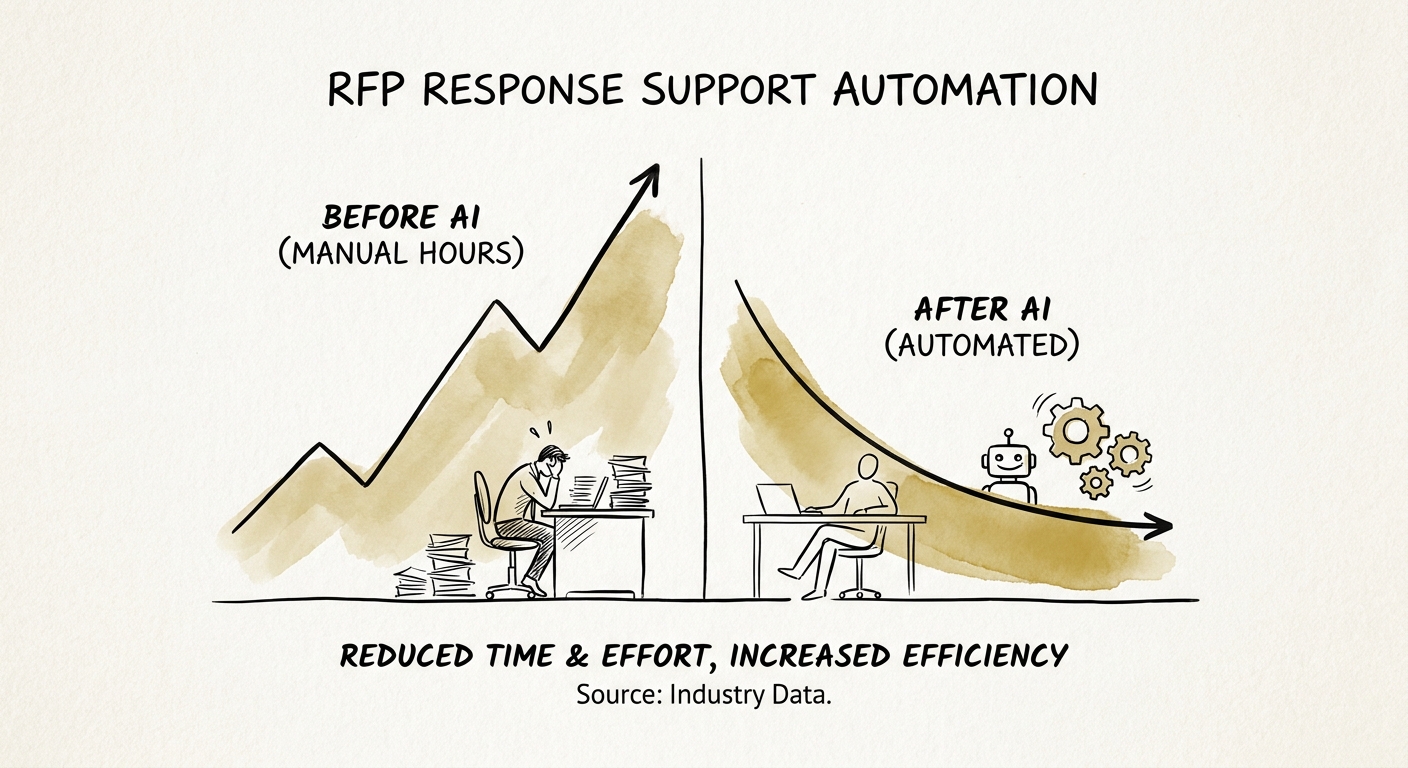
The metric that matters: fewer corrections caught late
You'll know this is working long before you can prove it, because the Friday scramble gets quiet. To make it concrete, track six things: time to first complete draft, how much of the questionnaire the library could actually cover, how many expired answers the assistant surfaced and flagged, the reviewer correction rate, the volume of late-stage rework on the Sunday-night read-through, and the count of questions that still need a real expert. The win condition isn't "the AI answered everything" — it's that your people spent their time approving a handful of judgment calls instead of archaeology in old proposals.
Hold a hard line on authority. Anything touching a legal warranty, your security posture, a regulated commitment, or a customer-specific carve-out gets retrieved by the assistant and signed by a human. The assistant's job is to put the best available, in-date evidence in front of the owner with its source attached. The owner's job is to decide whether it's true today and whether you want to commit to it. Blur that line and a fast submission becomes a liability you discover during the deal review.
One caution on measuring the payoff: faster submissions only count if quality and approval control survive intact — a draft that goes out in half the time but doubles your rework or commits you to something you can't deliver is not a win. Count it the way you'd count any operational change, with the discipline laid out in measuring AI ROI without fake savings. Monday action: pull your last three RFPs, tag every question as reusable / expiring / needs-expert, and you've started the library.