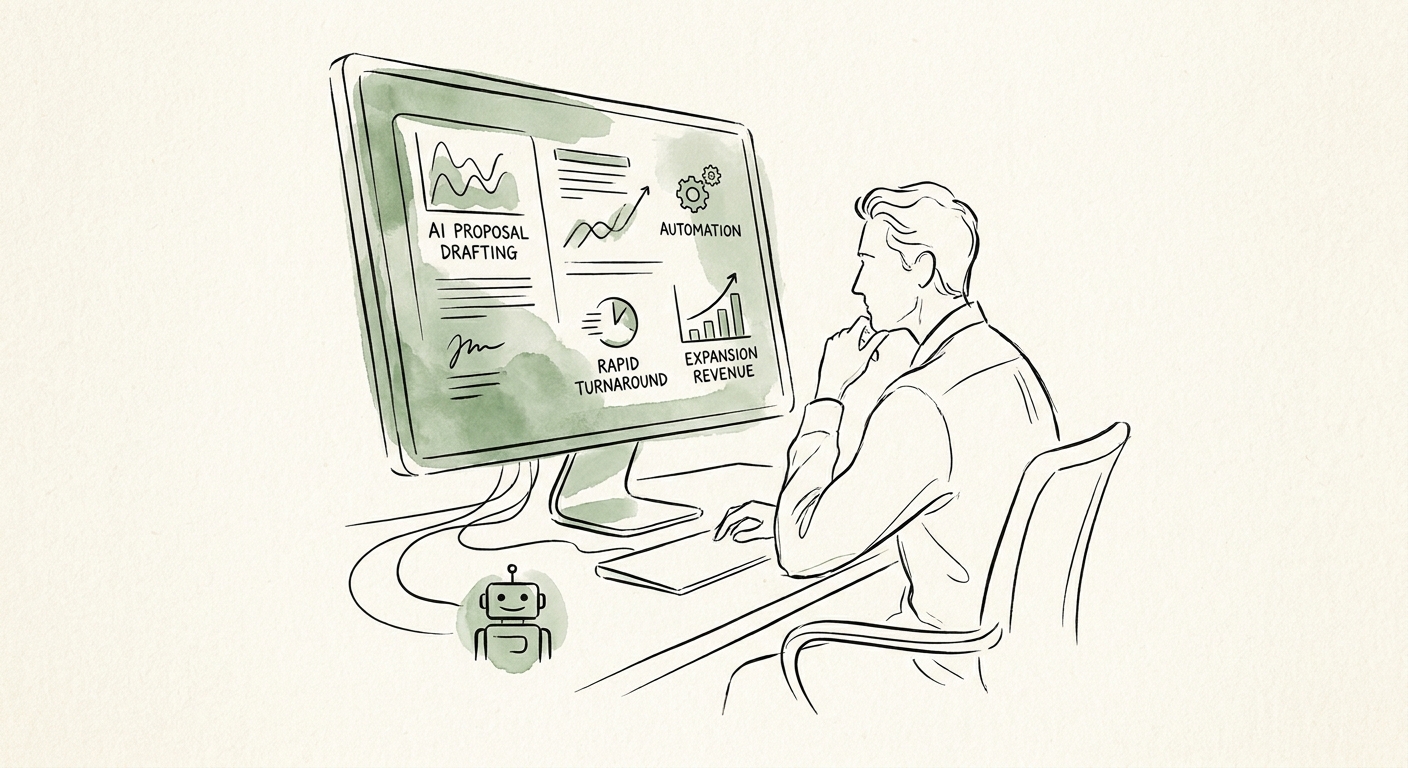
The expansion signal dies in the ticket queue
A customer emails support: "We've added two new locations, can the current plan cover them?" That's not a support ticket. That's an expansion request wearing a support ticket's clothes. The rep who reads it knows the account is ready to spend more. Then they do the thing that kills the moment: they tag it "follow up with AM," close the ticket, and move to the next one in the queue.
By the time an account manager circles back, the urgency has cooled. In a B2B services business, the people closest to the buying signal are almost never the people allowed to write the document that captures it. Support reps live in the ticketing system; proposals live in CRM, contract templates, and pricing approvals they can't touch. So the signal travels through a handoff, loses context, and lands as a generic "want to upgrade?" follow-up days later.
This is why proposal drafting beats a customer-facing chatbot as a first AI workflow. The chatbot answers questions you've already answered a hundred times. The proposal draft does something harder and more valuable: it lets the rep who saw the signal capture it in minutes, in your approved language, without becoming a part-time salesperson. The workflow is narrow enough to govern and close enough to revenue to matter.
What the draft pulls, and what it must never decide
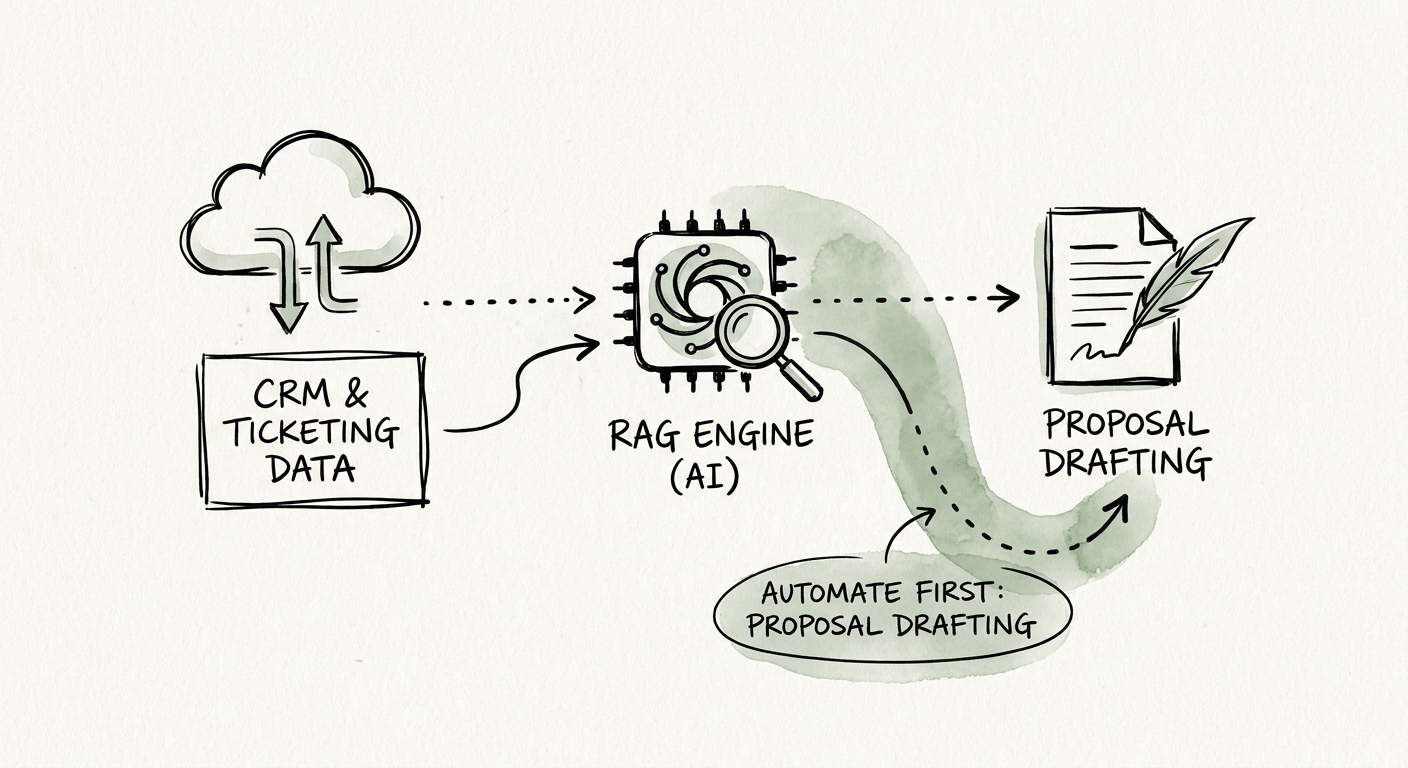
The mechanics matter because this is where teams either build something trustworthy or something dangerous. A useful proposal draft assembles from three sources the rep already has fragments of: the CRM record (current plan, contract dates, account owner), the ticket thread that triggered it (what the customer actually asked for, in their words), and your approved proposal templates and clause library. The AI's job is to merge these into a first draft and stop.
Stop is the operative word. The draft does not set price. It does not invent a discount because the customer sounds frustrated. It does not promise a delivery date or commit to scope that isn't in your templates. When it hits something it can't source — say a 40-person agency asks for a custom integration nobody has quoted before — it flags the gap rather than guessing. A draft that confidently fabricates a number is worse than no draft, because someone busy will trust it.
Make the draft show its work. Which ticket triggered this? Which account record did it read? Which template clauses did it pull, and which fields are still blank? That source trail is what gets the finance lead and the sales director to sign off on letting support touch proposals at all. For deciding whether it's working, lean on signals that map to this specific workflow — proposal cycle time from signal to send, rework rate on AI drafts, and expansion follow-through — not vanity "hours saved." The proposal drafting ROI guide walks through which of those to instrument first. Independent research from McKinsey's State of AI work and the IBM Institute for Business Value consistently finds that the deployments that hold up are the bounded, measured ones — not the broad rollouts.
The pilot you can run next month
Pick the single most common expansion trigger your support team sees. For most B2B service shops it's "add seats/locations/users to an existing plan" — a renewal-adjacent request with a known template and almost no scoping ambiguity. That's your pilot: one proposal type, one customer segment, one approved template, one named approver. Resist the urge to start with custom statements of work; those have the most judgment and the most ways to go wrong.
Wire the human approval step in from day one, not as a phase-two add-on. A person signs off on price, any technical commitment, and the customer-facing language before anything sends. PwC's responsible-AI guidance and MIT Sloan Management Review's AI coverage both land on the same point that operators learn the hard way: governed automation earns trust, ungoverned automation burns it once and gets shut off. Bain's AI research echoes that the durable wins come from workflows people actually keep using.
If the pilot cuts the time from "customer asks" to "proposal in their inbox" and rework stays flat, you have a pattern you can extend — to renewals, to add-on services, to the bigger SOWs you were right to avoid at the start. When you're ready to build it as a governed workflow rather than a one-off experiment, AI Workflow Automation is the path, and the AI ROI Calculator lets you model the expansion-revenue math before you commit engineering time.