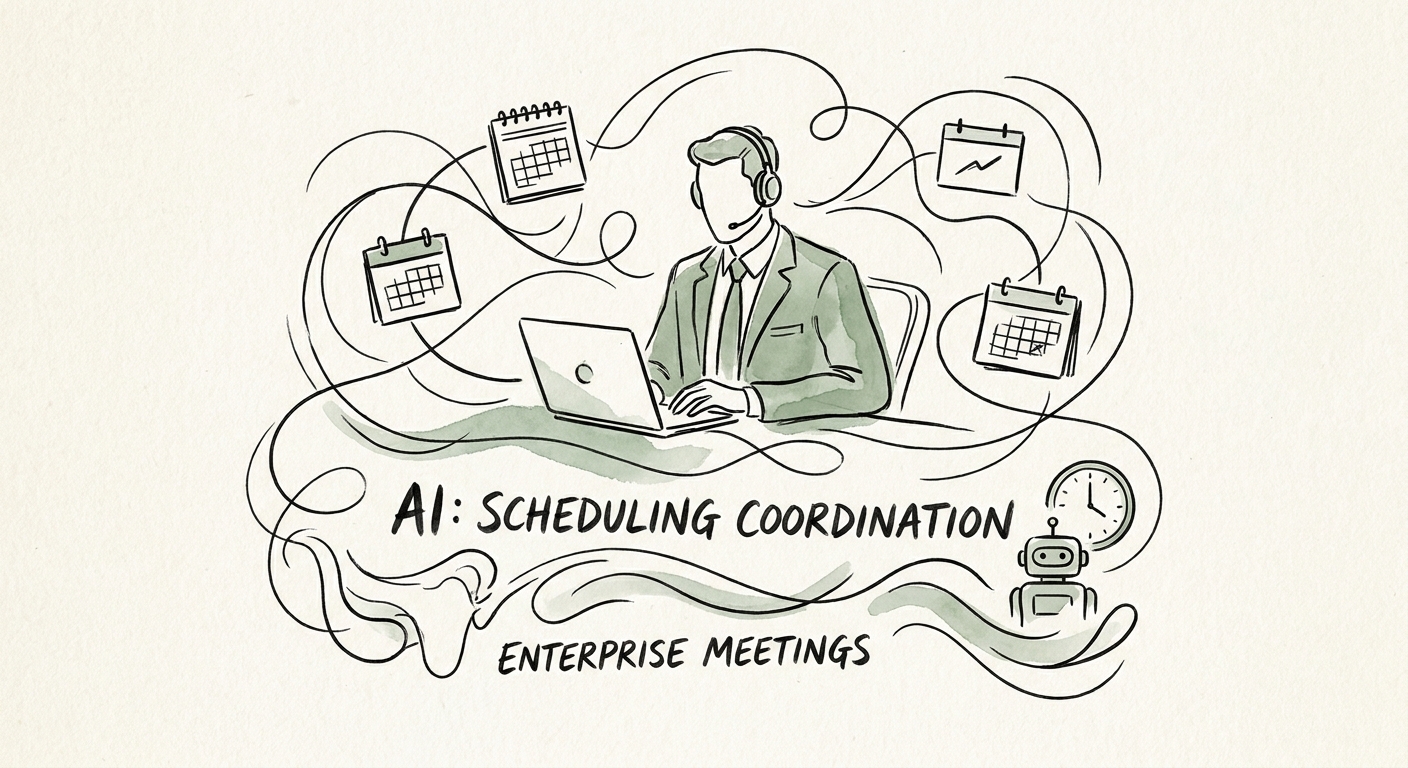
The 11-Email Thread That Should Have Been Two
Picture a B2B services rep trying to get a discovery call on the books with a prospect's VP of Operations. The buyer suggests Tuesday. The rep's calendar shows Tuesday is open — except the rep is holding it loosely for a renewal that might slip. So they offer Wednesday. The buyer's assistant counters with Thursday at 9, which is 6 a.m. for the buyer's West Coast counterpart who also needs to be there. Eleven emails later, the meeting lands on a slot nobody loves, and the rep has spent forty-five minutes being a switchboard instead of selling.
This is exactly why scheduling coordination is the right first AI workflow for a sales team — not because it's glamorous, but because the failure mode is small and the friction is loud. Nobody loses a deal because AI proposed three good times instead of zero. Salesforce State of Sales research consistently shows reps spend a large share of the week on non-selling administrative drag, and Deloitte State of AI in the Enterprise 2026 finds the AI projects that actually stick are the ones aimed at bounded, measurable friction rather than open-ended "transformation."
The catch — and the reason most teams skip straight to something flashier — is that a calendar is not a neutral document. The slot you protect, the buyer you'll move three meetings for, the executive whose time appears "magically available" the moment a seven-figure logo asks — every one of those is a priority signal. Automate scheduling carelessly and your AI starts broadcasting your sales strategy through the timestamps it offers.
The Tell Is in Which Times You Don't Offer
Here's the part teams underestimate: the risk in AI scheduling isn't a wrong time, it's a revealing one. If your scheduler instantly surfaces your VP of Sales for a mid-size prospect but makes the same exec "unavailable for two weeks" to a smaller one, an observant buyer learns where they rank. If it offers a same-day slot to one account and never to another, it has leaked your tiering. The buyer doesn't see your CRM — but they can read the calendar you expose.
So scope the first pilot to a single meeting type where the priority logic is simple. Discovery calls are a good candidate: the rules are roughly "any open slot in the next two weeks during business hours in the buyer's timezone, with the named account owner present." Renewal reviews and executive briefings are deliberately bad first choices — those are exactly where calendar access maps to deal value, and where you most want a human deciding whether the CRO clears an afternoon.
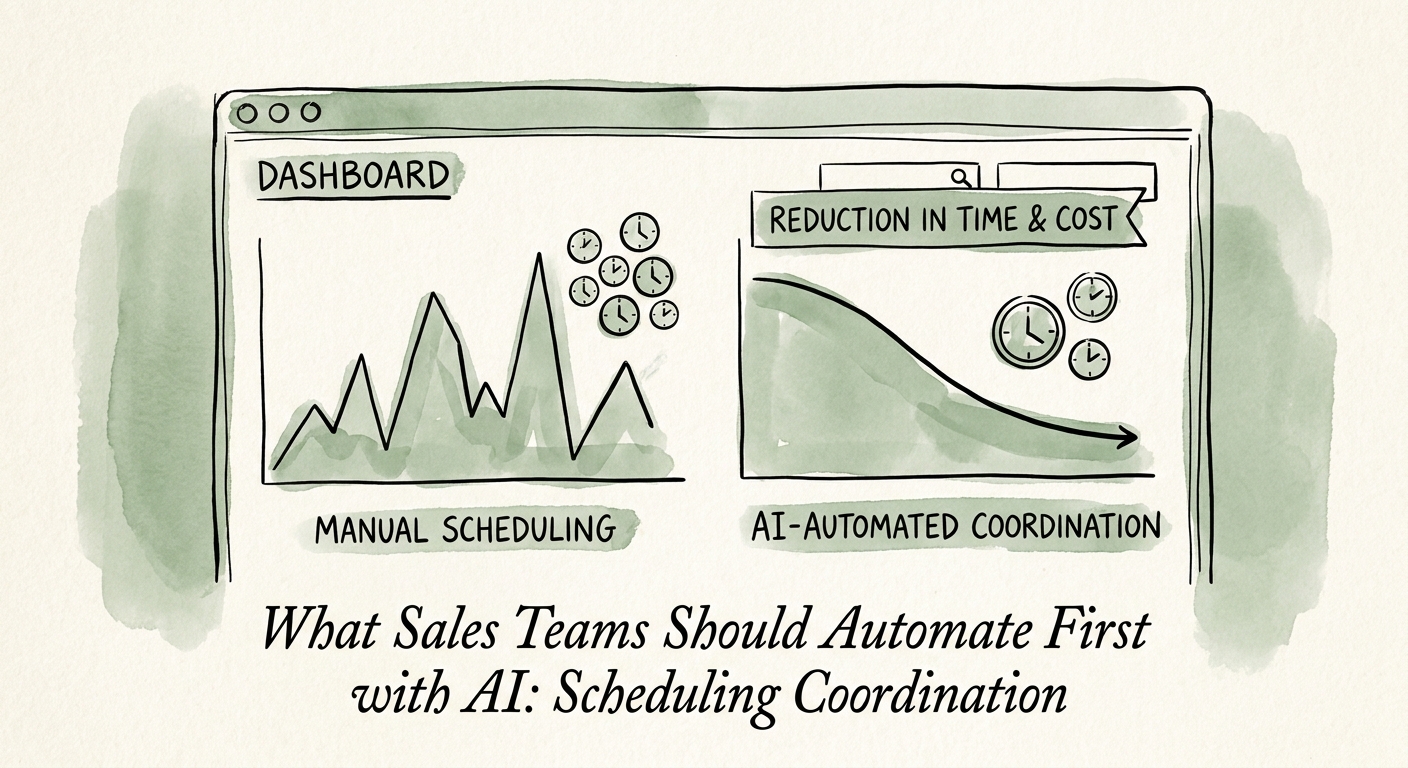
For that one meeting type, define a scheduling packet the AI must fill before it proposes anything to a human: request source, required attendee roles, the buyer's timezone, the approved calendar window, and a flag for any slot that touches a protected hold. The NIST AI Risk Management Framework is the right lens for writing down what the assistant is allowed to see and do — treat "which calendars and which fields" as a governance decision, not a default integration setting. Then measure the things that prove friction is actually falling: emails-to-confirmed-meeting (your eleven-thread benchmark), median time from request to booked slot, and how often a rep rewrites the AI's proposal before it goes out. That last number is your honesty meter — a rising correction rate means the model is offering times your reps wouldn't.
Keep the Confirmation Human Until the Class Is Proven
Run the first version internal-facing. The AI proposes two or three times to the rep; the rep — not the model — sends the email to the buyer. That single guardrail means a mistake is a private "let me adjust those," never a customer-facing message that implied your CEO is sitting around waiting for a 30-person prospect. Before you connect any calendar at all, walk through CISA's AI data-security best practices on what the assistant can read, log, and retain — a sales calendar quietly contains buyer names, internal escalation patterns, and who's meeting whom, which is competitively sensitive even when no deal terms appear.
The most useful artifact from the pilot is the rejection log. Every time a rep overrides a proposed slot, you're seeing a rule the AI didn't know: a timezone assumption that was wrong, a protected hold it ignored, a stakeholder it forgot to include, a buyer it shouldn't have offered prime time to. Review those weekly. When the override rate on discovery calls drops to near zero, you've earned the right to either flip that one meeting type to buyer-facing or add the next class — meeting follow-ups, prep briefings — one at a time.
Two practical moves for this week: pull last month's scheduling email threads for one rep and count the round-trips — that's your before number and your business case. Then use the AI ROI Calculator to translate recovered selling hours into pipeline, and the AI Opportunity Score to confirm scheduling is genuinely your highest-friction, lowest-risk starting point before you build anything. If it is, you've found the rare AI project that pays back fast and can't embarrass you in front of a buyer.
