The 187-question security questionnaire is why you start here
Picture the Thursday afternoon a 60-person SaaS vendor gets a qualified RFP from a buyer worth more than any deal they closed last quarter. Attached is a 187-line security and compliance questionnaire due Monday. Half the answers already exist — in last year's submission, in a SOC 2 report, in a Slack thread where the CTO explained data residency. The other half are buried, stale, or contradict each other. So a sales engineer spends the weekend copy-pasting from a deal that closed in 2024, and nobody is sure whether the answer about subprocessors is still true.
That weekend is the case for starting AI in sales with RFP response — not because RFPs are glamorous, but because they are the one place where retrieval pain, deadline pressure, and binding language all collide. The Census Bureau's data on AI use at U.S. businesses and the OECD's research on AI adoption by smaller enterprises both show the same gap: adoption is climbing, but the value shows up only where the workflow has a clear owner and a clear boundary. An RFP queue has both — a due date and a person whose name is on the submission.
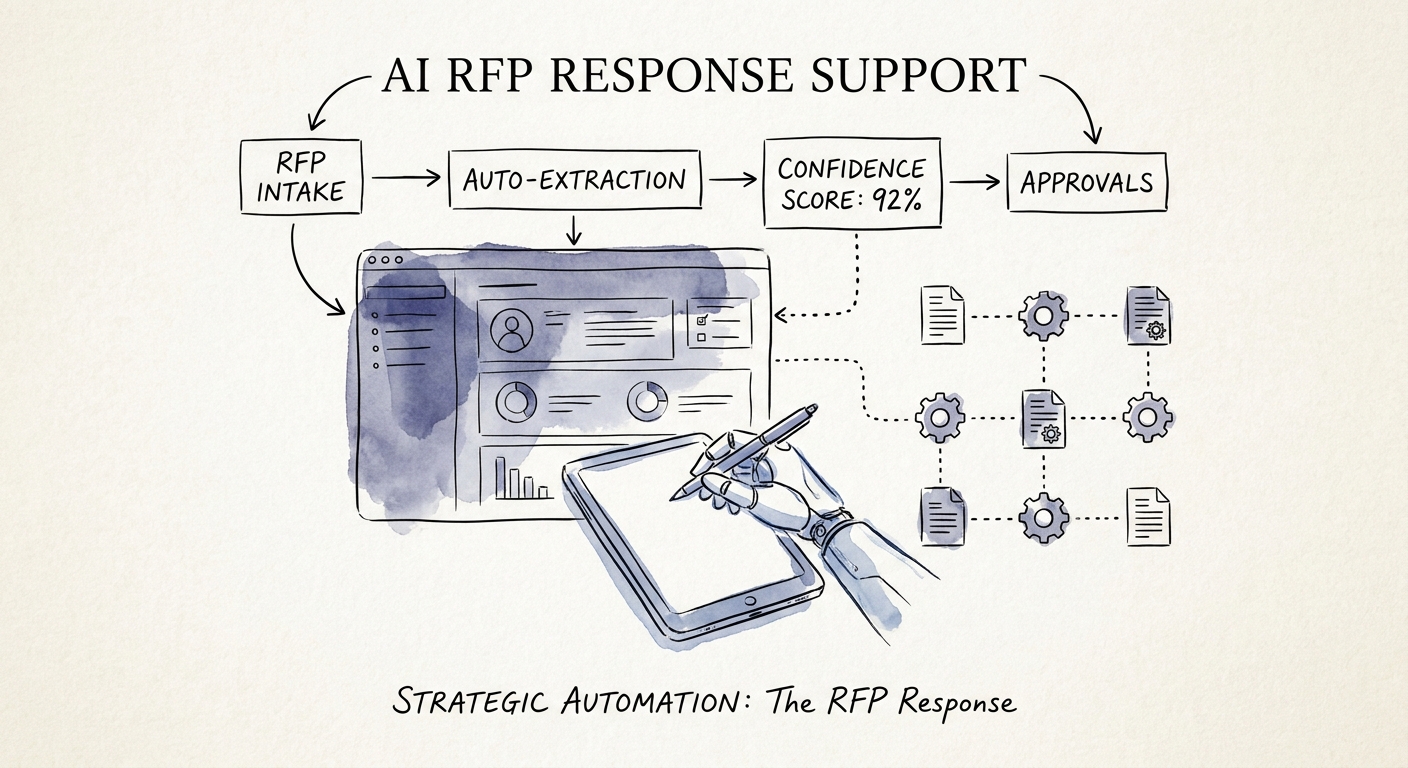
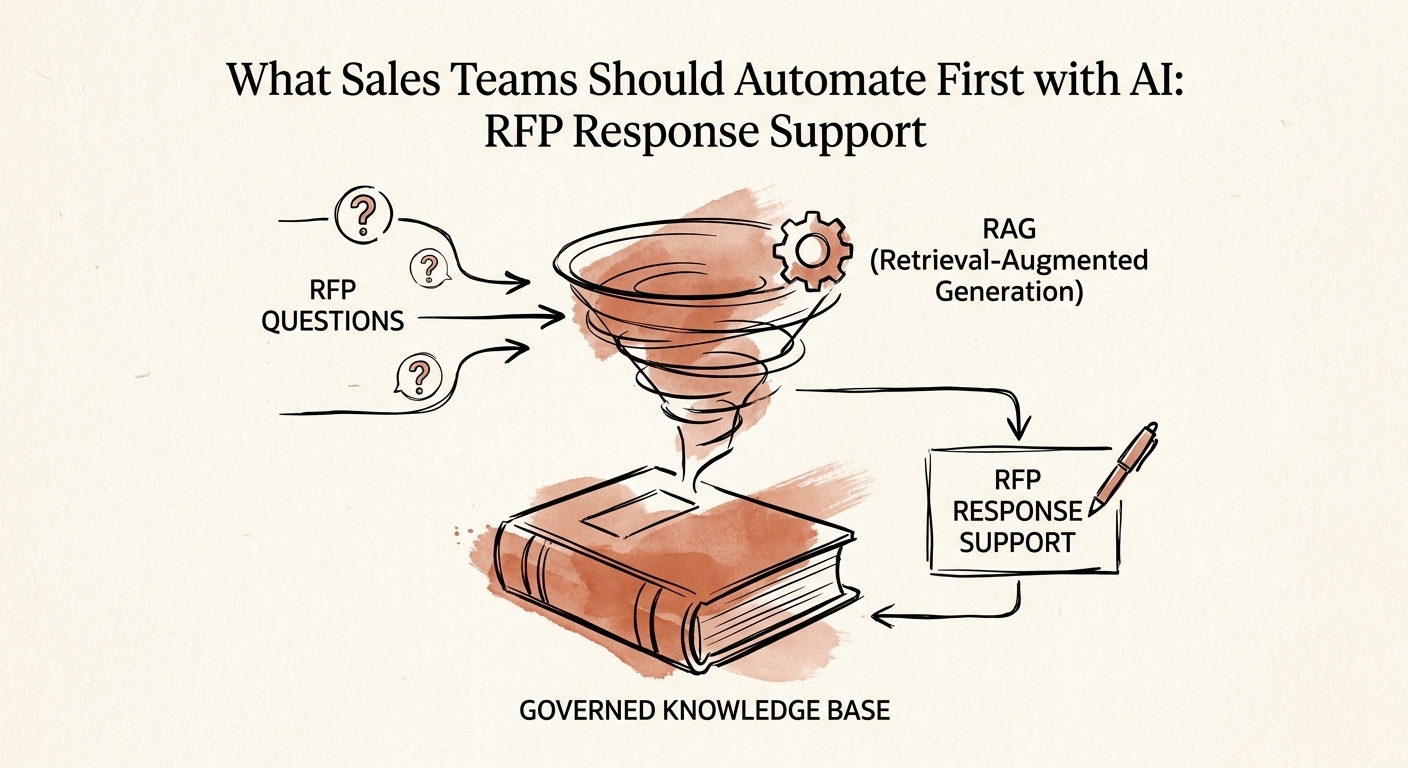
So scope the pilot to one thing: a retrieval layer over your approved answer library, your last three winning submissions, and your current security and legal posture. Nothing else. The AI's job is to find the best existing answer and flag where one doesn't exist — not to write new commitments. Name what it must never touch on its own: pricing, contractual SLAs, compliance attestations, and anything a customer could later wave in front of a lawyer. Deloitte's 2026 state-of-AI research keeps landing on the same point: the value lives in the workflow you can measure after launch, not in the demo that wowed the room.
The dangerous answer is the one that sounds confident and is six months out of date
Here is the failure mode unique to RFPs, and it's not a typo. Say a buyer asks, "Do you support customer-managed encryption keys?" Your AI confidently pulls "Yes" from a 2024 submission — but that feature shipped to enterprise tier only, and this buyer is on a plan that doesn't include it. In an email, that's an awkward correction. In an RFP, you've just made a written representation that follows you into the contract. The risk isn't that the AI hallucinates from nothing; it's that it retrieves something that was true once and is wrong now.
This is exactly the contextual risk the NIST AI Risk Management Framework warns about — a statement that's harmless in a draft becomes material the moment it enters a binding document. So the review artifact for every AI-suggested answer needs four things visible at a glance: the source it pulled from, the date that source was last verified, the confidence flag, and the named owner who can attest it's still true. A security questionnaire answer routes to the CTO or compliance lead; a feature claim routes to product. No green checkmark moves to the submission without an attestation behind it.
Lock the source boundary down hard, because RFP answers often touch the most sensitive material you have. The CISA guidance on securing data used to train and operate AI systems should shape what the retrieval layer can read, what it logs, and what it's forbidden to surface — your pen-test results and incident history should never get auto-pasted into a prospect's spreadsheet. Then measure four things over the first batch of RFPs: hours to first complete draft, the share of answers reused from the approved library versus rewritten from scratch, the count of "no current answer exists" flags (your real content gaps), and post-submission corrections. If corrections don't fall, the answer isn't a smarter model — it's an answer library someone actually owns and keeps current.
You've won when the weekend scramble becomes a Tuesday review
Run it on a real clock. In the first 30 days, take every RFP that comes in through the existing path and have the AI assemble a draft from the library — then have the human owner mark every answer accept, fix, or "this commitment didn't exist before." That last bucket is gold: it's a live inventory of the questions you keep getting asked and have no approved answer for. Days 31 to 60, fix those gaps at the source so the library stops drifting, and compare each AI-assembled draft against what your best sales engineer would have submitted. By day 90 you decide: scale it, narrow it to security questionnaires only, or pause until the library is trustworthy.
The tell for a good outcome is unglamorous. The Monday-deadline RFP gets a clean first draft on Thursday, the compliance owner spends 40 minutes verifying instead of a weekend writing, and nobody submits a promise the product can't keep. A bad outcome looks polished in the demo but leaves your sales engineers re-checking every answer by hand — which, for a lean team, just trades one queue for another. As the Federal Reserve Bank of San Francisco's early findings on small business AI suggest, the gains accrue to operators who tighten a specific process, not to those who bolt on a general assistant.
If RFP response is competing with other places to start, run it through the AI Opportunity Score first, then reach for the AI ROI Calculator only once you have real hours-saved evidence from a few submitted bids. When you're ready to sequence this into the next governed workflow without losing source control, that's what the AI Transformation Blueprint is built to do.