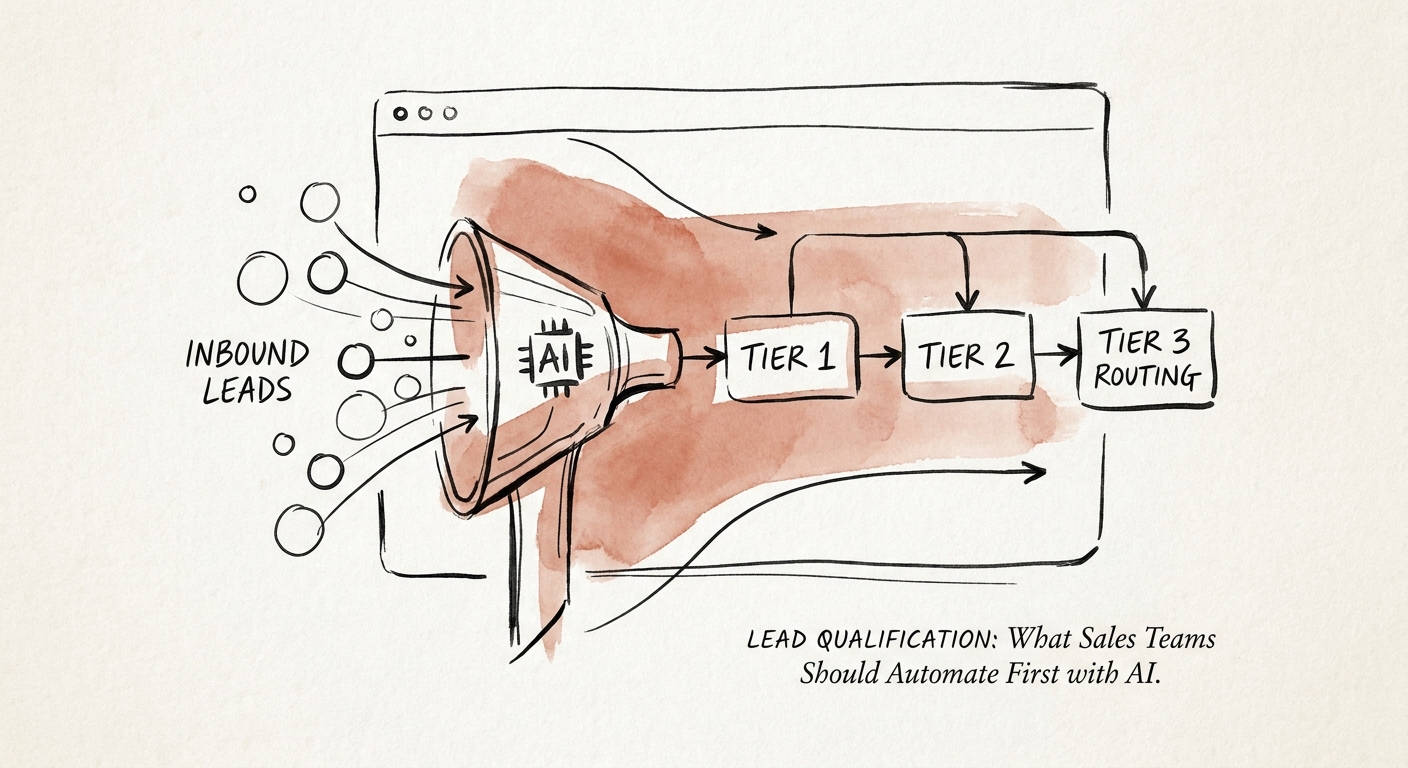
The Monday-morning lead pile is where you start
Picture a 35-person B2B services firm: marketing ran a webinar, a content syndication push, and the usual contact-form drip. Monday morning there are 140 new leads in the queue. Three SDRs will work maybe 40 of them well. The other 100 get a glance, a guess, and a status that means nothing. Half the "qualified" ones are competitors, students, and people who downloaded a checklist and will never buy. The two leads that were actually worth a fortune sat in the pile until Thursday.
That pile — not your forecast, not your outreach sequences — is the right first job for AI. Lead triage is low-stakes to get wrong (a misrouted lead can be re-routed), high-volume (so improvement compounds), and it sits on data you already have. The test for readiness is brutal and simple: can a rep say in one sentence why a lead gets worked, killed, or sent to nurture? If the answer is "I just kind of know," you don't have a model problem, you have an undefined rule. Write the rule down first. AI applies rules; it doesn't invent judgment.
For a services business the qualification rule is rarely about company size alone. It's "right title at a firm that buys our kind of work, with a trigger we can act on, in a region we serve." Salesforce's State of Sales research and State of Marketing research both keep landing on the same fault line: the leak isn't lead volume, it's the marketing-to-sales handoff, where fit definitions quietly disagree. Automate the handoff before you automate anything downstream of it.
Make the model show its work, or it stays in manual review
The thing that makes lead triage safe to automate is that you can demand a receipt. For every lead, the workflow should output a small, readable packet before it touches a route: the source (which campaign, which form), a CRM duplicate check, the firmographic fit it matched, the persona/title match, the actual engagement evidence (opened three emails, hit pricing twice — not "high intent"), the enrichment source and how confident it is, the recommended route, and — this is the one most teams skip — the disqualification reason when it says no.
Disqualification logic is the real quality signal, and here's why for services specifically. A model left to its own devices treats every form fill as buying intent. But in a services shop, the strongest signal often runs the other way: this lead is from a 4-person company that can't afford a six-month engagement; this title doesn't sign for our work; this is a job-seeker mining your case studies. When you force the model to state why it's killing a lead, you can audit the kills — and bad kills are where you lose deals. Watch for one pattern above all: if rejected leads keep failing on the same missing field, the fix is upstream. Repair the form question or the enrichment provider before you give the workflow more volume.
Treat this like the governance discipline it is. The NIST AI Risk Management Framework is useful here not as paperwork but as four questions you answer once: what's the context, who reviews, what do we measure, and where does an uncertain lead escalate. Then measure the things that actually move pipeline quality: SDR acceptance rate (do reps work the leads it sends?), override rate, time-to-route, enrichment error rate, and — the lagging one that matters most — disqualified leads that later converted anyway. If a rep can't reconstruct why a lead got its route from the packet alone, that lead doesn't get auto-routed yet.
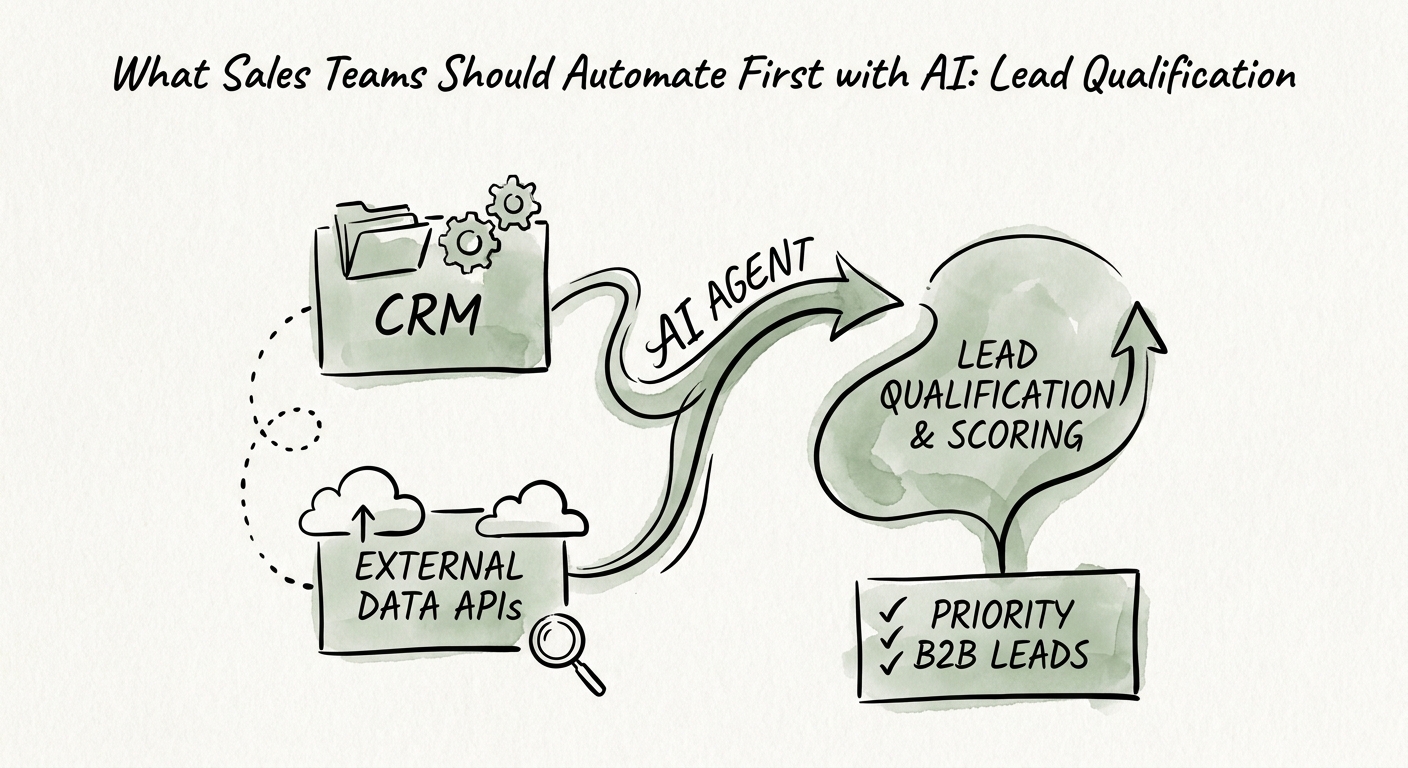
The unresolved queue is the feature, not the failure
Here's the trap most teams fall into: they want the AI to decide everything, so they tune it to never hesitate, and a confidence score becomes a number nobody trusts. Do the opposite. Let the model refuse to decide, and route low-confidence leads to a visible "needs a human" queue. That queue is the most valuable output you'll get in month one. When it fills up with leads from one campaign, you've found a campaign whose promises don't match your qualification rules. When it fills with leads missing firmographic data, you've found a broken enrichment source. When two SDRs both claim the same routed account, you've found an overlapping-territory problem the score was papering over. Uncertainty made visible is a punch list; uncertainty hidden behind a score is a slow leak.
Be deliberate about one risk that's easy to wave away: criteria can quietly encode bias or proxy signals that have nothing to do with fit. Sales leadership — not the vendor, not the SDR who set it up — should look at the list of fields allowed to influence routing and confirm each one earns its place. CISA's AI data-security best practices are the right reference for how the workflow accesses and logs the data behind those decisions. If you can't explain why a field affects a route, pull the field.
So, concretely, what do you do Monday? Pick one lead source — not all of them. Write the accept/reject/nurture rule in plain sentences. Have the workflow produce the receipt packet for every lead but route nothing automatically for two weeks; just compare its calls to your SDRs' calls and argue about the disagreements. The disagreements are the whole point — they tell you whether your rule is wrong or your reps are inconsistent. Run the AI Opportunity Score to see how triage stacks up against the other sales jobs you could automate next, and only after acceptance holds steady for a few weeks should you let it route on its own. Do not jump from triage to automated outreach because the demo looked clean. Earn the clean handoff first; if you want a sequenced plan for what comes after, the AI Transformation Blueprint maps it out.