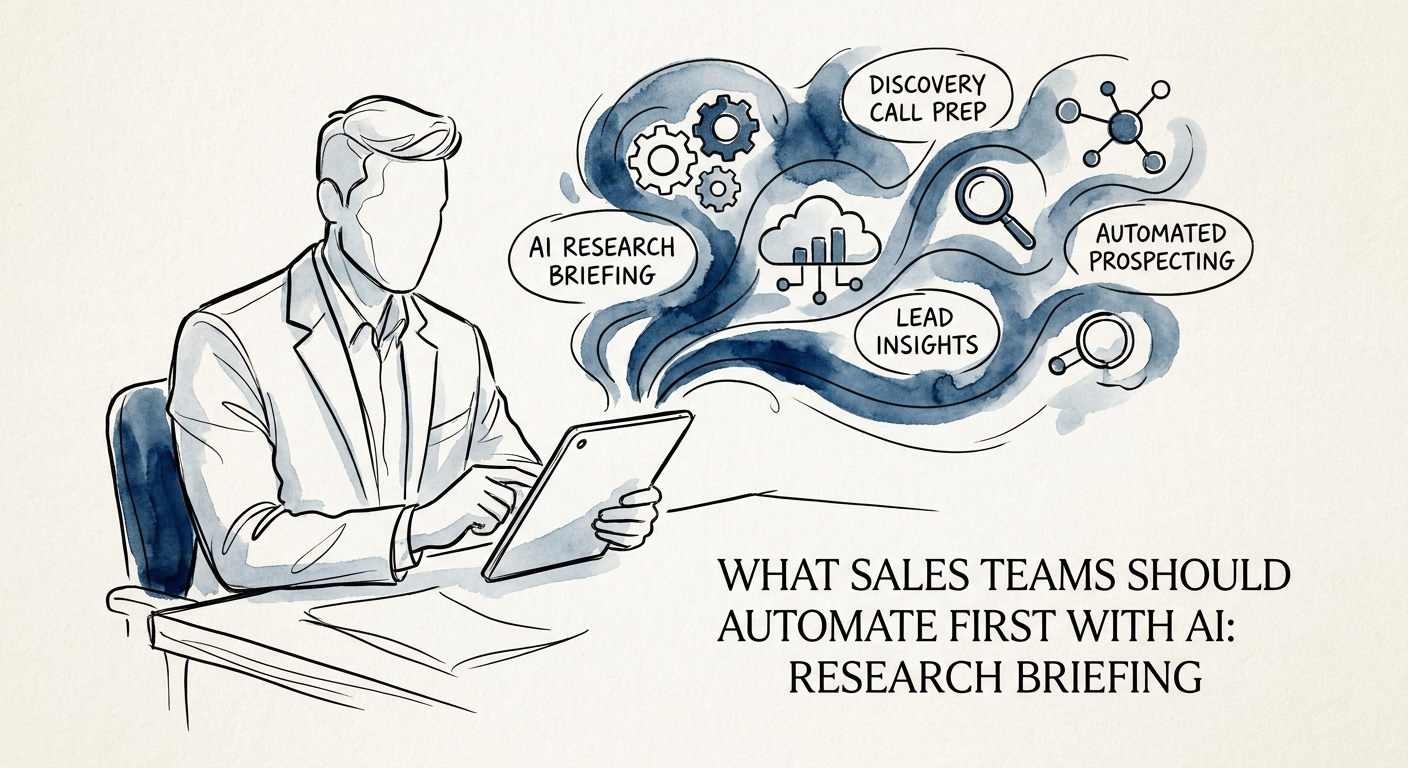
The 12 minutes before a call is where AI pays off first
Picture a Tuesday at a 60-person B2B services firm. A rep has a 2pm with a prospect's VP of Ops. At 1:48 they're still bouncing between the CRM, a LinkedIn tab, last quarter's meeting notes, and a half-remembered Slack thread about a pricing question. They walk in with a vibe, not a plan. That scramble — not a thin pipeline — is the thing AI should kill first.
Notice what I did not say: automate the outreach. The reason research briefings beat auto-prospecting as a first move is boundary. A brief lives entirely inside the rep's head ahead of the call. Nothing the model writes touches a prospect's inbox. If it's wrong, the seller catches it and moves on; if auto-outreach is wrong, the prospect catches it and you've burned the account. Salesforce's State of Sales research and its companion State of Marketing research are useful here precisely because they sit at the seam between account intelligence and what actually gets said in the field — and that seam is exactly where a brief earns its keep.
Start narrower than you want to. One meeting type — say, the second-call discovery with a qualified mid-market account — fed by account records, approved public sources, prior call notes, the open opportunity, and the rep's stated objective for the meeting. The model assembles. The rep decides what survives contact.
Make the model show its work, or it will invent urgency
Here's the failure mode nobody warns you about. Ask an AI to brief a rep on an account and, left unsupervised, it will produce a paragraph like: "The prospect is actively evaluating solutions and feeling pressure to modernize ahead of their fiscal year." Sounds great. It's also frequently fiction — a plausible-sounding "buying trigger" the model manufactured to fill the space. A rep who repeats that in the room gets a blank stare, or worse, a polite correction that hands the conversation to the buyer.
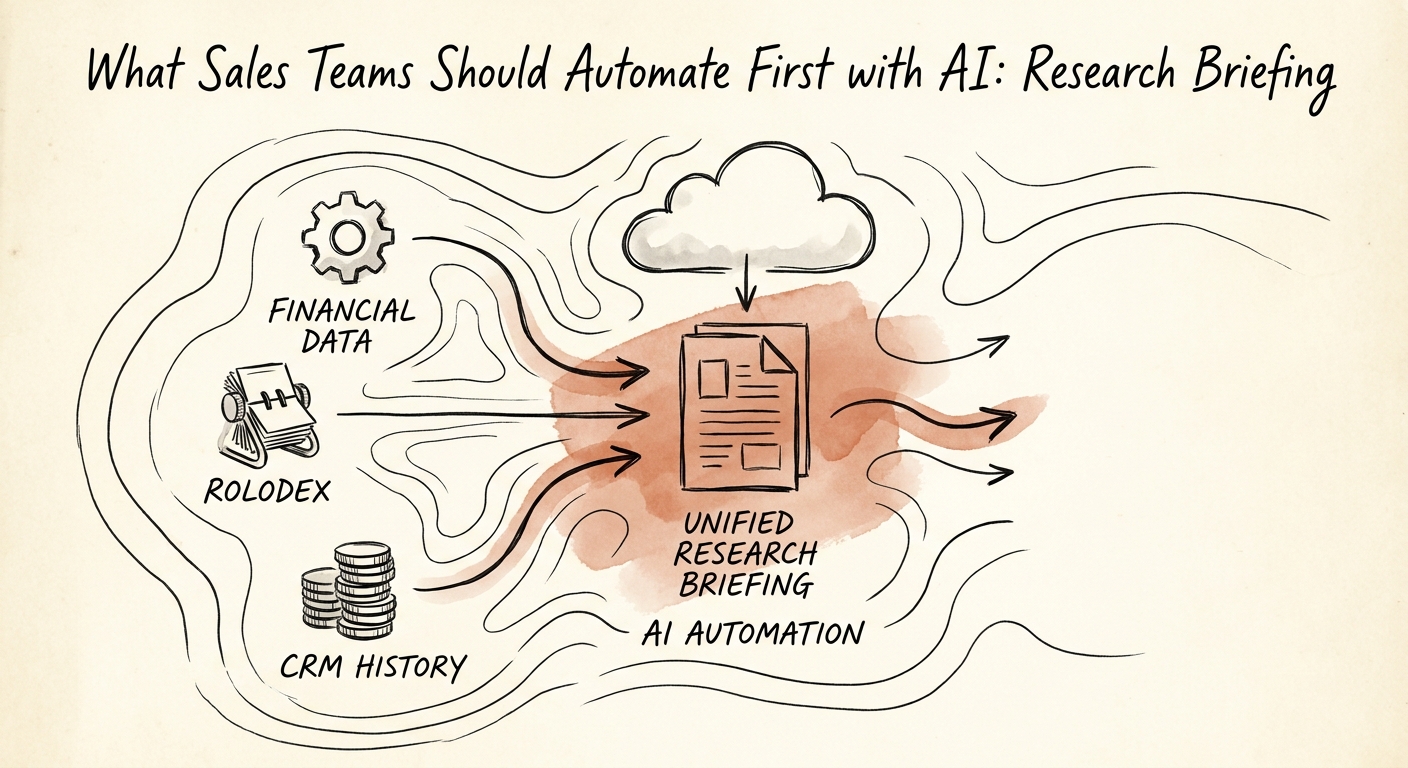
The fix is structural, not a better prompt. Force every line of the brief into one of four buckets before the rep ever sees it: verified public fact (with the source link), internal CRM/account note, inference (the model's guess, flagged as a guess), and recommended discovery question. A "they're modernizing ahead of fiscal year" claim then has to declare itself: is it on the prospect's earnings page, or did the model dream it? That single label is what stops a brief from laundering speculation into confidence.
The NIST AI Risk Management Framework gives you the scaffolding for this — confidence levels, who owns the review, and what you measure. For a briefing workflow the metrics are concrete: unsupported claims removed per brief, share of "facts" that turned out to be uncited inferences, rep acceptance rate, and whether the meeting actually used the brief. If your "facts" bucket is mostly inferences in disguise, don't scale — shrink the source set until the model has less room to confabulate.
What to do Monday, and where the brief is allowed to go
Run it as a two-week test on one rep and one meeting type. After each call, the rep marks every brief section: used it, cut it as wrong, or too generic to matter. By call ten you'll know whether the workflow is sharpening prep or just generating more text to skim. A useful brief changes the meeting plan — it reorders discovery questions, surfaces a verified fact the rep would have missed, or flags where the account intelligence is thin. A useless one rewrites the prospect's homepage into prose. If you're getting the second kind, the source rules are too loose.
Mind the data boundary while you're at it. A briefing blends public facts, private CRM history, internal pricing context, and assumptions about who actually signs. CISA's AI data-security best practices should govern what the model can read and where outputs can travel before the first brief is generated — because the same engine that drafts a prep note can just as easily paste a confidential account margin into a follow-up email if you let the prep boundary leak into messaging.
Resist the urge to graduate this into auto-personalization the moment it works. The sequence matters: prove the model can separate fact from guess in a context only the rep sees, then — and only then — consider letting it touch anything customer-facing. Want to see where briefing ranks against lead scoring and follow-up automation for your specific team? Run the AI Opportunity Score and build the sequence from there.