Your reps already heard it. Three quarters ago.
Picture a renewal call going sideways at a 90-person B2B services firm. The customer is frustrated about a handoff that broke during onboarding. The account exec is hearing it for the "first" time. Except they aren't. The support team logged it in February. Customer success flagged it in March. A different rep lost a similar deal in April and wrote "implementation concerns" in the lost-deal notes. The signal was sitting in five systems, in five people's heads, and it reached the person holding the renewal exactly one quarter too late.
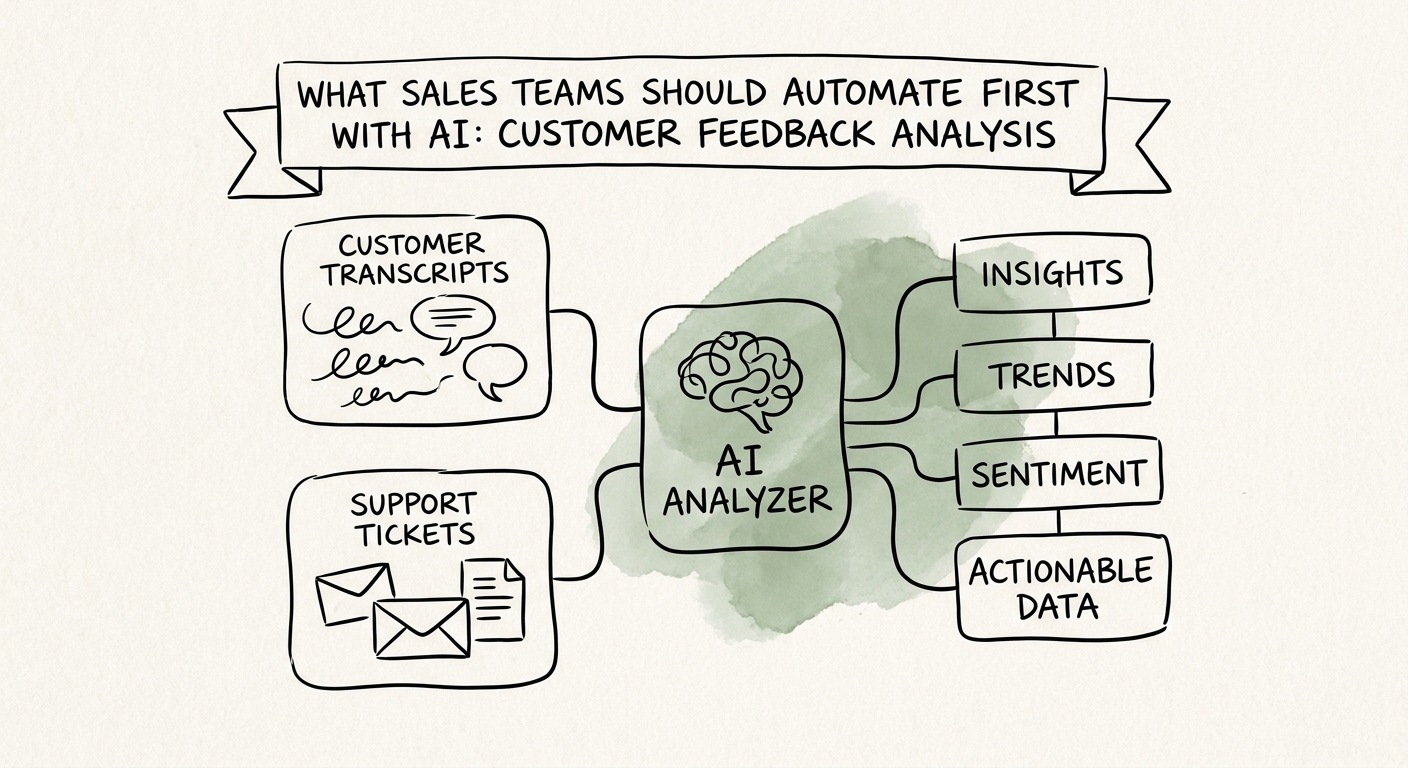
That is the actual problem worth pointing AI at first, and it is not "summarize our feedback." It is "stop letting account-killing patterns hide in the gaps between support tickets, CRM notes, call recordings, and win-loss comments." When sales leaders ask me where to start, I steer them away from a generic voice-of-customer dashboard and toward one question: which patterns in what customers are telling us should change a specific seller's next move on a specific account?
The data on why this is worth doing is not subtle. Salesforce State of Sales research consistently shows reps spending the minority of their week actually selling, with the rest swallowed by admin and hunting for context. And Salesforce State of Service research documents how much customer truth lives in the service org that revenue never sees. Feedback analysis is the seam between those two worlds. That is exactly why it's a strong first workflow and a dangerous one if you build it lazily.
The packet test: would a rep change a call plan over this?
Here is the failure mode I see at firms this size. The model ingests every call transcript and support thread, clusters it, and ships a tidy slide: "Pricing — 34 mentions. Onboarding — 28. Sentiment trending down." Leadership nods. Nothing happens. Because "pricing, 34 mentions" tells a rep nothing they can act on Monday. Which accounts? At what stage? Was it three loud enterprise prospects or thirty SMB renewals quietly heading for the door?
So the unit of output is not a theme. It's a packet a rep could open before a call. Each one carries: the actual customer language (a quote, not a paraphrase), the account and its owner, the segment and contract stage, how many distinct accounts the pattern touches, a severity read tied to renewal dollars, and a single recommended next move — reprice conversation, escalate to product, coach the rep, or hold for more evidence. Run a blunt test on every packet: if an account exec read this, would they change anything they were about to do? If the honest answer is no, the packet failed, regardless of how confident the sentiment score looked.
And you have to measure the thing, not vibe-check it. The NIST AI Risk Management Framework gives you the discipline here: decide what "working" means before launch, then track it. I'd watch a small set of numbers — how often a manager accepts a packet versus rejects it, how often the model fused two unrelated complaints into one fake theme, how many packets actually produced an account action, and the lag from "customer said it" to "rep saw it." A pattern built from four mentions across one whale account is not the same as four mentions across four mid-market renewals, and the workflow has to make a reviewer stare at that difference instead of papering over it with a single confidence percentage.
Customer dirt is not campaign fuel
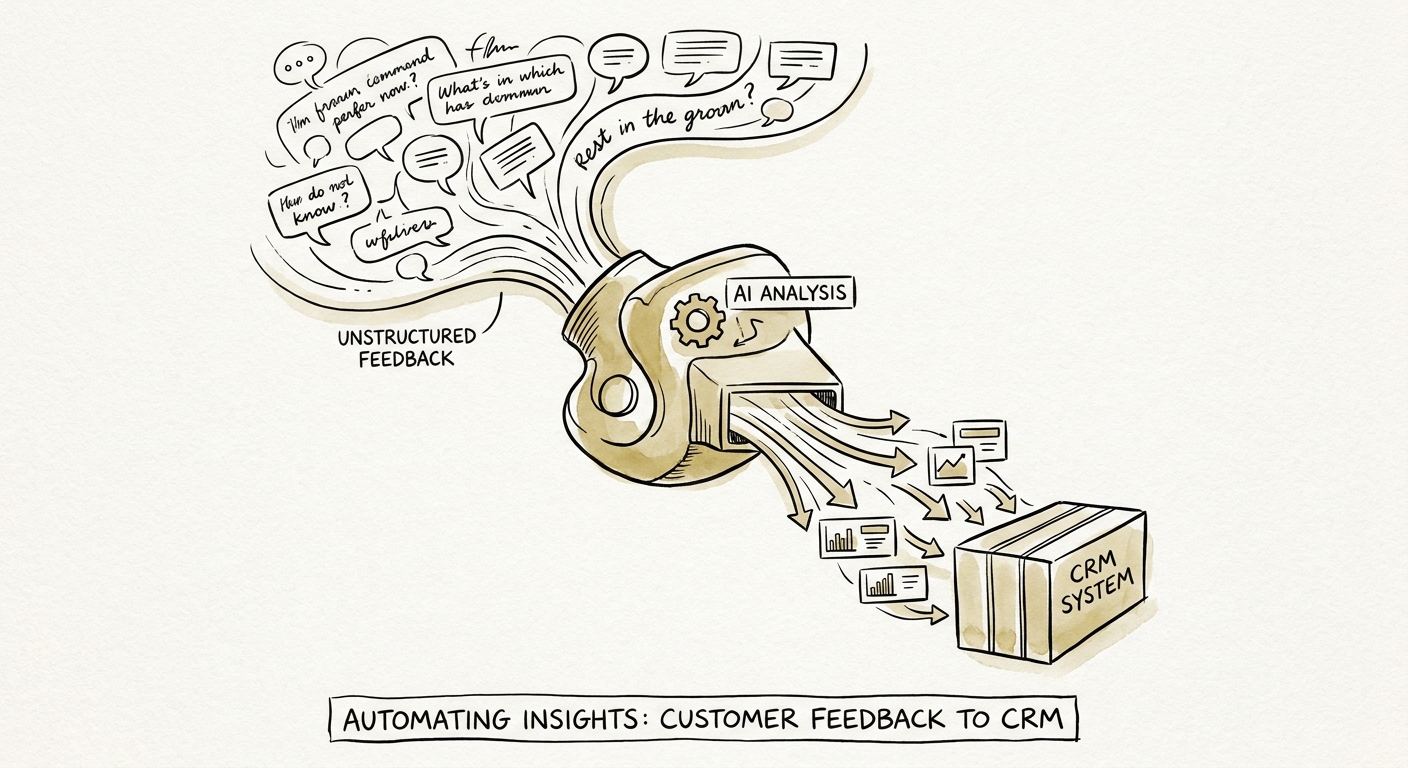
One discipline separates a feedback workflow you can trust from one that gets you in trouble: the raw material is some of the most sensitive data your company holds. Named accounts, by-name dissatisfaction, support histories, who's a flight risk, what a competitor is whispering in a deal. The instant that flows unfiltered into a marketing tool or a broad enablement deck, you have a problem. The CISA AI data-security best practices are the right guardrail — de-identify where a name isn't load-bearing, set retention and access by audience, and log who can see account-level detail. A theme can travel widely. The verbatim complaint from "Acme's CFO" should not.
Run it as a real 90-day pilot on one source family, not all of them. I'd start with lost-deal notes or renewal-conversation transcripts, because those carry the cleanest revenue consequence — a rejected packet there costs nothing, an accepted one might save a renewal. Resist the urge to bolt on support tickets and product tags in week two; you'll drown the reviewer and the accept rate will crater. Expand the source set only after managers trust what they're already seeing.
What you're really building in those first three months is a reflex: managers spending fifteen minutes comparing AI-tagged patterns against their actual renewal pipeline and win-loss notes, and getting back a churn risk they can work before it shows up on a forecast call. If after 90 days the packets aren't changing account plans, you don't have a model problem — you have a scope problem. Narrow the sources, tighten the tagging, and rebuild trust before you widen the aperture. When you're ready to sequence this against the rest of your sales stack, run the AI Opportunity Score to see where feedback analysis ranks against lead qualification and account research for your team specifically — and then build the AI roadmap around the workflow that actually moves a number.