The invoice that AI sent to a manager who quit in March
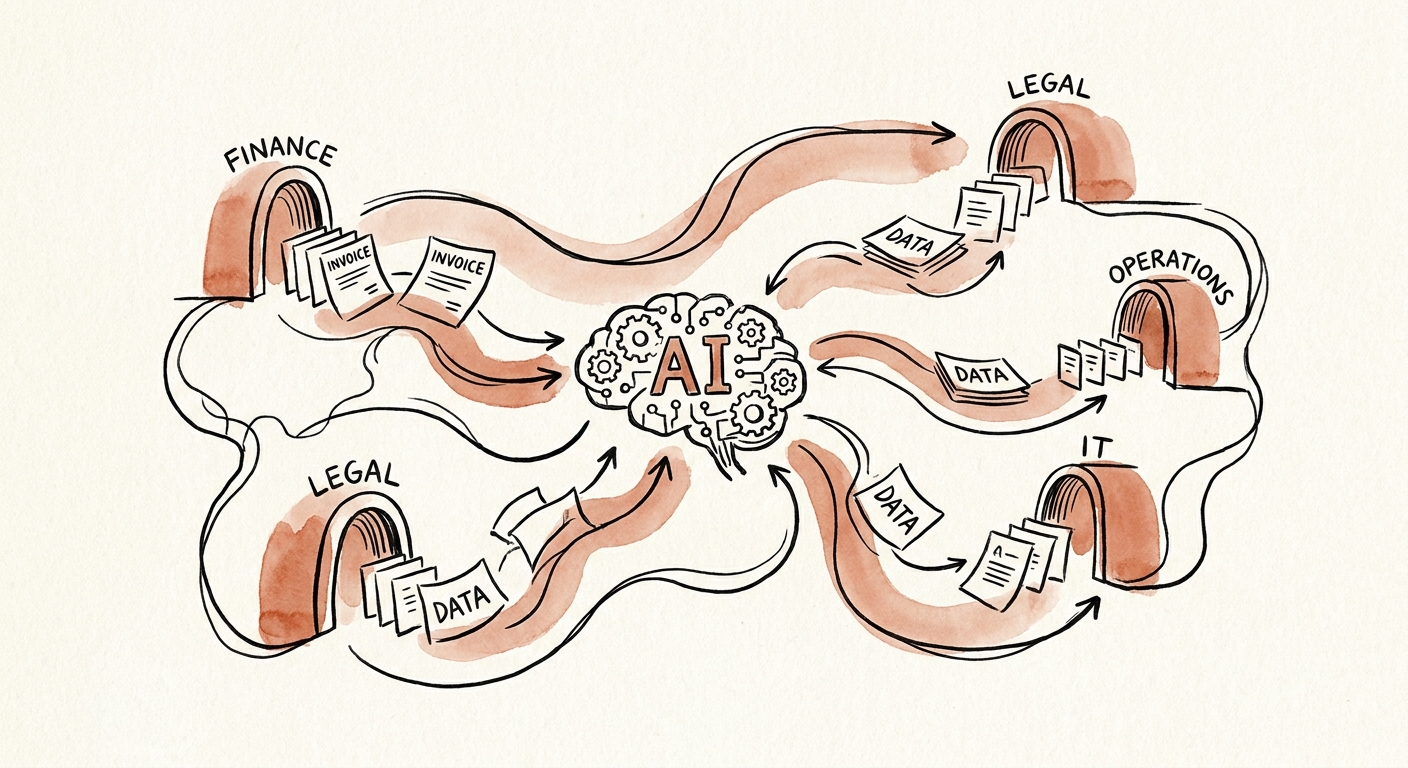
Picture a 60-person technology services firm. A renewal invoice from a cloud vendor lands in the AP inbox. The new AI router reads it, matches the vendor, and sends the approval to a department head who left the company two months ago. The model did exactly what it was told. The problem was that the approval matrix still listed him, and nobody noticed until an invoice tried to walk through the door he no longer owned.
This is why invoice routing is the right first AI automation for an IT or data team, and it is also why most teams misunderstand the win. The value is not that AI reads invoices faster. The value is that routing forces six systems, the invoice inbox, the vendor master, the purchase-order record, the approval matrix, department ownership, and the exception log, to agree with each other in public, on a real transaction, with a finance reviewer watching. Speed is the byproduct. The audit of your own source data is the actual product.
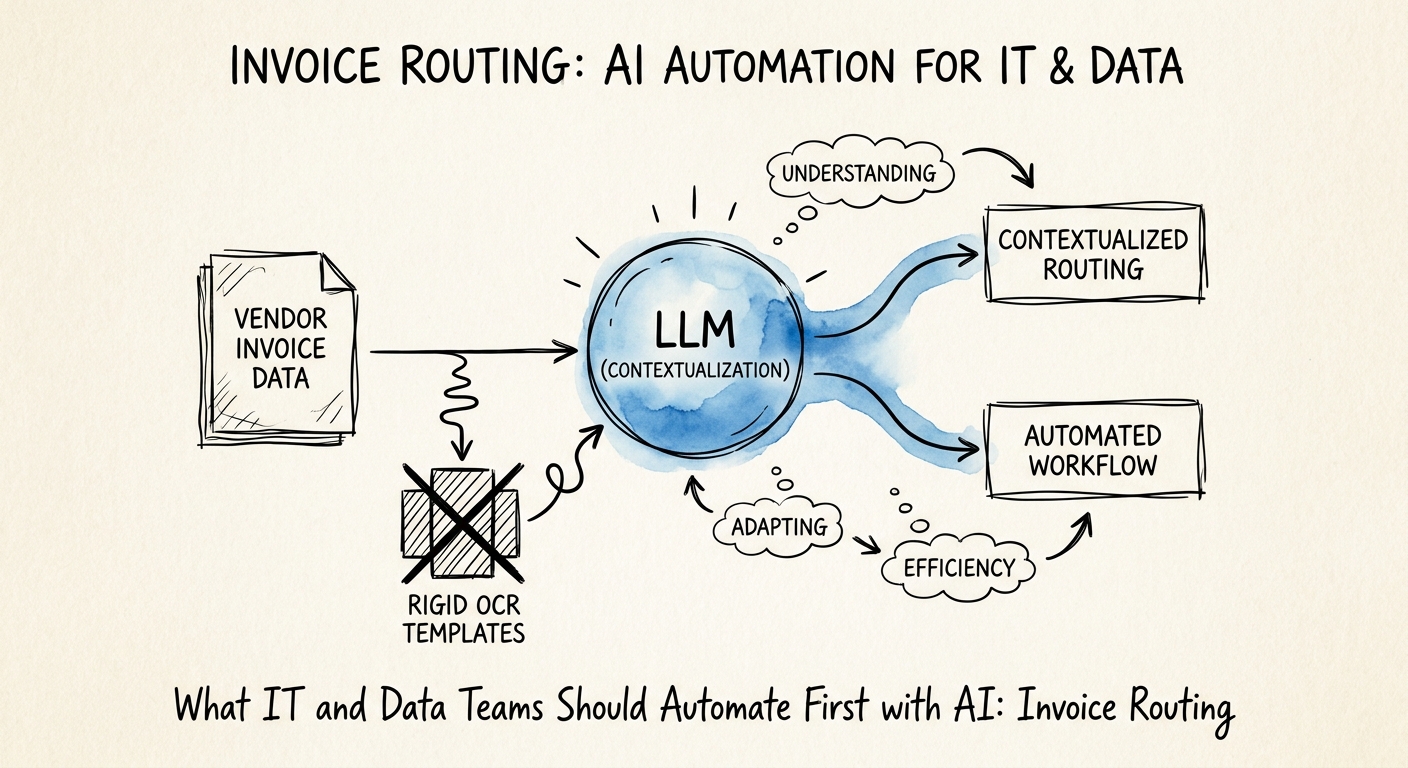
The OECD SME AI adoption report and Deloitte State of AI in the Enterprise 2026 both land on the same uncomfortable point: adoption stalls not on model quality but on the operating plumbing underneath. Invoice routing is where that plumbing either holds or springs a leak you can see. Start the pilot with one invoice type, say recurring software subscriptions, and one approval path. Resist the urge to do all of AP at once.
Write the field contract before you touch a single classifier
Here is the order most teams get backwards. They tune the model first, then discover the vendor master is a mess. Do it the other way. Before the classifier sees anything, write down, field by field, where each routing input comes from and how stale it is allowed to be. Vendor identifier: source system, last-verified date. PO match: which integration, how often it syncs. Department code: who owns it, who updates it when someone transfers. Approval threshold: where the dollar limits live and who last edited them. Duplicate-risk signal. Exception reason. Writeback destination.
Then make the workflow fail closed. If the vendor ID is blank or the approval table is older than your freshness limit, the invoice goes to a human review queue, not to a guess. That single rule is the difference between a controlled pilot and an automation that quietly mis-routes payments for a quarter before anyone audits it. The NIST AI Risk Management Framework earns its place in your design review here, because it pushes you to measure the context and the governance, not just the accuracy. Track source completeness, field freshness, routing accuracy, finance override rate, exception aging, and audit-log coverage. The override rate is your honesty signal: if finance keeps correcting the same vendor or the same cost center, the model is fine and your data is not.
When the first week surfaces three vendors with two different IDs each and an approval table that still references the departed manager, the correct response is not a better prompt. It is a ticket. You are repairing the system of record so the finance system finally knows what it was supposed to know. A governed router does not paper over that gap. It spotlights it.
What you should actually keep, and what to do Monday
Invoice routing touches supplier terms, cost centers, approval behavior, and payment-adjacent context, so scope what the model can see before it sees anything. Let the CISA AI data-security best practices drive your least-privilege access, retention windows, logging, and exclusion rules. Finance should be able to state plainly which fields the workflow reads and which it is fenced out of. If they cannot, you have not finished the design.
The decision to expand should be made on finance evidence, not on a demo that looked good. Fewer manual routes, lower exception aging, a more complete audit trail, and fewer override corrections mean it is working. If those numbers are flat, do not connect more processes; go tighten source ownership instead. If they are improving, the natural next candidates are document intake, purchase-order follow-up, and variance-note packets, each of which should inherit the same field contract and the same fail-closed rule.
The most valuable thing this pilot leaves behind is not a faster queue. It is a backlog of specific, prioritized source-data repairs that IT and finance own together: the duplicate vendor records, the missing PO references, the approval table nobody had updated. Use the AI ROI Calculator to put a number on the AP handling time you recover, and the AI Opportunity Score to weigh invoice routing against the other data workflows on your plate. Monday, pick one invoice type, list its six source fields, and find out which one nobody can tell you the owner of. That field is your first repair, and it was always going to bite you, with or without AI.