The MSA that should never have been countersigned
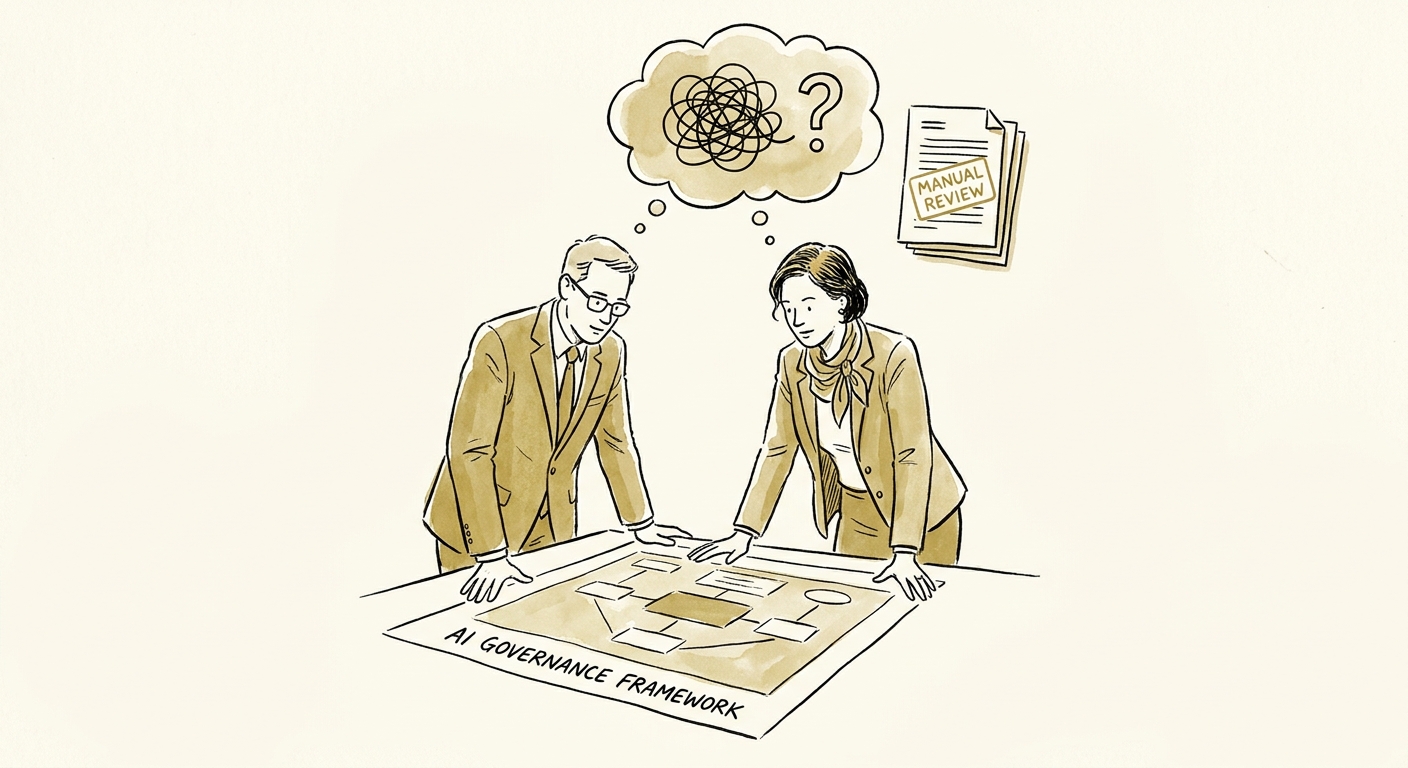
A vendor's master services agreement lands in the inbox of a 60-person professional services firm. The deal owner wants it back today. So someone pastes it into an AI tool and asks, "Anything I should worry about?" The model returns a tidy summary: payment terms standard, termination for convenience present, governing law fine. Looks clean. Someone countersigns. Three months later a data incident surfaces an uncapped indemnity obligation the summary glossed over because the clause was phrased as a carve-out to the limitation of liability section, not as a liability term. The model read the words. It did not read the exposure.
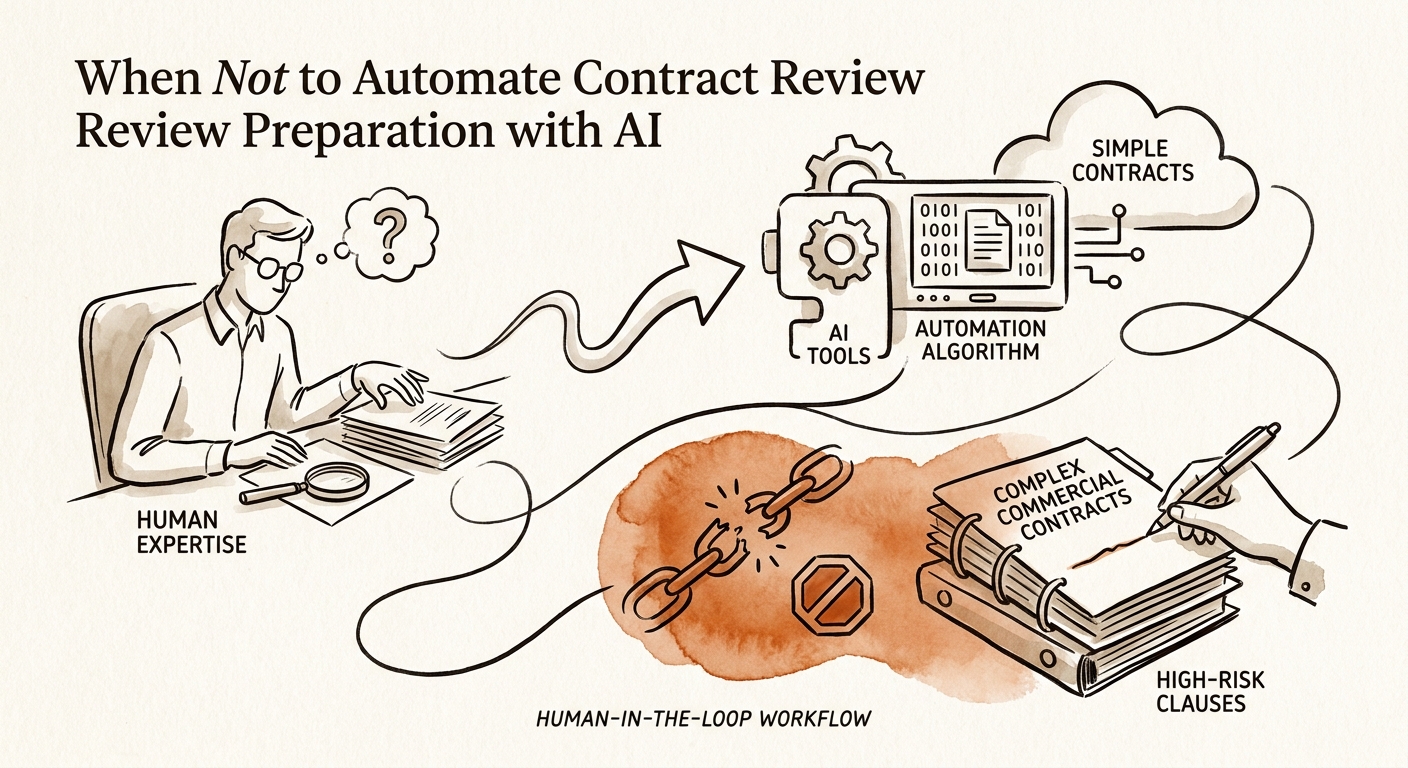
That is the exact seam where contract review preparation is worth automating and where it quietly becomes a liability. AI earns its place when it does the mechanical work no associate enjoys: pulling every clause into a structured grid, summarizing obligations and renewal triggers, diffing the counterparty's redlines against your approved positions, and surfacing what is missing entirely. The NIST AI Risk Management Framework maps this cleanly into context, measurement, control, and ongoing governance, which is precisely the lifecycle a contract workflow needs. The danger starts one inch past that: the moment the tool moves from "here is what the indemnity clause says" to "this looks acceptable." Acceptable is a risk decision, and a risk decision belongs to a named human.
Your contract repository is not a search corpus
Here is the trap specific to contracts. Most general AI deployments treat every accessible document as one big retrievable pile. Fine for a knowledge base of how-to articles. A loaded gun for a deal room. The folder your AI can reach may hold the customer's signed terms, your negotiation strategy memo, the side letter you never want the other side to see, and privileged analysis from outside counsel. Index all of that into one search surface and you have built a machine that can answer "what's the lowest price we've ever accepted?" to anyone who can phrase the question.
This is why Microsoft 365 Copilot's data protection architecture leans so hard on identity, permissions, and auditing, and why contracts demand a stricter layer on top: privilege boundaries that keep counsel's work product out of the general index, and clause authority that comes from a maintained playbook rather than whatever pattern the model inferred from past deals. The PwC Responsible AI survey makes the point that responsible AI lives in operational controls, not policy PDFs. For a contract workflow that means four things you can actually point at: an approved clause library, an escalation rule for anything outside it, a privilege wall, and a named legal owner. The IBM Institute for Business Value research adds the uncomfortable prerequisite most firms skip: if your fallback positions only live in a partner's head, the AI has nothing trustworthy to compare against. It will diff the redline against a playbook that does not exist, and confidently tell you the change is minor.
What to do Monday: build the packet, keep the judgment
Pick one repeated contract type where you sign roughly the same shape of deal over and over: vendor MSAs, NDAs, or your own services agreement going out to clients. Write down the five positions you will and won't move on for that type, including the actual fallback language. That document is the thing AI checks against. Without it, automating the review just launders guesses into a clean format.
Then measure the workflow on prep quality, not legal replacement. Track extraction accuracy on key clauses, the match rate against your playbook, how often a lawyer corrects the AI's summary, escalation frequency, and how many hours come off the review cycle. If the legal-correction rate is climbing, your playbook is thin, not your model. The win you are buying is a faster, cleaner starting point for a human reviewer, never an automated yes. Before any of this touches a live contract, use a QuickStart AI Audit to confirm the model cannot reach privileged or strategy documents it has no business reading, and use AI governance and training to set the line your team will hold: AI builds the review packet, a named owner decides the risk.