The deal IT never sees until it is already wrong
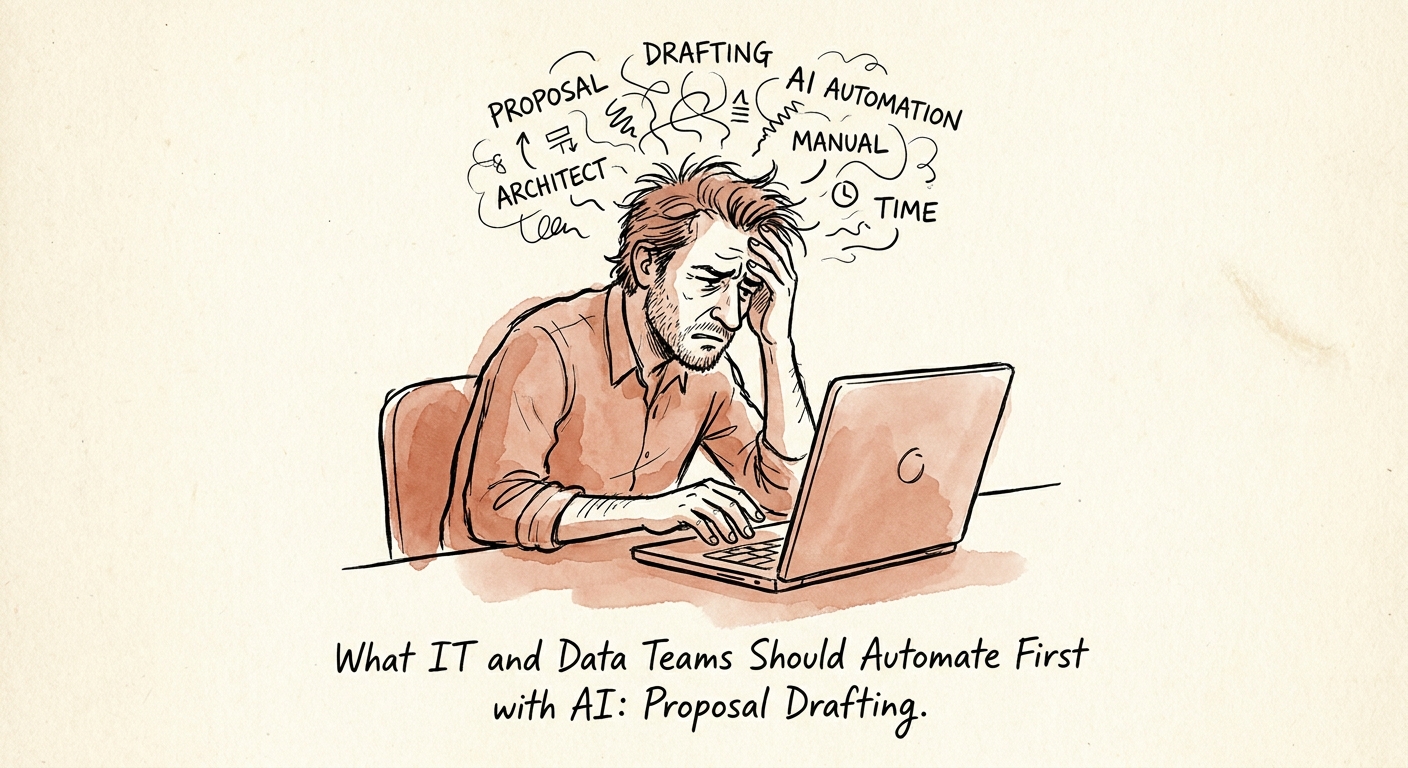
Picture a 60-person managed services firm chasing a six-figure contract. The buyer sends a 90-question security questionnaire and an RFP with a full architecture section. The salesperson, on a Thursday deadline, pastes the whole thing into a chatbot and ships a polished response by lunch. It reads beautifully. It also claims SOC 2 Type II coverage the firm is still six months from earning, references an SSO integration that was deprecated last quarter, and describes a data-residency posture that hasn't been true since the last cloud migration.
Nobody on the revenue team can catch those errors, because the errors aren't writing errors. They're technical claims. And the person who would catch them, IT, found out the proposal existed when legal forwarded the signed contract for an implementation kickoff.
This is why "automate proposal drafting" is the wrong frame for IT and data leaders. The marketing prose is not your problem. The technical evidence underneath it is, and AI does not improve evidence quality. It accelerates whatever quality already exists in your source material. Surveys from RSM, the San Francisco Fed, and the OECD all point to the same adoption pattern in mid-market companies: the workflows that work are the ones where ownership, source quality, and business value are obvious. Technical proposal content checks all three for IT. You already own the facts. You just don't own where the answers come from.
Govern the answer library before you govern the model
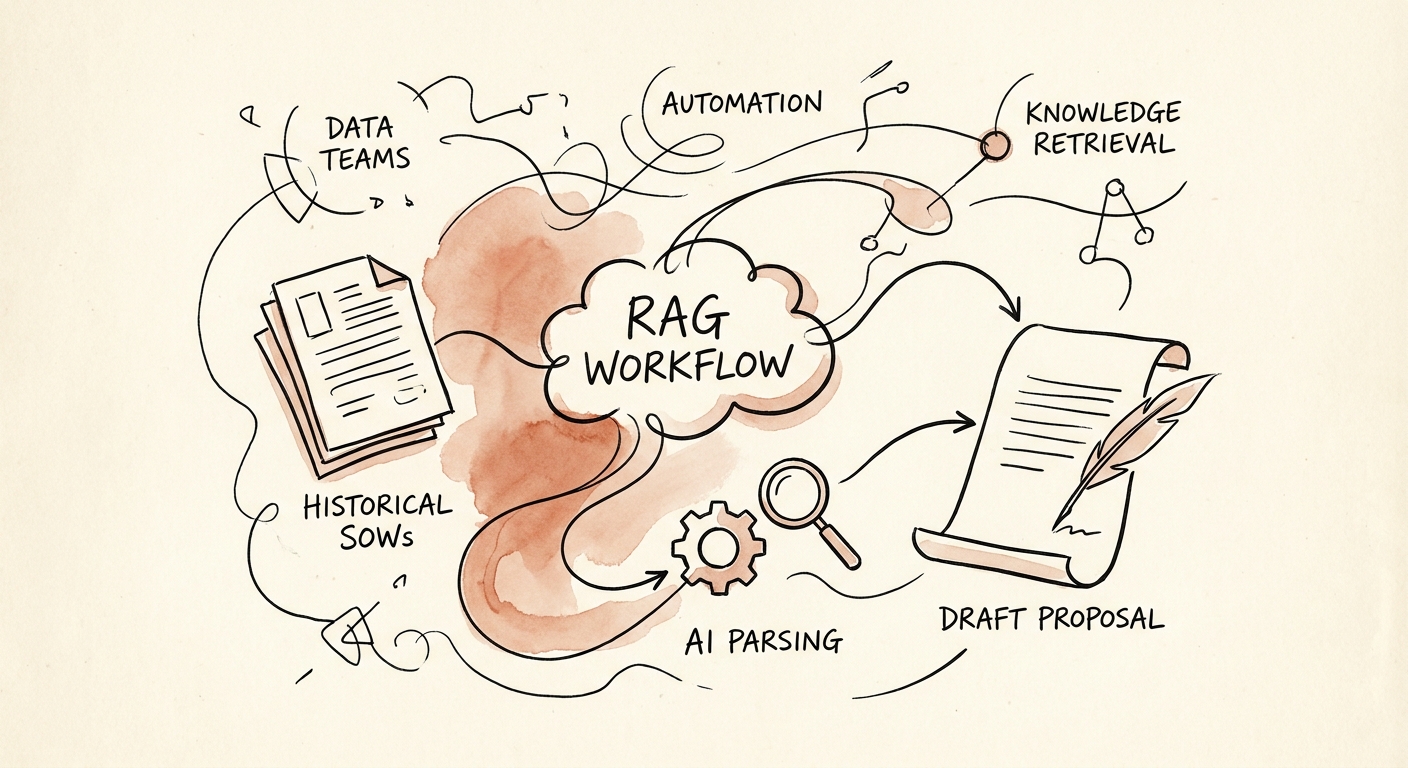
The instinct is to lock down the AI tool. The leverage is somewhere less glamorous: the corpus of technical answers your firm has accumulated across years of RFPs. Right now it lives in a dozen places, a 2023 security questionnaire in someone's Downloads folder, an architecture diagram in a closed deal's Slack thread, a data-handling paragraph one solutions engineer keeps rewriting from memory. AI retrieving from that mess produces confident, sourced-looking, occasionally false answers.
So the first build is a single governed source of approved technical answers: current certifications and their real scope, supported integrations and authentication methods, data residency and retention by tier, infrastructure and uptime commitments, and standard delivery assumptions. Each entry carries a last-reviewed date and an owner. The NIST AI Risk Management Framework calls this mapping context and keeping a human in the loop; in practice it means the AI is allowed to retrieve only from this library and is required to cite the entry it pulled from, so a reviewer can verify the source in one click instead of relitigating the claim.
The data controls matter more here than in most internal AI work, because proposal content is the one place your security posture gets written down and sent to a prospect's procurement team. CISA's guidance on securing data used to train and operate AI systems maps cleanly onto this: restrict which past deals can be cited as examples (a named reference under NDA should never surface in another buyer's draft), log every reviewer correction, and route any compliance, legal, or pricing-sensitive language through a defined approval path rather than letting the model freelance it. Before committing engineering time, run the candidate workflow through the AI use-case scoring model to weigh the value against source freshness, permission complexity, and the brand risk of a wrong claim reaching a buyer.
Your scoreboard is correction rate, not draft speed
Sales will measure this in minutes saved. That number will look great and tell you almost nothing about whether the system is safe to trust. The metric that matters to IT is the reviewer correction rate: of the technical claims AI generates, how many does a human have to fix before the proposal goes out? Track it from the first week. If it climbs as your team writes more proposals, your source library is rotting faster than you're maintaining it, and "faster drafts" just means faster wrong answers. Deloitte's State of AI in the Enterprise 2026 makes the same separation at the portfolio level: novelty is easy, operating impact is what holds up. Here, operating impact is fewer factual corrections per draft and more approved answers reused without anyone rewriting them from memory.
So instrument four things and review them monthly: the current-source citation rate (what share of technical claims trace to a dated, owned library entry), the reviewer correction volume, the count of stale claims caught before sending, and the percentage of questionnaire items answered from reusable content versus written fresh. When the last number is high and the correction rate is low, you've earned the right to widen the aperture.
The sequencing is the whole game. A governed answer library comes first; broad draft generation comes last. Most teams reverse it, turn on the AI, then spend six months cleaning up claims that already went to buyers. Use the 90-day AI implementation plan to order the work, source cleanup, permission and NDA-scope tests, the reviewer correction loop, then controlled expansion, so the first proposal AI touches is one whose facts you already trust. On Monday, start smaller than that: pull your last ten proposals and count how many technical claims in them are still true today. That number is your real starting line.