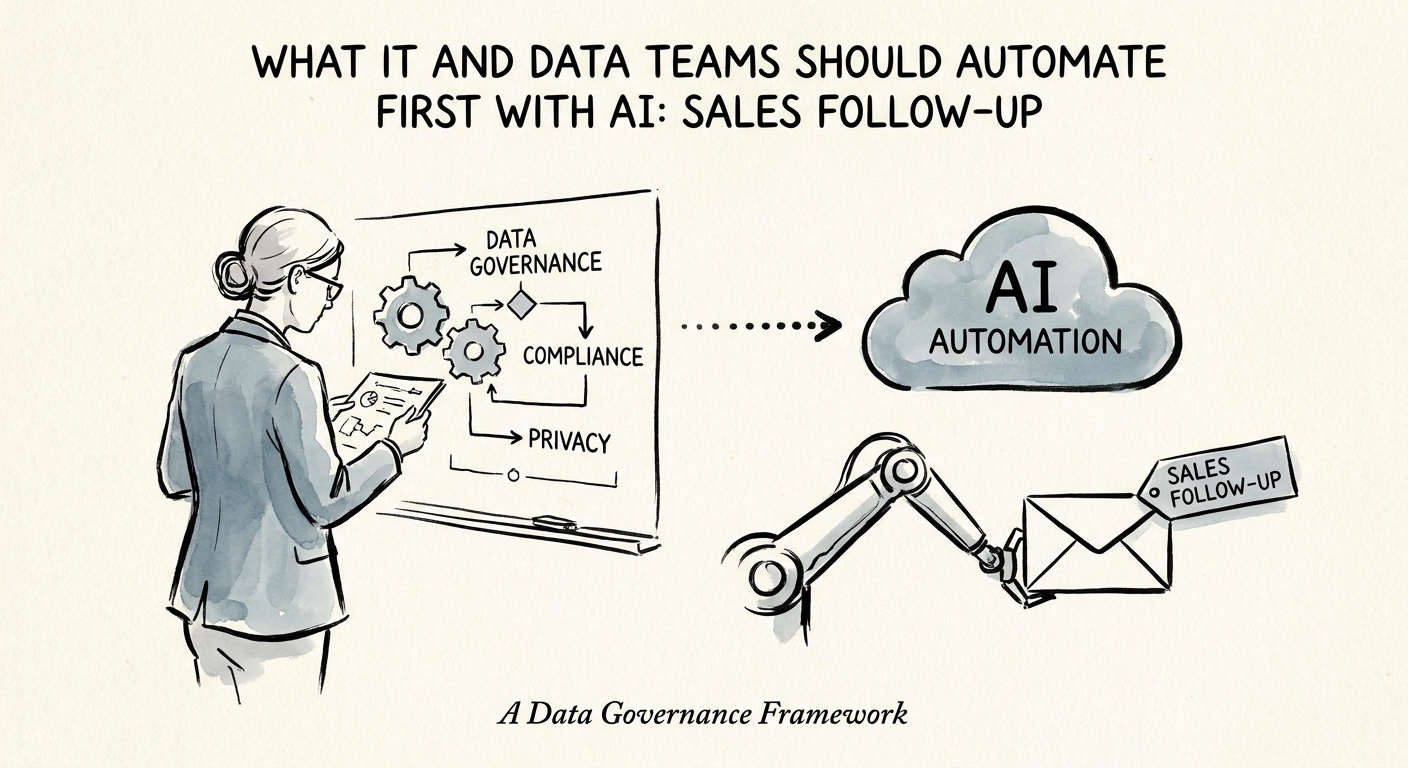
The bot didn't lie. Your CRM did.
Picture the email a sales rep almost sent: a warm "great catching up last week, here's that pricing you asked about" — to an account whose renewal was downgraded two months ago, owned by a rep who left in March, referencing a product tier the contract explicitly excludes. The AI wrote it perfectly. Every fact in it was wrong. None of that is a prompt problem. It's a data problem, and that means it's yours.
This is why, for a growing business, sales follow-up is often the right first AI workflow for IT and data teams to own — not because reps are slow, but because it forces every messy source you've been avoiding into one place: CRM account history, meeting notes, product usage, contract terms, consent fields, and who actually owns the account today. A general assistant can produce fluent outreach in an afternoon. Making that outreach true is the part only IT and data can deliver.
The adoption research bears out the gap between "we tried AI" and "AI changed an outcome." The RSM middle-market AI survey, the San Francisco Fed analysis of AI and small businesses, and the OECD SME AI adoption report all point the same direction: smaller firms adopt fast and stall at value. The stall usually isn't the model. It's that nobody decided which record wins when two systems disagree about the same account.
Write the source contract before you write the prompt
Here is the decision IT and data teams should make on a whiteboard, before anyone touches a model: when the CRM, the last meeting note, the product-usage dashboard, and the signed contract say four different things about an account, which one does the AI believe? Pick the order out loud. Say, for a 60-person software company: contract terms override everything on what was actually sold; the CRM owner field overrides the meeting note on who the rep is; product usage informs tone but never asserts a commitment. That ranking is the product. The prompt is just plumbing on top of it.
Two frameworks do real work here. The NIST AI Risk Management Framework gives you the language for context, a named reviewer, and measurable risk — so "is this follow-up safe to send" becomes a checkable condition, not a vibe. The CISA AI Data Security Best Practices guidance forces the harder call: which fields the model is even allowed to see. Consent flags, contract pricing, and churn-risk scores are exactly the fields that make a follow-up convincing — and exactly the ones a seller may not be cleared to reference. Exposing them is a permissions decision, not a feature request.
So before the first draft goes out, the workflow should carry a small, boring packet attached to every suggestion: source hierarchy, a freshness check (is this CRM record older than your renewal cadence?), the current account owner, the claims the rep is allowed to make, a suppression rule, and a slot to capture what happened. Notice what that packet does — it turns a fluent paragraph into a traceable one. When a manager asks "why did it say that," you point at a row, not at a black box.
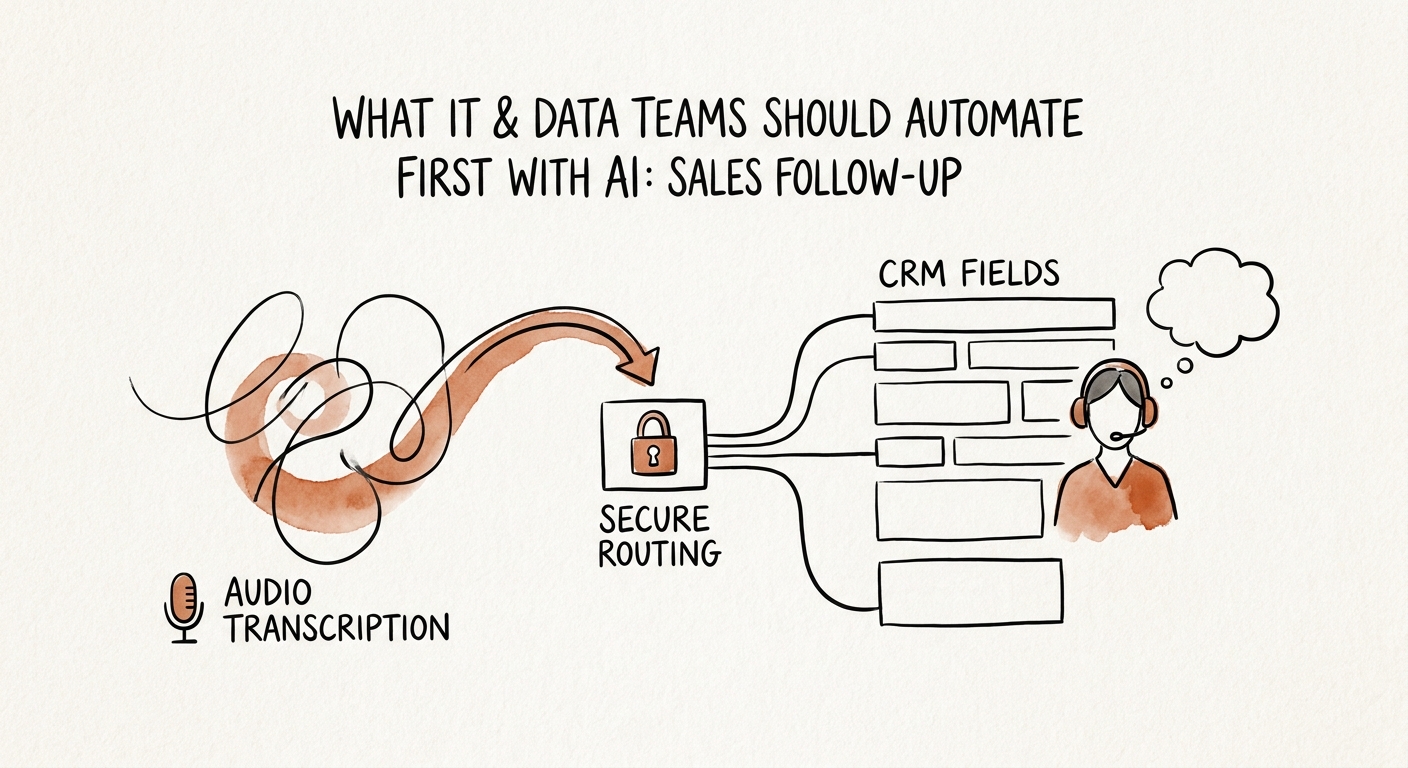
Measure whether the facts were right, not how many emails went out
The trap is celebrating volume. The Deloitte State of AI in the Enterprise 2026 report keeps drawing the same line between pilots that generate activity and pilots that generate value — and for a follow-up workflow, value is narrow and specific: more messages a rep was willing to send as-is, and fewer that referenced a fact your systems got wrong.
So instrument the boring number first. Track source-freshness pass rate — what share of drafts were built only from records inside your acceptable staleness window. Track seller edit rate and why they edited: tone is fine, "wrong account fact" is an alarm. Track suppressed-message count, send-approval rate, and — the quiet payoff — the number of CRM cleanup items the pilot surfaced. A follow-up bot that keeps refusing to draft because the owner field is blank is doing free data-quality work for you.
Run it on exactly one sales motion. Make every draft display the fields it used. Log accept / edit / suppress on each one. If reps reject drafts because the account facts are wrong, do not add a second AI surface — go fix the source of truth, because every future workflow will inherit the same rot. To pressure-test that this is even the right first target, run it through the manual-work scoring guide; to sequence source cleanup, prototype, reviewer training, and scale, use the 90-day AI implementation plan. And give the data team explicit veto over the suppression rules — because the most valuable thing this system can learn is when not to write at all: a churn-risk account, a contract-sensitive renewal, an ownership record it can't confirm.
