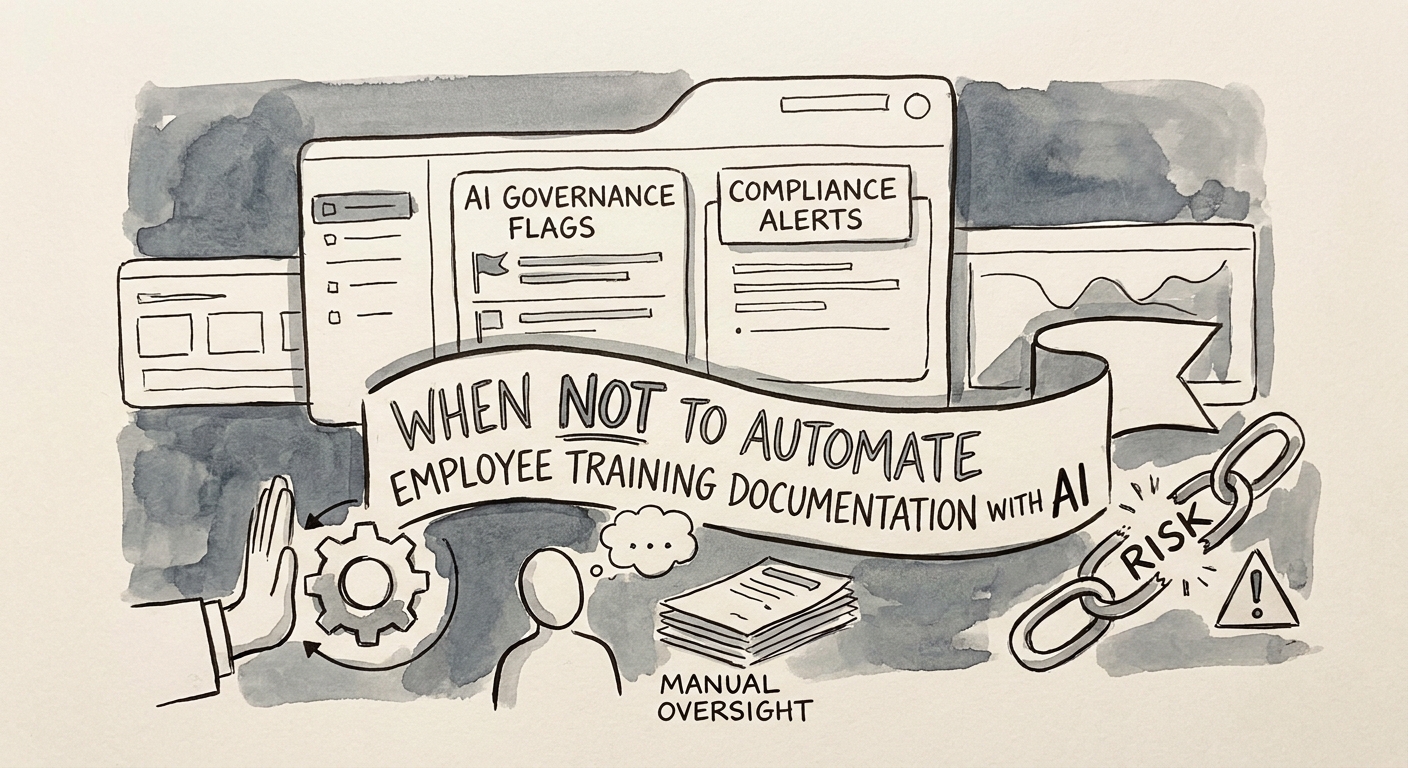
The new hire does exactly what the doc says
Picture a Tuesday in week two for someone you just hired. They hit a step they don't understand, so they open the onboarding doc and follow it literally, because that is what a new person is supposed to do. They have no instinct yet for which paragraphs are gospel and which are three reorgs out of date. If an AI tool drafted that doc from a folder of stale SOPs, the new hire just inherited every wrong assumption in the folder, and they will repeat it confidently because the company "documented" it.
That is what makes training documentation different from almost any other content you might hand to AI. A marketing draft gets edited. A meeting summary gets skimmed and forgotten. But a training doc gets obeyed, by the people least equipped to catch an error, and the obedience compounds with every cohort. The San Francisco Fed's analysis of AI and small businesses is right that the opportunity for smaller firms is real, but training content is where speed turns into liability fastest, because the output stops being a draft the moment someone treats it as instruction.
So here is the honest test before you let AI generate a single onboarding module: would you be comfortable if a brand-new employee did precisely what this document says, with zero judgment, on their first day? If the answer makes you wince, you have a source problem, not a drafting problem.
Three red flags that mean stop, not slow down
Most teams treat "should we automate this?" as a yes/no on the tooling. The better question is whether the underlying procedure is even ready to be written down by anyone, human or machine. After watching this go sideways, three flags reliably mean the answer is no.
One: nobody can name who owns the procedure. Ask "who approves changes to the refund policy?" and if you get a shrug or three different names, AI will faithfully document a process that no single person stands behind. Two: two source documents disagree and there is no tiebreaker. The wiki says one thing, the Slack pin says another, the team lead does a third. AI will pick one at random or blend them into something nobody actually does. Three: the work needs judgment, not steps. "Handle the angry customer," "decide if this expense is reasonable," "escalate when it feels off" cannot be flattened into a checklist, and a confident AI checklist for a judgment call is worse than no doc at all, because it gives a new hire false certainty.
Those three flags are why this is the rare workflow where I'd tell an operations or enablement lead to fix governance first. Training docs routinely encode system access, customer data handling, and incident escalation, exactly the high-stakes material covered in CISA's AI Data Security Best Practices. Decide who owns each procedure, who approves edits, and which version wins when two docs conflict. If your team can't answer the tiebreaker question, the automation pauses there. Not because AI can't write the checklist, but because you'd be scaling a guess.
Where AI earns its keep, and how you'll know
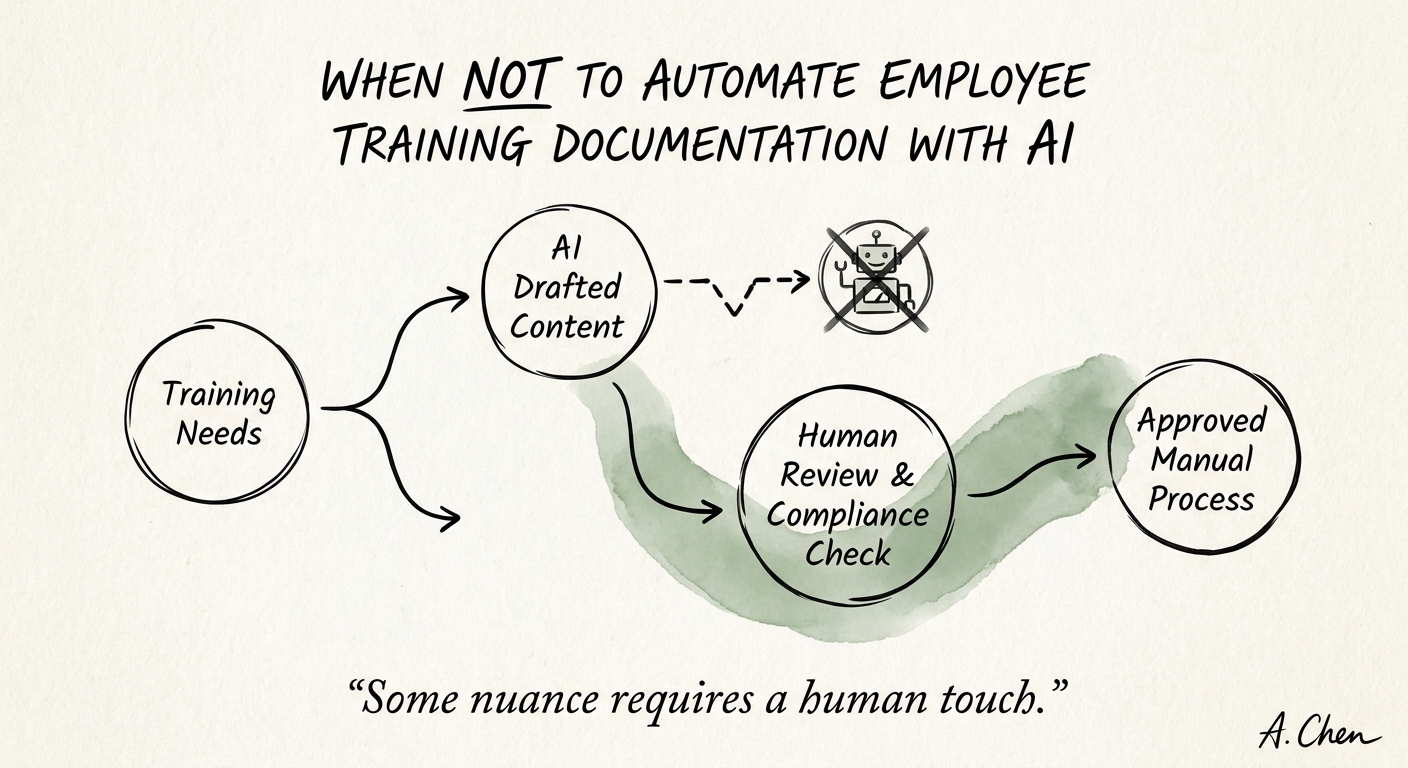
None of this means keep humans typing onboarding decks forever. Once the source is owned and settled, AI is genuinely good at the part humans hate: turning one approved procedure into a role-specific checklist, a five-question knowledge check, and a plain-language onboarding draft, three formats from one source in minutes. The split is clean. AI converts and reformats approved truth. People decide what the truth is.
The safest first version does four things: it drafts only from approved sources, it shows a citation back to the source document on every claim, it routes any proposed change to the named owner instead of editing silently, and it captures when a new hire flags "this doesn't match what my manager told me." That last loop is the whole game. The NIST AI Risk Management Framework gives you the governance pattern, and Deloitte's State of AI in the Enterprise 2026 underlines that the value shows up only when AI moves into a managed, measured workflow rather than a one-off generator.
So measure the things that catch drift early: onboarding completion, whether people actually find the doc they searched for, how often managers correct what the system produced, and how fast a flagged error makes it back into the source. Watch the manager-correction rate especially; if it climbs, your source is rotting and the AI is just amplifying it. The deliverable you want is not a faster document factory. It's a training system that gets more accurate every time someone uses it. When you're ready to sequence that rollout, a 90-day implementation plan keeps governance ahead of generation instead of behind it.