The brief that read like a recommendation and was wrong
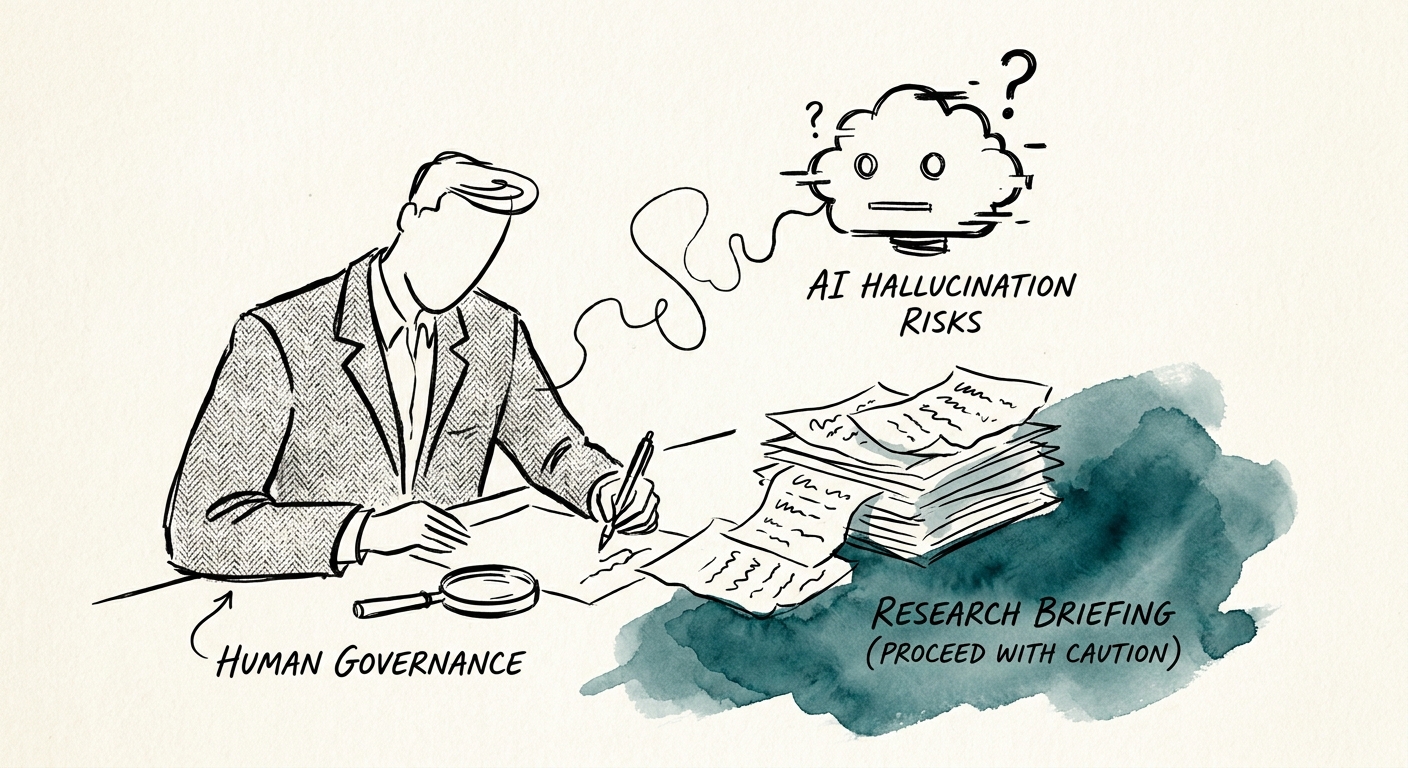
Picture a 60-person professional services firm prepping for a renewal call with its second-largest account. Someone asks the AI to "pull together what we know about this client and the competitive landscape." Ninety seconds later, a clean, two-page brief comes back: the account is "evaluating consolidation vendors," pricing pressure is "intensifying," and the recommended posture is to lead with a discount. The account exec walks into the call with that framing. None of it was current. The "consolidation" line traced to a forum post from 2023; the pricing claim came from a competitor's marketing page, not a real quote.
That is the specific danger of research briefing, and it's different from every other AI workflow. A draft email looks like a draft. A code suggestion gets tested. But a brief is built to be acted on — it's the format your team trusts the most and inspects the least. The fluency of the summary is exactly what hides the weakness of the sources underneath it.
So the first question before you automate isn't "can the model summarize?" It obviously can. The question is whether the people reading the brief can see how old each source is, what kind of source it is, and how well it actually matches the question asked. If those three signals are invisible in the output, you don't have a research tool. You have a confidence amplifier.
The three conditions that should stop the automation
Not every brief carries the same stakes, and treating them identically is how thin sourcing slips into a board deck. The NIST AI Risk Management Framework is useful here precisely because it forces you to grade context before you grade tools — a quick internal "who else is hiring in this market" note and an investment screen that moves real capital are not the same risk, and shouldn't get the same review depth.
Keep briefing human-led when any one of these is true. One: the source set is thin or stale. If the model is leaning on three pages and one of them is two years old, the brief inherits that fragility while looking authoritative. Two: the claims touch something with legal, financial, or customer consequences — pricing, contracts, compliance, a diligence finding. Three: the reader is likely to treat the summary as the decision rather than as the evidence behind it. Sales prep is high-risk on this axis because the brief gets used live, under time pressure, with no second look.
There's a data-handling line that runs underneath all three. A useful brief often wants to blend confidential client context with public research, and that's where things quietly go wrong. The CISA AI Data Security Best Practices are worth applying to what the system is allowed to retrieve and retain, and platform controls like Microsoft 365 Copilot's privacy and data controls and OpenAI's enterprise privacy commitments are the floor for keeping a client's confidential notes out of a brief that gets forwarded to the wrong room.
What you can ship Monday instead
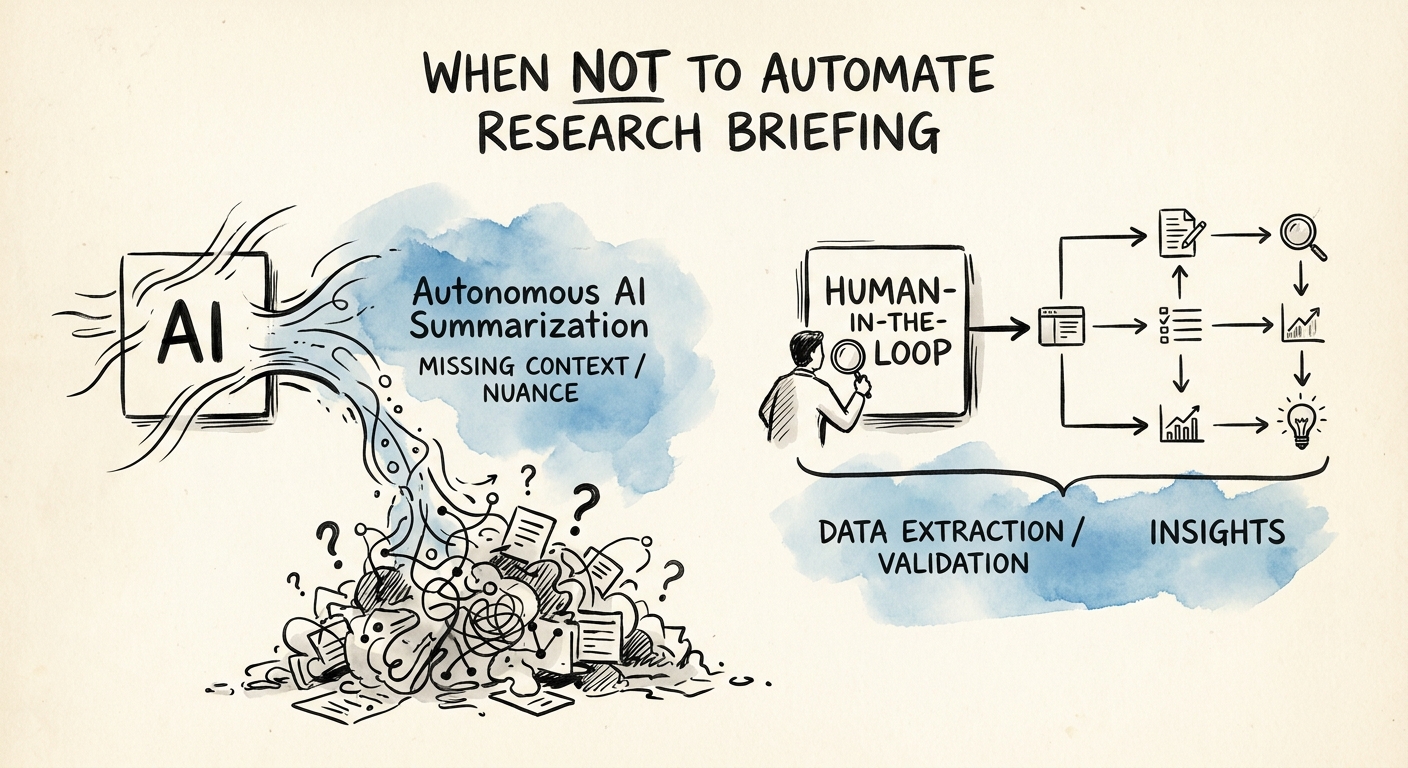
You don't have to choose between "automate the whole brief" and "do it all by hand." The version that works for a mid-market team is narrow on purpose: let AI build the evidence map — every source it pulled, dated and labeled by type, with the relevant passage quoted — and stop there. The human writes the actual recommendation. The map saves the hours analysts burn hunting and copying; the judgment stays where it belongs.
Make it inspectable with one rule reviewers can apply in seconds: every section of every brief gets marked accepted, corrected, unsupported, or decision-limited. "Decision-limited" is the one most teams skip and need most — it flags a section that's directionally fine for context but must not be treated as a green light to act. Run that on a single use case for 90 days (sales prep is a good first target because the feedback loop is fast and the stakes are visible), and you'll learn exactly where the model has earned trust and where it's manufacturing it.
Then measure the right thing. The win isn't pages summarized or minutes saved — it's better next questions and fewer false starts walked into a client meeting. Count corrections caught, unsupported claims pulled before they reached a decision, and how that changed outcomes. Measuring AI ROI without fake savings means valuing the bad brief you stopped, not the speed of the one you sent.