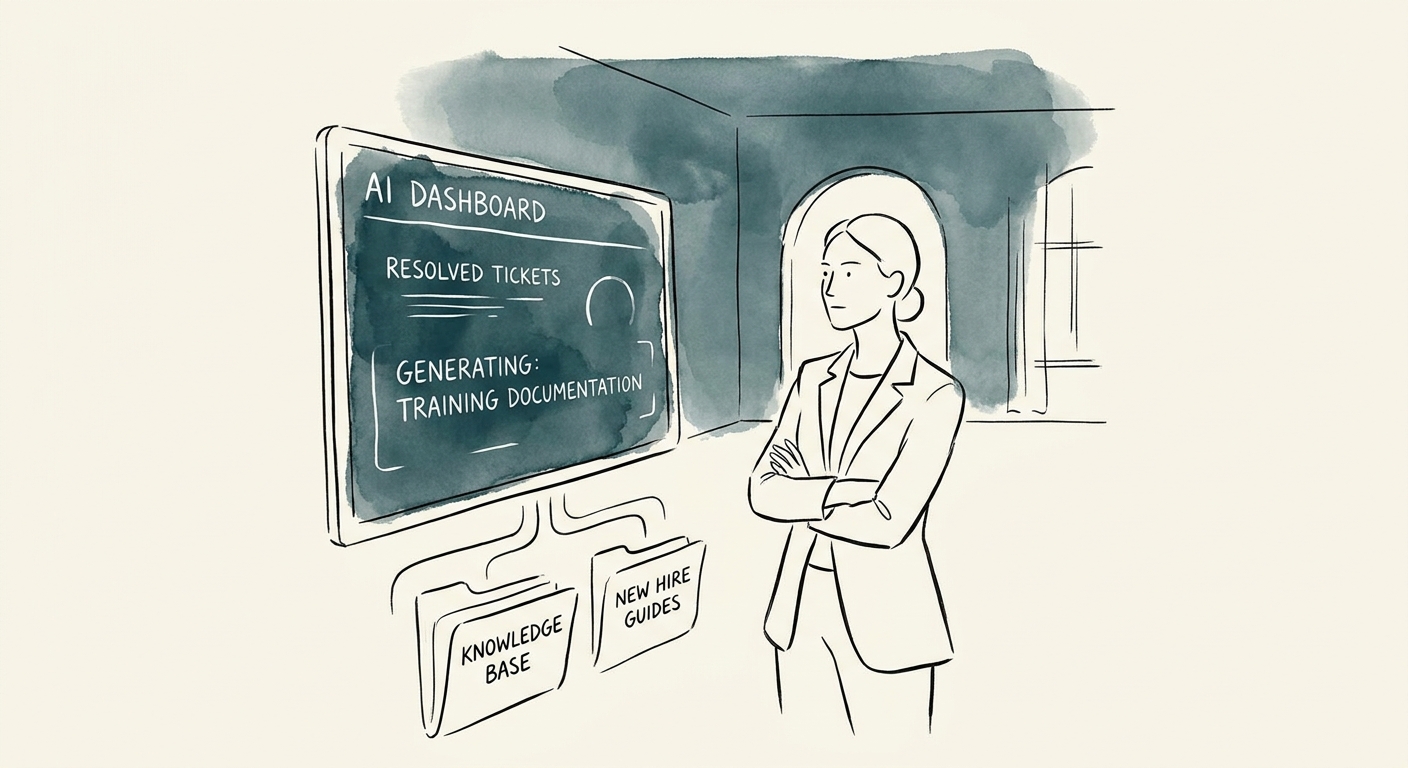
The new hire is reading a script that's three weeks out of date
A refund threshold changed on the first of the month. The supervisor announced it in a team huddle, dropped a note in Slack, and updated the macro in the help desk. What nobody touched: the new-hire onboarding deck, the escalation cheat sheet taped to the second-line queue's wiki, and the coaching packet that gets emailed to week-two reps. So a rep who started Monday is confidently quoting a policy that expired three weeks ago, and the customer on the other end is about to get an answer the company will have to walk back.
This is why customer service training documentation is a sharper first AI use case than the chatbot everyone reaches for. The chatbot is customer-facing, high-stakes, and slow to trust. The training doc is internal, the failure mode is visible the moment a rep cites the wrong rule, and the work is exactly the kind of repetitive synthesis AI is good at: take the huddle note, the updated macro, and the policy change, and draft the revision to the onboarding deck. The Salesforce State of Service research keeps landing on the same tension — service teams are asked for speed and consistency simultaneously, and stale documentation is where consistency quietly dies.
The catch is authority. When the ticket pattern, the product note, and the manager's memory disagree about the refund rule, AI cannot break the tie. It can only flag that there's a tie to break. Decide, before you generate a single draft, which source wins — and who the human is that the model routes the conflict to.
Pick one document, name three people, then let it draft
Don't point AI at "the training content." Point it at one document family — say, the new-hire call-handling guide, or the escalation script for billing disputes — and give it a closed library of approved sources to draft from: the current policy doc, the active macros, the supervisor-signed change log. Drafting from a fixed source set is the entire game. The moment the model is allowed to fill gaps from scattered notes, it starts writing policy that no one approved, and you've automated the exact problem you were trying to kill.
Three named humans before launch, not after. The service owner who decides what the rule actually is. The training editor who owns voice and structure. The compliance reviewer who checks what goes in the examples — because customer-service training is full of real ticket screenshots, names, account numbers, and notes about which products break in which ways. CISA's guidance on securing the data used to train and operate AI systems is blunt about this: define what may be used, how it's anonymized, and where drafts are retained, before anything scales. A redacted escalation example teaches the same lesson as a real one without leaking a customer's billing history into a model's working set.
The NIST AI Risk Management Framework gives you a clean line to draw: harmless rewording of a coaching tip is low-risk; changing what a rep is told to do when a customer threatens a chargeback is policy, and policy gets a human signature. Map which edits fall on which side. Keep version history and source links on every revision so a supervisor can ask "why does the script say this now?" and get an answer in one click. If you can't staff those three roles, the AI workflow won't fix stale docs — it'll expose that no one owned them in the first place, which is usually the real diagnosis. The RSM middle-market AI survey shows this is the use case that actually graduates from pilot to habit — but only where ownership is explicit.
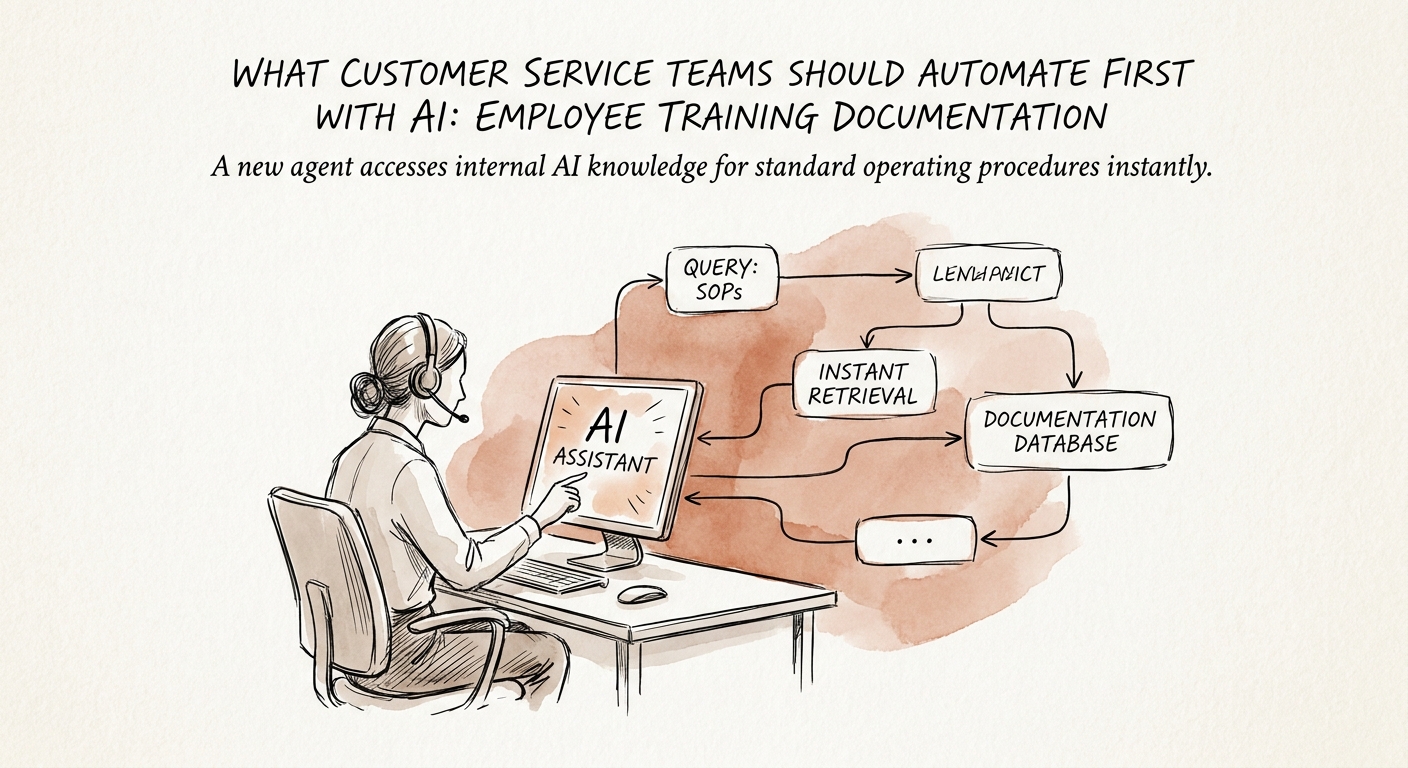
Measure the rep on the floor, not the editing time
It's tempting to score this on how many hours the training editor saved. Wrong metric. The point of updating the doc faster is that the rep on the phone Tuesday morning gives the right answer. So track the things that show behavior changed: how long it takes a policy change to reach the live training material, how often the reviewer has to correct the AI draft, how many week-two reps still flag confusion on the same three topics, and whether a supervisor can trace any given line in the script back to the ticket pattern or policy source that produced it. If reviewer corrections aren't dropping over a few cycles, the model is guessing and someone is babysitting it.
Keep the release assisted — AI drafts, human signs — whenever the underlying policy is unsettled, the example carries sensitive customer context, or two managers genuinely disagree on the right action. In those moments the model's job is to assemble the evidence and propose the redline; the accountable leader's job is to decide the rule. Letting the assistant auto-publish into that gray zone is how you end up with confidently worded, wrong training overnight.
Hold the business case to a real standard. Measuring AI ROI without fake savings means the win is concrete: policy changes hit the floor in days instead of weeks, new-hire ramp questions drop, and supervisors stop rewriting the same packet every quarter. Monday move: list every place your current refund or escalation rule is written down — deck, wiki, macro, coaching email — and count how many still say the old thing. That number is your before. A governed 90-day implementation plan is how you get the after.