The danger isn't a clumsy draft — it's a confident, wrong one
Picture the engagement manager at a 30-person consulting or accounting firm walking out of a Thursday client status call. Six decisions got made, three of them verbally, and two of those changed an earlier scope assumption. By the time she's back at her desk, a calendar invite has eaten the gap, and the recap she sends Friday morning is reconstructed from memory and a half-page of shorthand. The client reads it, nods, and now both sides are operating off slightly different versions of what was agreed. That drift is where professional services firms quietly lose margin and trust.
An AI recap tool looks like the obvious fix, and the pressure to adopt one is real — the Thomson Reuters 2026 AI in Professional Services report and Deloitte State of AI in the Enterprise 2026 both describe firms moving fast under delivery load. But the thing that bites a professional services firm isn't a recap that reads awkwardly. It's a recap that drops the scope change, manufactures an action item nobody owns, or pastes client-confidential context into a thread that wasn't approved to receive it. A clumsy draft gets edited. A confident, wrong recap gets sent.
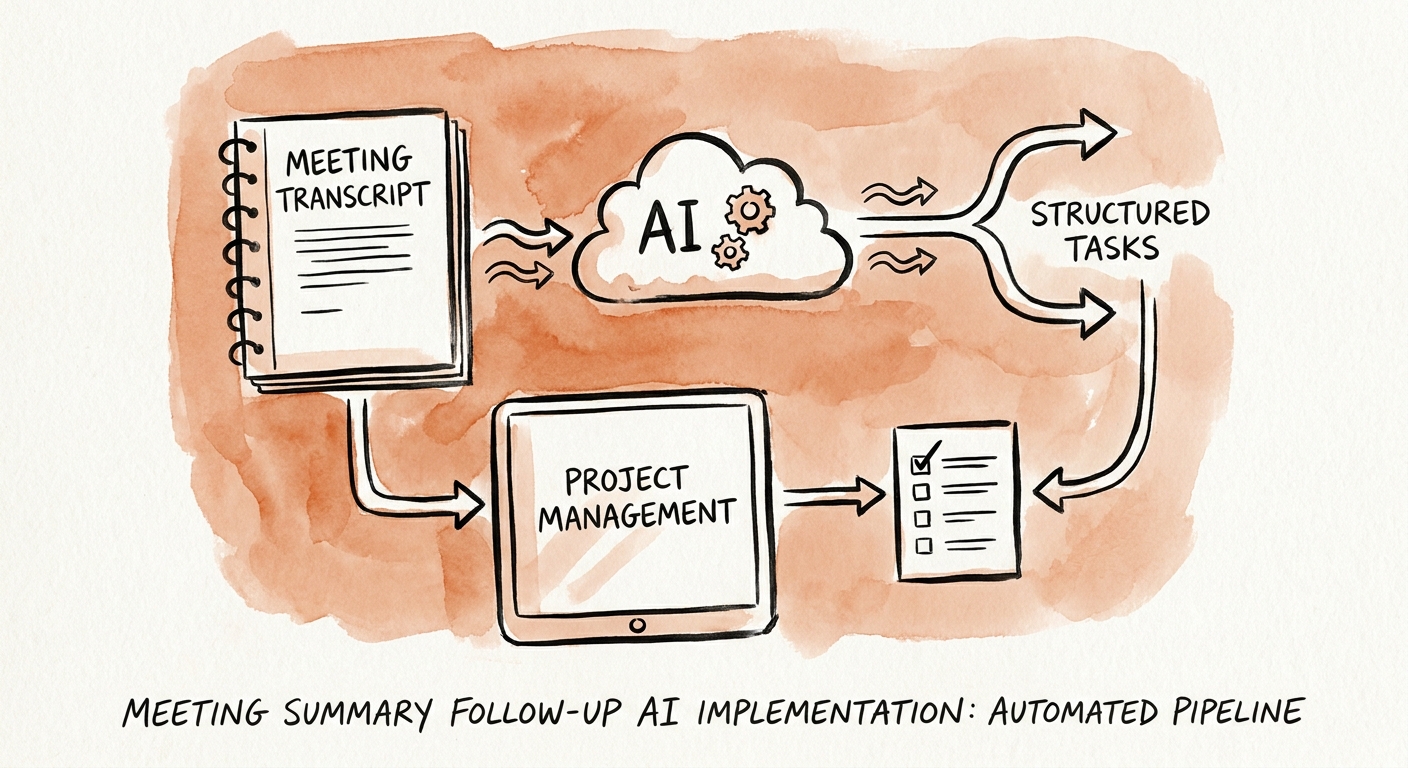
So don't pilot "AI note-taking." Pilot one workflow: turn an approved transcript from one recurring client meeting type into a reviewed set of commitments — owner, deadline, and what changed since last week — that a delivery lead signs before it leaves the building.
Count the things a client would notice, not the drafts you produced
Most firms measure the wrong number. They count summaries generated and call it adoption. The client doesn't experience your summary volume; they experience whether the next step you promised actually shows up. So baseline the metrics that map to the handoff itself, for that one meeting type, for four to six weeks before you change anything:
How many follow-ups went out late, or never? How many action items reached the client with no named owner? How often did a partner have to send a "to clarify what we agreed" cleanup email after the recap? And the one that matters most for professional services — how much material rewriting did the recap need before someone was willing to put the firm's name on it?
Then turn the tool on for that same meeting type and watch the same numbers. The win you're hunting for is narrow and specific: fewer dropped commitments, faster owner response, and partners spending their post-call time on the client relationship instead of reconstructing what was said. If the AI just produces longer drafts that still need a full rewrite, you've added a step, not removed one. Once those operating numbers move and each is tied to a named owner, the AI Opportunity Score and the AI ROI Calculator can help you size the case for the next workflow — not before.
In professional services, the transcript is privileged until you prove otherwise
This is the part most AI advice skips, and it's the part that ends client relationships. A consulting or accounting firm's meeting transcripts contain things that belong inside a confidentiality wall: a client's unannounced restructuring, a number not yet public, a candid aside about a board member. Before any recap tool touches that material, you need rules about what it can read and what it's allowed to repeat. The NIST AI Risk Management Framework gives you a clean way to write down intended use, risk, and who is accountable when the recap gets it wrong, and CISA's AI data-security best practices should govern how transcripts are accessed, retained, and walled off by engagement.
Three concrete rails for the pilot: limit the tool's sources to approved meeting notes, transcripts, and project records for that engagement only — no cross-client memory. Require a delivery owner to sign off before anything reaches the client. And keep the source link behind every action item, so when a client says "we never agreed to that," you can point to the line in the transcript in under a minute.
Hold the pilot to one recurring client meeting type until the team can trace every commitment back to its source and explain every exception. Only then expand to adjacent delivery routines — onboarding calls, scope reviews, weekly standups. Earned scope, one workflow at a time, is how this becomes infrastructure your clients trust instead of a leak waiting to happen. When you're ready to map that sequence across the firm, that's what the AI roadmap is for.
